Timing is (sometimes) everything

Sometimes, in reading as in life, timing is everything. When you read a book can have a huge effect on how you experience it. You can read a book at the exact right time, maybe the right age or the right point in your life or the right time of year or day, and it just feels right, it makes sense. Other books are read at the wrong time: too early, too late, when the subject matter feels too close to home or too remote.

For example, when I first read The Secret History by Donna Tartt, about privileged Classics students whose actions get out of hand, I was in my second year at Oxford, spending the Easter holidays trying to read a lot of Romantic poetry and long eighteenth century novels. I read it as a treat whilst I was reading Clarissa by Samuel Richardson (a 1500 page long epistolary novel) and it was exactly what I needed. Not only was the style a far cry from eighteenth century prose, but the world of Henry Winters et al was pretty recognisable. Their tea drinking and meal eating with their professor Julian wasn’t all that different from classes with my tutors. It was easily believable that a group of students could do terrible things inspired by their reading because that was the kind of rumour you heard around Oxford. The Secret History made sense.

I first read Mary Shelley’s Frankenstein too early, expecting something more horror-based like the image of the monster in popular culture. Its brooding, gothic Romanticism and meditations on the spark of life went right over my head. Thankfully, I had to read it during my degree and, armed with context and different expectations, I rediscovered it as a fantastic novel. On the other hand, I read Under The Dome by Stephen King too late, after my phase of reading his books was over, and I had no interest in the long story about characters I didn’t care about. The same is probably true of The Hunger Games, which I spent all three books being annoyed that because it was a first person narrator I knew she wouldn’t die, ruining the stakes somewhat.

These are all novels, but I think that poetry is also very caught up with timing. The first poem I loved was Simon Armitage’s ‘Kid’, which I studied at GCSE and became obsessed with how it used Batman and poetic sound to suggest growing up. It helped that this was around the release of The Dark Knight too. Later it was Eliot’s ‘The Love Song of J. Alfred Prufrock’; again, I loved how it sounded, but also the way it was caught between comprehensibility and confusion (I was seventeen, which may explain that).

I still always thought I wasn’t ‘good’ at poetry until it turned out the answer was that I needed narrative poetry. I get along very well with Milton and Byron. I didn’t read Byron until I was halfway through my degree so instead of being put off by the length of Childe Harold’s Pilgrimage (took me until the summer to get to Don Juan, which I read partly in Rome because I’m very pretentious), I discovered his dramatic way of summing up a concept in a single line and constant flirting with whether he is his narrator, his hero, both, or neither. Earlier and I might not have enjoyed it.

There’s plenty of other examples. What I’m trying to show is that sometimes it isn’t as simple as reading a great book or a terrible book, but reading those books at a time that makes them work or not work as the case may be. Reading is personal, not only in your response, but in the factors that affect that response. I should add as a final note that sometimes it makes very little difference – I read Ulysses whilst revising for my AS exams aged seventeen and I have no strong feelings about it either way.

Invited into their circle: the Oxbridge Secret History

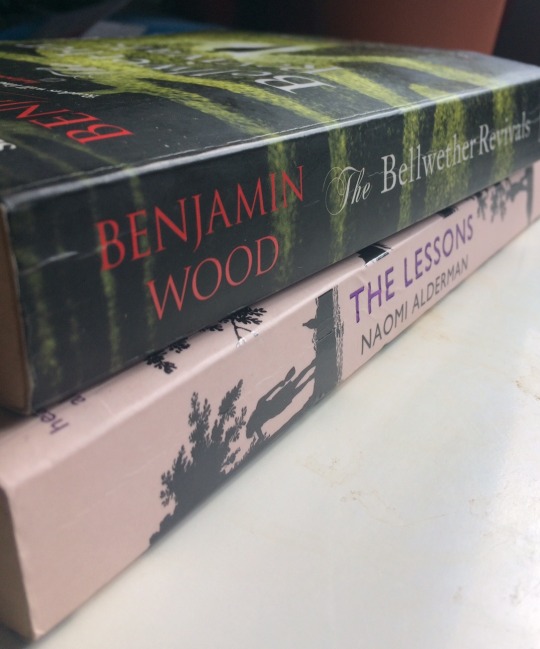
Today I’m going to talk about a category of books I love: privileged, genius, and/or eccentric students make questionable choices, mostly in books that are compared to The Secret History (Donna Tartt’s infamous epitome of this genre). To do so, I’m going to be discussing two books I bought and read recently, both set in Oxbridge, both featuring incredibly rich students and more ‘normal’ protagonists, both compared to both Brideshead Revisited and The Secret History on their covers.

I’m starting with The Lessons by Naomi Alderman because the second of my choices references this book on its cover so I felt that must be the natural progression. The narrator is James, a Physics student who falls behind almost as soon as he gets to Oxford and is feeling the weight of his parents’ and older sister’s expectations for him. Soon he is drawn into the world of the charismatic Mark Winters and becomes part of a group of friends living in Mark’s strange Oxford house. As the years pass, it turns out that they were not at all prepared for life and that their wild lifestyle in Oxford is not so suited to the outside world.

It is easy to compare James with Richard Papen from The Secret History: narrators apprehensive yet drawn into a seductive world of an enigmatic friendship group, unreliable in their description of characters, and far too entwined to narrate with any sense of objectivity. What differs is that James becomes far less of an onlooker and instead part of the narrative of desire and betrayal that runs through the novel. The other main characters are vividly drawn and run from recognisable stereotypes, but it is Mark who is the standout character, as is to be expected. His issues and unstable nature mixed with large generosity with the money he barely understands the value of make him exactly the kind of enthralling figure who captivates even when they are making terrible decisions.

In terms of plot, The Lessons is not hugely similar to TSH, but feels more a child of Brideshead, albeit without any wars. Much of its thrill comes from wondering what the characters will do next and watching as secrets are revealed and life fails to turn out how they expected it to. If you like the genre, it is a hugely enjoyable read, with the relationship between James and Mark forming a dark and complicated core.

The second book, The Bellwether Revivals by Benjamin Wood, is set in Cambridge and features a protagonist not actually at the university, a shock for the category. Instead Oscar is a care assistant who stumbles across the Bellwether siblings Iris and Eden by accident when he is lured into King’s College chapel by the music playing. What unfurls is a narrative dominated by Eden, a musical genius who attempts to conduct experiments on his group of friends and refuses to accept any boundaries that the world might place on him.

Oscar’s outsider view of the group lessens as he begins a relationship with Iris and he becomes a classic figure drawn into events he can barely comprehend. A lot is left unsaid in the book, creating lingering mystery and allowing the gaps to be filled in by the reader. Like The Lessons, the student backdrop is accurately painted, though their student lives are less important than in either The Lessons or The Secret History. More significant is Eden’s spellbinding power and the attempts of Oscar and Iris to work out if he really has something special about him. As in Alderman’s novel, The Bellwether Revivals opens with a mysterious scene from near the end of the narrative, begging the question of how things will go so wrong. In both cases this adds to the sense that a life of privilege and genius cannot turn out rosy and safe.

In my opinion, The Bellwether Revivals is more worthy of the Donna Tartt comparison, due to its plot and use of academic experiments and historical ideas, though The Lessons has a better cast of captivating characters who draw the reader into their circle (and I personally enjoyed more, possibly because the Oxford accuracy drew me in). Both books are worth reading for anybody who likes this kind of out of control academic setting and closely entwined messed up friendship group. Just don’t let them give you any ideas…

If A Book Is Compared To X On Its Book Jacket, It Is Probably…

  • Brideshead Revisited – Lots of posh Oxford, maybe gay. Or, about Catholicism and nostalgia and messed up families and not as much gay as expected.
  • John Le Carré – Spies. SPIES. Should be Cold War but won’t necessarily be.
  • The Secret History – Where too close group do something Bad. Narrator may have inferiority complex.
  • Sarah Waters – Victorian and either contains lesbians or wants people to pick it up thinking that it does.
  • We Need To Talk About Kevin – Dealing with troubled motherhood.
  • Stephen King – Any kind of horror. Vaguely horror. Once met horror in a supermarket.
  • Trainspotting – Trying to be Trainspotting and probably failing.
  • Jane Austen – If you’re incredibly lucky not lacking completely in satirical edge.
  • Brick Lane / anything by Zadie Smith – Set in London amongst a community of people who are not white and/or Christian.
  • Hemingway – Something you should run away from.

Read what you like: in honour of World Book Day 2017

World Book Day is an important day and not only for the children’s costume opportunities (though my Little Wolf costume complete with bits of fur was impressive when I was 10). It’s a celebration of reading (check out its website for more info) marked in over 100 countries around the world and is in its 20th year. Today’s post is not only inspired by today being World Book Day, but also by a couple of tweets I saw recently by author Holly Smale (which can be seen here) that were defending letting children, teenagers, and indeed anybody, read what they want without judging or claiming it is the ‘wrong’ kind of reading, in which she defends her “teen passion for Point Horror”.

Smale’s tweets particularly struck a chord with me because I loved Point Horror (and also have an MA in Shakespeare, in fact, as she also mentions). When I was about ten or eleven, there was nothing more exciting than being allowed to put Point Horror books on my mum’s library card (I was not 12 and couldn’t have the Young Adult card needed to take them out) and then go home and settle down with one, finding out how American teenagers dealt with what mostly turned out to be fellow teenagers angered into violence and murder.

Maybe the huge number of Point Horror books that I read from the library didn’t seem to improve me in any way. They didn’t need to. I was, after all, reading for fun. There should be no requirement for reading to be anything more than fun. Actually, I was getting insights into American culture that I knew nothing about because I only watched British TV. My reading precursors to Point Horror, the Goosebumps books, were some of my only other knowledge of the US (it was clearly a spooky place).

My other reading interests weren’t unusual. I read Harry Potter and Jacqueline Wilson, Jean Ure and Darren Shan. I loved Roald Dahl’s autobiographical Boy more than any of his novels for some reason. I did read some books because they were suggested to be ‘more challenging’, enjoying Little Women because of Jo and reading Anne Fine because a teacher kept pushing me to, but I also avoided the classics with boring looking covers in favour of rereading Harry Potter for the fiftieth time. This didn’t harm me. I did, eventually, want to read harder things of my own volition, but because they looked interesting rather than because they were more like ‘proper’ books.

From Point Horror I moved onto Stephen King and Anne Rice, and later Poe and Lovecraft. Even later, and initially as part of my English degree, I developed a huge love for eighteenth century gothic novels such as Lewis’ The Monk, which is arguably just as trashy as Point Horror in some ways. Though I can chart this interest to reach more acclaimed places, I don’t need to. I don’t need to justify Point Horror. Books are entertainment. Read what you like.

What I Learnt From Giving Away My Books For Free

Any promise of free books is incredibly exciting to a book lover. Libraries, of course, play a vital part in the world of free books, as do borrowing books from friends and relatives. The casual words ‘oh, do you want a copy of ___?’ can create a momentary mental frenzy that may end up with accepting books you have no interest in reading. I am aware of these facts, and yet I was surprised by the response to me offering friends and colleagues some of my books for free.

I did it for practical reasons: I was moving soon and the small room I was moving out of was full of books, in piles and on the squeezed-in bookshelf and even less read books forming the base of my makeshift bedside table. My collection was not easily moveable. In addition to this, I knew I would keep getting books, because if my life so far has taught me anything, it’s that books will just keep appearing.

Weeding out books was fairly easy for me as I hate clutter. Anything that I was unlikely to reread and to which I had no ties making me keep it would be put on the list. It ended up a varied offering: I was just finished a Masters degree in Shakespeare and his fellow early modern writers, meaning that I had a number of drama collections to go alongside popular books of the last twenty years and Victorian novels and poetry left over from undergrad. I really wasn’t sure if anybody would want any of them. I posted the list on some of my social media, expecting a couple of bookish friends to ask for a couple and then maybe I’d take the rest to a charity shop.

I ended up giving away over 50 books. Coworkers from my theatre bar job asked for a wide selection, surprising me as these were people who I’d never discussed books with at all. I reconnected momentarily with old friends and coursemates who wanted things like the first Dirk Gently book and all of Louisa May Alcott’s Little Women series. I posted off packages of free books and I lugged books around in bags to their new owners. I didn’t ask for anything in return (though one person gave me a bar of chocolate in thanks). What I ended up getting was a different kind of reward: book excitement.

People were very thankful. They seemed amazed when I responded to their tentative ‘can I have this book?’ with a ‘yes, of course!’. They watched in delight as I pulled out four dogeared books from my bag and handed them over to be forced into their own bag. I didn’t tell people of my opinions of the books I was handing over though I’d read basically all of them, but instead let them make up their own mind. All I hoped was that if they didn’t enjoy them enough to keep them, they’d pass the book on further. Surely all books can find their forever home somewhere.

What I discovered was that far more of my friends wanted to engage with free books than I had imagined and they were all so grateful for them. I realised that I shouldn’t assume what kind of books people might want to read or whether they want to read at all. The people who suddenly get excited at a book of Jacobean plays are more varied than you might expect. Anyone might want that recent popular thriller. And by giving out these books for free, maybe you can give the chance to read either – or both – to somebody who hasn’t tried them out before.

I would highly recommend offering up your books to your wider social circle, even if you only have a few you’re willing to part with. Not only does it clear space, but it can teach you things about the people you know and maybe find new ways to connect with them.

Hot off the press: reading new books

Recently I’ve been reading a lot of proof copies and newly published books via Netgalley, as may be apparent from the reviews I’ve been posting. The experience of reading brand new books has been a novel one (pardon the pun there) for someone who has done a degree in all the historical periods of English Literature and a masters in specifically works of the 16th and 17th centuries. So far, it has been an experience that has taught me a few things.

For starters, that there’s a huge range of books coming out right now. The variation in subject matter, setting, and style means that it hasn’t even felt like an influx of similar books (I hate reading too many similar books at once), even though I’ve only been requesting copies of books I like the sound of. It wasn’t like I didn’t know this, but it has been refreshing to see the diversity and choice of books and to try out reading them.

Judging books by their cover (and blurb) is fairly necessary in order to pick what you want to review. I’ve learnt that intriguing covers do often mean intriguing books, but that some books have terrible blurbs. In one instance in particular, blurbs that misrepresent the content of the book, with it ending up far darker than expected and really needing a warning for some of its contents. I also discovered that sometimes a vague title and vague blurb may make a lot more sense once you take stock of the picture on the front (a horse picture turned out to be a long novel focused on raising race horses, rather than a more symbolic horse as I’d expected).

Reading books with smaller levels of feedback available can be freeing (who cares what those four other Goodreads reviews say), but also perhaps intimidating, as there’s less of a chance to consider what you already know about the book. Years – decades, centuries – of readers haven’t been there before you, saying things similar or dissimilar to you. Your words will probably have more of an impact if anyone looks for information on the book, but also it’s harder to look up things you didn’t quite get.

Brand new and unreleased books are exciting chances to read something with a slightly clearer canvas in your mind, though of course still influenced by author, publisher, cover, blurb, and a myriad of other things. If nothing else, it’s exciting to see what is coming next.

Why reread?

To reread or not to reread is one of the biggest issues book lovers can face. Rereading takes up time you could be reading any of the millions of books out there, so it can seem inefficient and a kick in the eye to the pile of unread books on the shelf. I begin with the caveat that at the moment I am not rereading very much because Goodreads won’t accept my rereads as part of my year’s books and I’m trying to double my year’s challenge on there and read 100 by the end of 2016. However, I do like to reread and am going to explain why.

Firstly, rereading allows you to savour details that you missed the first time, to take in foreshadowing and hints that didn’t make sense originally, and to generally enjoy elements that an initial read may not have caught. Books are long and full of words, so it is unlikely that a single read will allow you to notice them all. For favourite books especially, rereading a few times can really cement its merits in your mind and allow you to think about it whenever you want.

For the books that were less than favourites, rereading can allow for new perspectives. Maybe with time, knowledge, or experience, that hated book will seem a little better. For example, I recommend anyone who hated Frankenstein to try it again, especially literature students who know anything about the Romantics or gothic novels. It can improve massively (my best friend is a graduate student who studies the Romantics and the 18th century and loves Mary Shelley, but she didn’t like it when she first read it).

On the other hand, if you dare to reread a book you really hated, you also might be certain that you hate it, and with that remembrance have a better picture of its flaws to complain to people about or get into arguments about. Admittedly not the best form of rereading unless you’re someone who loves debating books with people.

For students, rereading can be very useful for having new things to say about texts. For general readers, it can enlighten or make books more enjoyable. So go and reread your favourite books, whether that means experiencing the prose style of Lolita again or giving the Harry Potter series another run through in case you missed an extra word or line about your favourite character.

Digital Competitiveness

Book vs e-reader debates have become so boring and pointless that it would be preferable to read the terms and conditions of joining the Kindle Store* to read anything about whether the page or the screen will prevail in the battle of How To Read™. I am not here to get involved in this: I am happy to use both and for people to read in whatever way is convenient to them. I am here to discuss a specifically e-reader phenomenon that happens when I use mine.

Before that, I must note the weird fact that I constantly forget I own a Kindle. I’ve had one for nearly two years and I forget for months at a time that I own one. This fact perhaps makes this phenomenon more pronounced, as reading on an e-reader is something I don’t do every day. Somehow, I have not developed a sense of Kindle object permanence, like a baby with an impressive reading age.

The phenomenon I am talking about is reading competitiveness – with myself. When I read physical books, I have a tendency to vaguely track how I’m doing, page-wise. At some point near the start of my reading a book, I will look and see how many pages it has, then throughout the book will occasionally pause to think ‘oh look, a quarter of the way through’ or ‘over two thirds now!’. With an e-reader, or at least on my basic Kindle, there is a percentage at the bottom of the screen. A dangerous percentage.

This week I have read three books on my Kindle: Atwood’s MaddAddam, the vampire novella Carmilla, and a music memoir called I Blame Morrissey. Each book, of differing lengths, genres, and styles, was read by me as if I was in competition with the Kindle. I even chose Carmilla from my to-read collection because it was short and easily achieved. My eye could not stop looking at that percentage. Past 75% I knew I was on the home straight and would speed up even more. In short, I have a problem.

What is weird is that I am not a competitive person. I quite recently was beaten six games in a row in Trivial Pursuit by my best friend and I did not care, just enjoying playing. I am the kind of person who is willing to let other, competitive people win if that might be good for them (and I like them, of course). Against my Kindle, however, I am determined. And I wonder if anyone else becomes competitive at the sight of that little percentage, goading you into reading a little more, a little faster. Trying to win at reading.

*Note: The terms and conditions of joining the Kindle Store could be thrilling: I, like everybody else, have never read them.

Know What You Hate

Hating books is important. Nobody can like everything. There has to be books where, at the very least, you are bored as you read, each word pulling at your brain, making you want to give up. Books written in a style you despise, books with pointless plots or no plot or too much plot, books with pages of unnecessary details that you just want to rip out. And that is good. Disliking books gives the possibility to be critical, to think critically, and to question what it is that you enjoy or look for in reading.

People will not hate the same things, for the most part. You may not get along with the book everybody else has raved about. Maybe out of politeness you’ll tell them it was ‘alright’ or flat ‘good’ with no elaboration. Maybe it’s not your ‘cup of tea.’ Maybe you’ll give anybody who asks a full review of how much you hated it. Hating books, whether you shout it from the rooftops or politely avoid the subject, is natural and allows you better insight into what to pick to read next.

Of course, sometimes hated books are required reading: for school, university, a book club, or because someone well-meaning bought it as a gift. Even then, hating can be good. Considering why you hate a book, what it is that you specifically do not like, is analysing your media, even if in less of a ‘why is this metaphor here’ way and more of a ‘I loathe books with an unreliable narrator way’ (though if that is true, I do not understand you).

I can’t talk the talk without sharing a few books that I hate, and a few words about why I hate them.  I recommend trying out the same, whether online or to a friend or just in your head. It might be insightful. It might be cathartic. Know what you hate.

Some books I hate:

For Whom The Bell Tolls by Ernest Hemingway – It is so boring. It is so long. Why it is so long I don’t know, because Hemingway is known for writing stories in six words and sentences so short that end before they’ve begun. I remember very little about it. A bridge? I can only picture a bridge. The bridge I would throw this book off.

Heart of Darkness by Joseph Conrad – Also boring. Another book I read around the age of 17 and I am thankful that I read other stuff when I was 17 too or I may not have done my English degree, because I kept reading Classic Boring Books (™). I like Apocalypse Now more. ‘The End’ is a good song. A good song not in Heart of Darkness.

The Life and Opinions of Tristram Shandy, Gentleman by Lawrence Sterne – I feel bad about this one: I read it aged 16, gave up because it was so boring, and then years later during my degree learnt about eighteenth-century literature and what it was doing. I’ve never tried reading it again, however, perhaps because I’ve seen portraits of Lawrence Sterne and know much of a creep he looks.

Under The Dome by Stephen King – I like Stephen King. I like horror. I could not make myself finish Under The Dome. I very much did not care what happened to anybody in it. I did not feel a sense of foreboding, except at how much I had left to read of it.