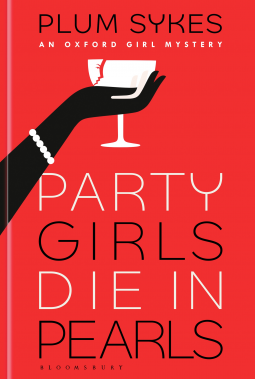
Party Girls Die In Pearls by Plum Sykes

80s culture, Oxford undergrad high society, and murder: Party Girls Die in Pearls by Plum Sykes
image

Party Girls Die in Pearls is a fun murder mystery set amongst the parties, scandals, and scrapes of Oxford students in the 1980s. Ursula Flowerbutton is a middle-class girl from the countryside, brought up by her two grannies and looking forward to studying History and eating cucumber sandwiches when she goes to Oxford. However, her desire to get involved with the Cherwell, an Oxford student newspaper, becomes a reality when after an unexpected party invite, she comes across a dead body on her way to a tutorial. Suddenly, Ursula must spend her first week in Oxford on the trail of a murderer, assisted by her new American friend, and try to unravel all the love affairs, college jealousies, and high society secrets that she finds in her way.

Sykes’ narrative is a classic murder mystery, but the insight into the upper-class world of a certain subsection of Oxford students is what adds to the enjoyment, with witty and sometimes biting comments and descriptions giving a vivid picture of the world in which Ursula finds herself. Explanations of elements of slang amongst the rich and of Oxford traditions may seem a little odd to some, but it draws attention to the period nature of the setting whilst also holding up elements to ridicule. The characters are quite memorable, either in their poshness or eccentricity, and the style is light and straightforward, making it an easy read to devour in an afternoon.

The novel is full of references to both works involving Oxford (a footnote calls the TV adaptation of Brideshead Revisited the Downton Abbey of the 1980s except everyone was secretly gay) and 80s pop culture, with films and famous songs mentioned amongst the elite world. Like Starter For 10 and Stranger Things, Party Girls Die in Pearls mixes a genre story with a distinctive 1980s setting that will appeal to those who lived it and those who wish they could recreate the aesthetic of the time. Anyone who went to Oxford will also recognise details in the novel, many unchanged since the 80s.
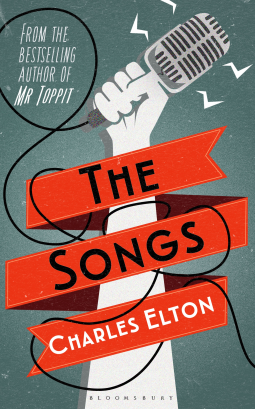
The Songs by Charles Elton

Protest music and show tune rhymes: The Songs by Charles Elton

image

The Songs is a strangely enchanting novel about the children of an ageing protest singer and how their unusual lives converge. Rose is sixteen and cares for her dying younger brother Huddie whilst living with their eighty-year-old father Iz Herzl amidst the presence—both real and imagined—of his current and past wives. Rose and Huddie’s mother died falling out of the same window twice. Meanwhile, Iz’s much older son Joseph writes songs very much unlike his father’s political work: rhyming tunes for musicals. As things go wrong and the siblings who have never met end up with their lives coming together, it becomes clear fame, family, and truth are not always simple.

Elton’s novel is made up of a bright and distinctive cast of characters, from Rose’s first-person narration, in which her view on her beloved brother, her maths ability, and her family’s unusual history become clear, to Maurice, a schoolboy from the late 1940s fascinated by revolution who meets a Jewish outsider. The book may seem initially to be focused on music and the life of a musician’s family, but a lot of the novel is also about religion, history, and loss, as well as the darkly comic truth of estranged family and secrets. At the start of the novel, the discussion of fame, rumour, and retelling history make interesting points about celebrity life, and throughout these recur in different ways to show connectedness and also how things aren’t always as they seem.

The tone is light yet distinctive, making it an easy and enjoyable read, and the narrative does have one or two surprises. It will appeal to fans of books that contain distinctive characters with both light and deep subject matter, for example novels by Matt Haig. The real standout is the perspective of Rose and how her and her brother exist as the eccentric and often forgotten children of a famed singer and activist.

Judas by Amos Oz

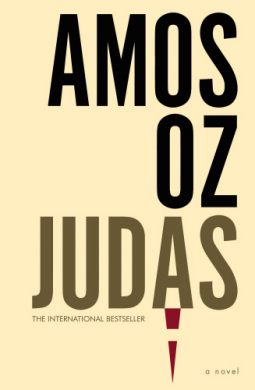
Judas by Amos Oz (trans. Nicholas de Lange)

image

Judas is a thoughtful and complex coming-of-age novel set in Jerusalem in 1959-60. Shmuel is an idealistic student whose life seems to be at a dead end. When he sees a mysterious handwritten note on a campus noticeboard, he takes a job as the companion to an elderly invalid in a different part of the city. As well as arguing with and listening to the old man, he must share the house with a strange older woman who soon fascinates him, though she appears less intrigued by Shmuel. What follows is a narrative about conflict, conversation, religion, treason, and love, as Shmuel tries to find his way forward in life and processes the thoughts and lives of his two new companions.

Amos Oz combines youthful uncertainty and idealism with big questions of political and religious divide and debate. Shmuel’s curiosity about Gershom Wald, the old man, and Atalia, the mysterious woman, seems to battle with his abandoned intellectual curiosity in the figure of Judas and of Jewish views of Jesus, with information about these areas taking up different chapters. He is an interesting central character, the kind of protagonist who falls into a situation through being lost and melancholy and then leaves it somehow transformed. Conflict in Israel is central to the novel, but so is unrequited love and desire, and attempts to understand different viewpoints and how this may change ideas about treason for example. The narrative follows a classic plot of lost student obsessing over various things and battling desire and mystery, but it is the insightful musings, conversation, and detail that give the novel its spark.

Phone by Will Self

Darkly comic spy satire: Phone by Will Self

image

Phone is the witty and fast paced new novel from Will Self, a side-eyed look at the modern worlds of intelligence, warfare, and technology. The main focus is on Jonathan De’Ath, a spy known as ‘The Butcher’ to all who and know him, and his secret longterm lover, tank commander Gawain Thomas. The other thread of the narrative follows recurring Will Self character Zach Busner, an aging psychiatrist, and his family, particularly his daughter-in-law Camilla and autistic grandson Ben. Self creates a riot of a ride, darkly comic and reference-heavy, in this novel about technology and life in the twenty first century.

The narrative hurtles full throttle in one direction, narrated by one character without room for pause, then screeches suddenly into a new point of view. This style – not unexpected to anyone aware of Self’s work – is unlikely to be to everyone’s taste, but it creates an obsessively-echoing and detailed novel full of parroting phrases and cultural references. Acronyms are written phonetically, making the proliferation of them in the modern day very apparent. The Butcher is a fantastic creation, a meticulous and twisted spook who ends up with a glaringly obvious Achilles’ heel, and his sections make for the most exciting reading. How his story has any connection to Busner, Camilla, and Ben is not apparent for much of the novel, but becomes apparent by the end in a satisfyingly fitting yet somewhat ambiguous way.

Phone will not appeal to everybody. However, its blend of exposing military and intelligence cover-ups, political and societal satire, dark comedy, and strangely intriguing characters is a success, leaving a novel that is an intense and unrelenting read, one that pulls the reader into its style and idiosyncrasies. Despite being a spook adept at hiding, Jonathan De’Ath is not easy to forget.

Conversations With Friends by Sally Rooney

Friendship, anarchy, and being invited to stay in someone’s French house: Conversations With Friends by Sally Rooney

image

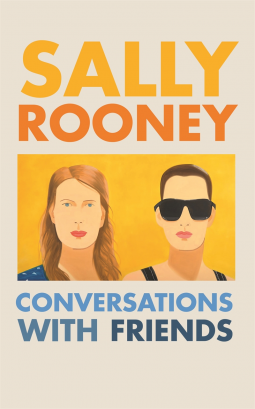
Conversations With Friends is a funny, exciting, and sometimes darkly relatable novel about being in your early twenties and about how to live your life. The story is told by Frances, a twenty-one year old student living in Dublin who writes poetry that she performs with her best friend and ex-girlfriend Bobbi. When they meet the older journalist Melissa who wants to profile them, they are drawn into the world of Melissa and her actor husband Nick, a world of tension, money, and wine. Frances begins an affair with Nick and soon everything is complicatedly entwined as they all consider what they want and what they believe.

The prose is fresh and somehow distinctive, giving Frances’ observational view of the world whilst accurately describing minuscule feelings and emotions. The descriptions of the sensations of being a student and in your early twenties are particularly astute, for example Rooney’s accurate depiction of the feeling of writing an essay, isolating yourself from the world and then emerging to find everything feeling strangely novel. Frances’ disorientation with the world and with the way she is living comes through, particularly when she tries to deal with feeling down and discovering she has a chronic pain issue. Bobbi is another great character, someone whose truth is clouded by the way that Frances sees and describes her, but who shines through as lively and opinionated. The main characters are complex and messed up, arguing about love and ideology and hurting each other a lot.

Engaging and gripping, it is not as much the narrative as the character relationships and the prose that keep you reading. It is filled with dark humour and literary references alongside relatable emotions, tangled-up relationships, and some background discussion of sexuality, class, and mental health. Rooney has created an exciting and enjoyable read about friendship, love, and the imperfection of being twentysomething.

Juniper Lemon’s Happiness Index

Juniper Lemon’s Happiness Index by Julie Israel

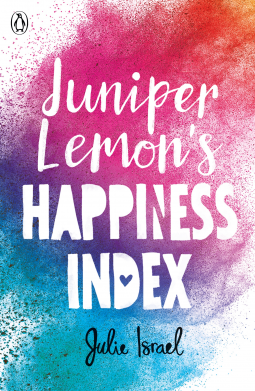
Juniper Lemon’s Happiness Index is a moving YA novel about loss and friendship, about having secrets and knowing what to do with other people’s. Juniper Lemon is lost without her older sister Camilla. She writes a daily Happiness Index in her sister’s memory and doesn’t know how to get through to her grieving parents. When she discovers a mysterious letter written by her sister to “You” on the day of her death, Juniper starts on a path to try and solve this mystery, protect her own secrets, and find a way of keeping Camilla close as the days keep going on.

The novel has a vibrant cast of characters, following Juniper as she makes new friends and deals with old relationships in the light of recent tragedy. The way in which Juniper realises she has brought people together around her is particularly powerful and leaves a lasting message about the importance of connecting with other people even—and especially—when terrible things have occurred. The mysteries and secrets unfold in a satisfying way whilst all being relatable issues and ideas to a teenage audience and there is a wealth of understated detail, but it is the characters who really shine through and their emotions are what makes the book important. In particular, the highlighting of different points of view—how thinking you’re helping somebody might not actually be the help they need, for example—is significant, showing how Juniper’s actions are well-meaning but can have negative consequences too.

Uplifting yet not cloying, Juniper Lemon’s Happiness Index will appeal to anyone who enjoys YA books that balance friendship, love, and serious issues, with a tinge of mystery and ambiguity.

Eurovision Reading: books set in European cities

As that time of year is here again, I’ve put together some reading go with the ultimate musical event. Here’s a selection of books that are set in a major European city (or multiple ones) that I think provide a memorable snapshot of their setting in some way. They’re all either in English or read in an English translation—I welcome other people’s additions regardless of language.

  • The Tin Drum by Günter Grass (Gdańsk, formerly Danzig) – A combination of politics, magical realism, and a distinctive and unreliable narrator, The Tin Drum isn’t a story about a city, but its setting is important and very memorable when I think back on the novel.
  • Giovanni’s Room by James Baldwin (Paris) – Baldwin’s hugely famous novel about a man having an affair with a guy called Giovanni has a Parisian backdrop for the highs and lows of their time together and as the world outside the room in which they spend so much time together.
  • N-W by Zadie Smith (London) – The London conjured up by Smith in this novel is so real, a snapshot of particularly the north-west of the city as shown through four intertwined characters whose experienced are shaped by class, race, and opportunity.
  • ABBA ABBA by Anthony Burgess (Rome) – Perhaps an odd suggestion for a Rome novel (unlike Angels and Demons), but Burgess’ novel about Keats’ last days—part of which is a load of dirty sonnets—is both distinctive and does give a real feel of the city. Read alongside canto IV of Byron’s Childe Harold’s Pilgrimage for the full Romantics in Rome effect.
  • The Unbearable Lightness of Being by Milan Kundera (Prague) – Kundera’s novel about intertwined characters and their loves during the Prague Spring is both hugely quotable and moving and an interesting look at a political situation and a city.
  • A Guide To Berlin by Gail Jones (Berlin) – A novel about a group of strangers—all travellers who love Nabokov in some way—who meet weekly in Berlin to share stories and talk about the city, until a shocking event occurs that changes their meetings.
  • Nightwood by Djuna Barnes (Paris, Berlin, Vienna) – Get in many cities at once with Barnes’ short and punchy novel about Europe between the wars and how expression of sexuality, religion, and class was suddenly very different.

Confessions of a Reader #1: The Recommendation

I love getting book recommendations, don’t get me wrong. A large amount of the books I actually buy are recommendations from friends, people whose book habits and preferences I know well and trust. Sending a ‘thanks for the suggestion, I loved the book’ message to someone is very satisfying, not to mention the all-important continuing the chain by recommending it to somebody else (this is how everyone seems to read Hanya Yanagihara’s A Little Life, after being told ‘it’s devastating but it’s so good’).

The problem is, sometimes people will not stop recommending you something you do not want to read. A genre you don’t like or a book you gave up on the first page of. Something with an insufferable first-person narrator. A book the time for reading has really passed (can you tell which specific book that I have actually read those last two are referring to?). It happens for other media types too, especially whatever TV series is big at that moment, and can leave you unnecessarily hating certain things that otherwise should just pass by you with ease.

For me, it tends to be fantasy or sci-fi books, because my tastes in those are very specific, especially the former. My Lord of the Rings exposure is having half-heartedly read The Fellowship of the Ring years ago and having owned The Hobbit as a child and never getting more than a few pages into it, despite liking the dragon on the cover. I don’t have any interest in it. I only like fantasy if it is a) Harry Potter b) modern/urban fantasy close to magical realism or c) very close to horror and probably either modern or like a historical novel but with the Unseelie Court or something. I share my undergraduate tutor’s hatred of Tolkien, though hers was more to do with his reputation as a tutor and his academic work. Mine is because I’ve had years of being told I would like his work, but I don’t.

I know from ranting about this with friends that I am not alone in this problem. I think that ranting with like-minded people might be the answer to this one, seeing as saying ‘X is not for me’ to somebody recommending it can sometimes just result in them trying harder to convince you. Often I feel like I have a club with anyone who also dislikes Lord of the Rings, or other things that are often recommended but not for me, one based on the exciting exchange ‘I don’t actually like…’ ‘oh my god, me neither!’. To anyone fed up of the same old recommendations of things they know aren’t for them, I say: come chat to me. We can rant together.

None of the Above

None of the Above by I.W. Gregorio

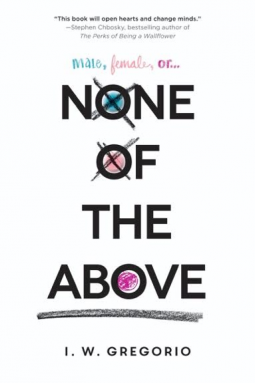
None of the Above is a powerful and compelling YA novel about a girl who discovers she is intersex aged eighteen. Kristin is a hurdler with a college scholarship and a popular boyfriend who finds out that her chromosomes aren’t what she assumed. She has to deal with her identity in the wake of this discovery and then when the whole school finds out she is intersex. The novel is an uplifting story about identity, learning who you and others are, and finding out who is really there for you.

Gregorio has written a novel that will make many people think, with many characters taking similar journeys of learning to understand different people and how some things—like gender—are far more complex than some people may imagine. Most of this is through the experiences of Kristin and through her and other people learning about being intersex, but there are also moments of discussion about things like homophobia and transphobia which focus on characters learning to be better towards others and to set aside assumptions and prejudices. Kristin herself is likable and interesting, somebody who isn’t even sure how to begin dealing with her own identity and her existence in relation to other people. The teenage characters are pretty typical of a YA novel, with various interests and dreams relating to school and college, which is important in a novel that tries to show how crucial acceptance is in a normal, everyday context.

None of the Above is an important book, taking an identity issue and makes it part of a YA narrative that is similar to many teenagers—dealing with who you are alongside possible mental health issues and life drama. It is similar to books like If I Was Your Girl, particularly in showing both the great and terrible sides to high schoolers and their ability to accept or ostracize.

I’ll Eat When I’m Dead by Barbara Bourland

Death, drugs, and betrayal in the fashion world: I’ll Eat When I’m Dead by Barbara Bourland

image

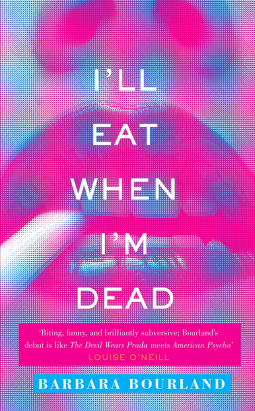
I’ll Eat When I’m Dead is a tense and exhilarating satire of the fashion world with a mysterious death at its heart. When Hillary, a top editor from RAGE Fashion Book, is found dead in the office, it seems like she starved, though her friend Cat thinks there’s more to the story. She starts doing her own detective work based on a mysterious bottle found in a bag of Hillary’s and soon she is drawn into a world of drugs, lies, and danger, all whilst dealing with the glaring public eye on social media.

In content, Bourland’s novel is Bret Easton Ellis and Jay McInerney for the digital age, where staying at the top requires hard work, luck, and sometimes killer instincts. In style it is far more straightforward and less pretentious than either, satiric and full of detail but still tensely written. The characters often seem to be teetering on the edge, fuelling themselves on whatever works to get them through the cutthroat world of the fashion magazine business in an age where digital media is key and paying people to wear brands on ‘Photogram’ – a transparent stand-in – is more effective than a full page ad. This environment is vividly drawn and brutal, a female-dominated version of the world of novels like American Psycho, and it forms the crucial backdrop for the fairly simple mystery death narrative.

The real force of the novel is Bourland’s satire of the industry and of other elements of the digital age. Offhand comments about dieting and image make for dark and at times horrific moments of self-awareness, summed up in the novel’s title. I’ll Eat When I’m Dead is the female-led modern version of 80s and 90s alternative American satirical fiction, exposing darkness in an industry full of drugs, sex, and battles for the top.