The Destroyers by Christopher Bollen

Privilege falling part on a Greek island: The Destroyers by Christopher Bollen
image

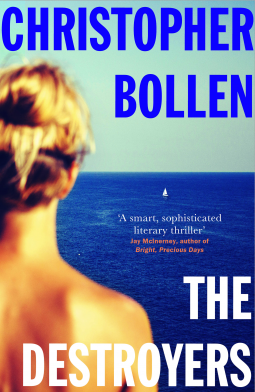
The Destroyers is a tense and ominous novel about childhood friendship and about the lengths people go to protect their power and assets. Ian Bledsoe flees the death of his disliked father to the Greek island retreat of his old schoolfriend, Charlie, whose life seems untroubled by worry or money troubles, the opposite of Ian’s own. The situation on Patmos is far from idyllic, however, with social tensions and shady dealings that start coming out of the woodwork just as Ian thinks he might have found a refuge. This literary thriller becomes a complicated web of priorities as Ian tries to work out just what is going on which Charlie.

Bollen’s writing style is full of witty observations and the narrative becomes gripping as the strands really start to take off, all held together from the perspective of Ian. He is a classic friend figure, a fellow rich schoolfriend of Charlie’s who is now saddled with a lack of inheritance and an inferiority complex about life. The importance of Ian and Charlie’s childhood game Destroyers adds a vivid touch, a thread of danger running from the start until the imagined threat starts to appear real. The novel shows the modern world as a place divided and tense, with the refugee crisis, the collapse of the Greek economy, and the thread of extremist violence all forming the backdrop of the story. At times this seems a little irrelevant – Ian’s time in Panama is shown in perhaps too much detail – but what Bollen creates is a thriller about privilege and power that focuses more on characters and on the society that made them who they are.

Comparisons to Tartt’s The Goldfinch are easily made, though Ian does not feel similar to her protagonist and Bollen’s style isn’t as distinctive. However, the tense world evoked – one in which modern threats recreate old problems – is similar and the complicated formation of Ian and Charlie’s now-rekindled friendship feels similar to her work. The Destroyers is for anyone looking for a modern novel that looks deep at self-interest and self-presentation amongst a privileged world whilst also keeping up a tense, thriller narrative.
Crime in all shapes and sizes

Working in a library, I see an awful lot of crime fiction. It is very popular in its various guises, from Agatha Christie to the action thriller kind where any investigation is mired in violence, but has never been something I read much of, excepting the odd mystery narrative. However, it doesn’t take much thinking for me to realise I read a lot of books with crime in them, even if they are not specifically crime fiction in some recognisable genre way. I’ve gathered up a few of my favourites for other people who either like stories with high stakes or who read crime and would like some other recommendations of something to read.

  • A Brief History of Seven Killings by Marlon James – This is how to turn a crime story into something else, something bigger. James’ Man Booker Prize winning novel focuses on the attempted assassination of Bob Marley in the 1970s and how the events affect a range of characters mixed up in political conspiracy, rivalry, drugs, and music.
  • American Psycho by Bret Easton Ellis – Quite famously about crime, but despite its infamy, it is still worth reading as a masterful and terrifying satire of 90s yuppie culture that will change the way you think about Huey Lewis and the News. Plus the way it interlinks with Easton Ellis’ other works (and how they link to Tartt’s The Secret History) is very satisfying as a reader who likes easter egg bonus content.
  • The Alchemist by Ben Jonson – An out-there choice, I know, but Jonson’s play about tricksters conning everyone in ridiculous ways is in some ways a great story of opportunity and comeuppance akin to modern gangster novels.
  • Skagboys by Irvine Welsh – I know it seems ‘edgy’ to pick the prequel to Trainspotting, but I want to emphasise how worth reading Skagboys is, both a dark and funny look at how the characters became the unforgettable personas from Trainspotting and a comment on the AIDS crisis in Scotland in the 80s. All three books about the characters are full of plenty of crime that isn’t just the prolific drug dealing and possession.
  • Loot by Joe Orton – Orton’s black comedy about two thieves trying to hide their loot around the dead body of one of their mothers is a classic example of how crime can be hilarious and also deeply twisted.
  • Caleb Williams by William Godwin – I needed at least one classic novel and Godwin’s story of revelation and persecution fits my criteria nicely, though the likelihood of convincing anyone to read it might be low. Written in the 1790s, it is about a man who finds out his employer’s secret and ends up on the run from the authorities. One to read if you like classic injustice, though the ending may surprise.

The Windfall by Diksha Basu

Comedy of wealth: The Windfall by Diksha Basu

image

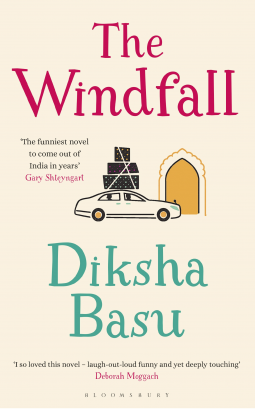
The Windfall is a funny and often sweet novel set in Delhi and America about money, social pressure, and what really makes someone happy. Anil Jha has made his fortune selling his website to an American start-up and he and his wife Bindu are moving to a more expensive area of Delhi. From their small flat where the neighbours are at close quarters to their new bungalow with its own gate, it is a big jump, especially when their new neighbours are so engrained in the world of money and privilege. Mr Jha finds himself unable to do anything but compete with these neighbours in increasingly ridiculous ways, and all the while he and his wife worry about their son Rupak, who is at college in America and not doing as well as they believe.

Basu’s novel is a classic comedy of manners, with the excesses of the rich mocked whilst gently poking fun at those who attempt to imitate it. Mr Jha’s obsession with appearing to fit in with and one-up the rich people he can now compete with is both ridiculous and endearing, with the narrative never quite laughing at him too much. Mrs Jha is the novel’s heart and possibly its best character, a woman who is uncertain about their move and about the American world her beloved son now lives in, but who ultimately wants the best for her husband and son, as well as supporting her widowed friend Reema as she tries to give her life a fresh start. It is the kind of comedy that revolves around the characters and their idiosyncrasies as it depicts the ridiculousness of wealth and the way that cultures blend and change in the modern world.

This is a comic novel not to be missed, a book with endearing and amusingly relatable characters that pokes light fun at money and rivalry whilst showing what it might be that actually makes people happy. It is a classic comedy of manners with a modern, globalised edge.

The Supremes Sing The Happy Heartache Blues by Edward Kelsey Moore

Lifelong blues: The Supremes Sing The Happy Heartache Blues by Edward Kelsey Moore

image

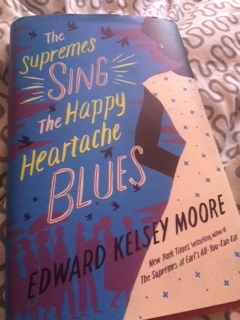
The Supremes Sing The Happy Heartache Blues is an uplifting and musical novel about a community in Plainview, Indiana, and how the arrival of an old blues singer to perform at an unexpected wedding sets off a range of consequences for those in the area. The Supremes are a group of old friends, Clarice, Barbara Jean, and Odette, who have lived in Plainview all their lives and are still dealing with issues in the past and present when aging blues guitarist El Walker ends up staying in town longer than expected. The novel follows the varied cast of characters as they deal with old bitterness, new opportunity, and local fiery spirited individuals.

The combination of personal drama in the lives of the three women and the turbulent past of Walker makes for a narrative with plenty of excitement and a few twists and turns. The characters are vibrant and individually drawn, with the three friends in particular given interesting personalities that are separate from their various husbands, children, and grandchildren. The novel is a follow-up to Moore’s previous book The Supremes At Earl’s All-You-Can-Eat, but there is no requirement to have read that one to enjoy his new work, a book which celebrates the varied lives of three older women, one even older blues guitarist, and a wealth of supporting characters. Despite the large cast, it isn’t difficult to quickly get acquainted with who is who, and Moore moves between first and third person narration without confusion, leading the reader into the centre of events.

The novel is ideal for readers who enjoy vivid characters learning to deal with their lives in the past and present, with a background of music and small town gossip and past scandal. It is a light and enjoyable read, with a happy tone and characters who aren’t afraid to be themselves.

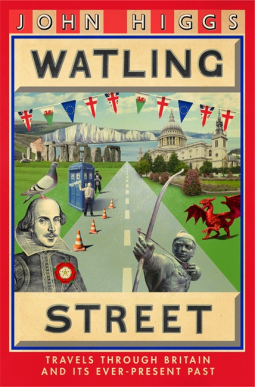
Watling Street by John Higgs

History and anecdote along a Roman road: Watling Street: Travels Through Britain and its Ever-Present Past by John Higgs

image

Watling Street is a charming and readable history book that combines British history, popular culture, and observations on modern society, all centred around the ancient road from Dover to Anglesey. Chapters follow the road up along the A2, the A5, and the M6 toll to pinpoint specific locations and match them with historical fact and anecdote. Higgs links in his own travels on and around Watling Street, from a family trip to Bletchley Park to stories about his childhood. What results is an eclectic book that blends older and modern history, references pop culture from classic literature to recent music, and remarks upon the state of the nation in the post-EU referendum time.

The introduction about Milton Keynes will immediately draw in anyone who has ever visited or lived in that infamously grid-shaped concrete hub. Indeed, the book’s particular audience is likely to be anyone who lives or regularly visits places along the road, as there is a certain excitement on finding familiar locations and their history told in Higgs’ warm and interesting style. Some of the historical stories and figures will probably be well-known to many readers, but the way that Higgs connects these with physical location and with modern references and ideals adds a different twist. He explores and questions ideas and definitions of Britain, turning what could sound from its summary like an uncomfortably nationalistic book into one that priorities the variation in the country and wonders how Brexit will affect visions of Britain like Higgs’ own.

Watling Street is part popular history and part light-hearted state of the nation book, with personal anecdotes from Alan Moore sitting alongside information on how Romans built their roads.

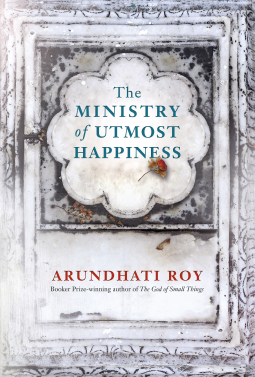
The Ministry of Utmost Happiness by Arundhati Roy

The Ministry of Utmost Happiness by Arundhati Roy

image

The Ministry of Utmost Happiness is the eagerly-awaited follow up to The God of Small Things, a moving novel that spans decades and goes across the Indian subcontinent to show a cast of interconnected characters and how their lives are shaped by conflict, joy, and circumstance. Depicting the stories of a variety of characters, it does not have a main narrative as much as it puts pieces of different individuals together to form a woven novel showing a modern world and its battles.

The storytelling is expectedly vivid and gives detail to different episodes such as the experiences of a transgender woman, Anjum, who finds community and makes her home in a graveyard, and the complex relationships and life of Tilo, who has been loved by fighters and intelligence officers. These female characters in particular are difficult to forget, with stories that combine family, religious and ideological conflict, and love. Roy’s style suits this storytelling, leading the reader between different narratives easily and making the novel easy to follow and join up the pieces of. From the bustle of Delhi to the countryside of Kashmir, Roy’s descriptions are intricate and show a conflicted and modern world, a world with ancient conflicts in close proximity to branches of Nando’s.

The novel is unlikely to disappoint Roy’s fans who’ve been waiting for her next book. It is a fantastic story full of vivid characters whose struggles are varied and real.

Quick book picks for June

Summer is finally here and, more importantly, a whole load of fantastic books are coming out this month. I was spoilt for choice as a number of these are some of the best of 2017 thus far. As ever, I’ve included short descriptions and links to longer reviews in the titles.

  • All The Good Things by Clare Fisher – One of my books of the year so far, this story of a young woman in prison who is trying to remember the good things that have happened in her life alongside the bad is a powerful modern tale of the system failing somebody and a moving assertion that good things can be found anywhere.
  • Conversations With Friends by Sally Rooney – A biting and clever novel about a student in Dublin who performs poetry with her best friend and ex-girlfriend, and then the two meet a married couple and get entwined in their life. Witty look at being a twentysomething in great prose.
  • Phone by Will Self – The anarchic, not-for-everyone new book by Will Self, which follows the spy life and long-running affair with a high-ranking soldier of Jonathan De’Ath, aka The Butcher. It mocks espionage, plays around with language and acronyms, and is very darkly satiric.
  • Juniper Lemon’s Happiness Index by Julie Israel – An emotional YA novel that focuses on grief, positivity, and friendship, whilst being uplifting yet not cloying.
  • A History of Running Away by Paula McGrath – The novel tells the simultaneous stories of a young girl in 80s Ireland who wants to be a boxer, a gynaecologist in 2012 dealing with work pressures and her ill mother, and a girl in Maryland running away after the death of her mother. A fantastic read that depicts finding home and knowing who you are.
  • No Good Deed by John Niven (review to come) – Another darkly comic story, this time about a successful writer who helps out an old friend who is down on his luck—and then finds out the limits of his good deeds. It shows the ups and downs of friendship whilst mocking the upper-middle-classes and their views and lifestyles.

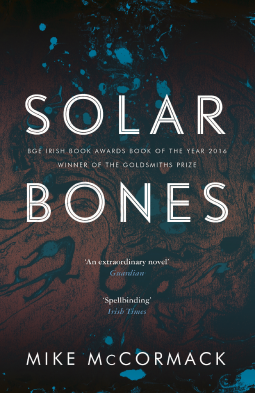
Solar Bones by Mike  McCormack

Life in a sentence: Solar Bones by Mike McCormack

image

Solar Bones is a distinctive novel that tells the highs and lows of a man’s life through his immediate thoughts and memories. Marcus Conway is an engineer with a wife and two grown up children, with his thoughts clouded with current work projects and interfering projects, his wife’s sudden illness from a tainted water supply, and the lives of his children, one a local artist trying out a new medium and the other across the globe in Australia. The novel follows him musing over all of these and more, considering the structures of civil features, marriage, and stable life in one single sentence.

McCormack’s stylistic touches—a single sentence novel, broken up by commas and line breaks—makes the book feel strangely natural, giving Marcus’ thoughts a flowing quality that might be expected from stream of consciousness writing, but also some of the feel of poetry. The detail, especially depictions of specific moments like when his wife is very ill, is vivid and real, with the ability to make the reader feel a little queasy, for example. The nature of the novel means it is focused upon the character, his thoughts, and his life rather than a particular main narrative, though the book does have a decisive ending.

Solar Bones is far more readable than the ‘single sentence novel’ selling point makes it sound, but also it is this selling point that gives it a distinctive style, a return to the modernist stream of consciousness and a way of making prose and poetry less separate. It makes for a tender look at a life, unmissable for literary fiction fans.

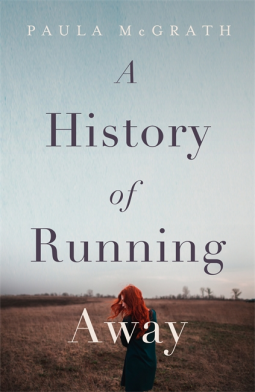
A History of Running Away by Paula McGrath

Running away and finding home: A History of Running Away by Paula McGrath

image

A History of Running Away is a striking and unforgettable novel with three different narratives that weave their way to show how running away can help you find homes you never knew you had. The most substantial of these is Jasmine’s attempts in the 1980s to escape her small town Irish home for a big city, which does not go as planned. The other two are set in 2012 and follow a gynaecologist dealing with the pressures of working in an Irish hospital and worrying about her ill mother and a girl in Maryland running away after the death of her mother. These stories unfold in a gripping and honest way, showing how finding out who you are can be a difficult process.

McGrath’s writing makes for a tense read. The book’s structure, cutting between the narratives but allowing for a large amount of Jasmine’s to run through the centre of the book, draws comparisons between the acts of running away whilst allowing the characters’ other connections to come through. The novel’s backdrop is the political and social events of the worlds in which the characters live, from Irish abortion laws in the present day to racism and gender restrictions in 1980s Dublin. It is a book that doesn’t shy away from the issues that the characters face, but also doesn’t define them by those issues.

Jasmine’s narrative is the most engaging, as her story is followed through her repeated running away and attempts to work out what she wants to do and whether it is even possible to achieve those goals. Her friendship with Nigerian medical student George as he teaches her to box is a particular highlight, showing how an unlikely acquaintance can have a huge influence.

A History of Running Away is a fantastic read for anybody who enjoys well-written, character-centred books, particularly those which span time periods to show common themes and social issues, and those which focus upon a variety of women.

All the men and women merely players: books about theatres

I had a request on Twitter for books about theatres, and seeing as that is quite a wide topic, I have split some options into fiction featuring theatres in an interesting way and non-fiction talking about theatres (mostly Shakespeare, though nothing I actually read for my Shakespeare MA funnily enough).

Fiction

  • Miss Treadway and the Field of Stars by Miranda Emmerson – This isn’t just about theatres, but it is a novel with its heart in the 1960s London theatre scene. It focuses on an actress who goes missing and how her dresser attempts to track down her whereabouts, plus has a big focus on social injustice of the time.
  • Tipping the Velvet by Sarah Waters – Waters’ novel isn’t famed just for being about the theatre, but its representation of Victorian melodrama, stage success, and gender on stage are fantastic, and it’s a very enjoyable read.
  • Evelina by Fanny Burney – Theatres (and pleasure gardens) play an important part in this fun eighteenth-century novel about an innocent girl who ends up finding out a lot about life, good and bad. There are a lot of extended descriptions of her going to the theatre and everybody’s reactions and social etiquette.

Non-fiction

  • The Genius of Jane Austen by Paula Byrne – This is a book about Jane Austen’s interest in the theatre which gives a lot of detail about the late eighteenth and early nineteenth century stage and also has a fantastic final chapter about less traditional Hollywood adaptations of Austen.
  • Hamlet: Globe to Globe by Dominic Dromgoole – This is the former artistic director of the Globe theatre’s account of their taking Hamlet to (almost) every country in the world, which gives an insight into the endeavour whilst also admitting that theatre both can and can’t change the world.
  • Shakespeare And Co by Stanley Wells – A very readable account of the other playwrights around at the same time as Shakespeare, which gives a good idea of the early modern theatre and admits that it was a collaborative affair.
  • The English Shakespeare Company by Michael Bogdanov and Michael Pennington – Apologies for all the Shakespeare, but I really love this book, which is written by the creators of the English Shakespeare Company about their tour of the history plays in the 1980s, with funding struggles, life issues, and attempts to make the history plays subversive and relevant.