Spite List: The Worst Books I Read in 2017

After claiming you should know what you hate, I really ought to practice it, and what better way than by moaning about things I read this year. If I’m being honest, I’ve actually left a few books off this list because I’ve already given them harsh reviews and I feel they were enough respectively. I’d say ‘no particular order’, but that’s untrue, Underworld is at the top because I disliked reading it that much.

  • Underworld by Don DeLillo – It’s too long. It’s mostly about men talking about baseball. I’m fed up of big American novels unless they’re doing something innovative. Did I mention I don’t know anything about baseball? I found the experience like talking to a very boring man who wouldn’t let me escape.
  • The Minor Outsider by Ted McDermott – If Underworld is being cornered by a man trying to tell you that politics is all a sports metaphor for many hours, The Minor Outsider was the guy who thinks his writing is better than yours but actually isn’t. Basically the main character is boring and unlikeable and I found the writing mediocre at best.
  • Higher Ed by Tessa McWatt – I didn’t so much dislike this book as I just found it boring. I picked it up because I wanted more London-set novels after having stopped living there, but it just…had no spark.
  • Prague Nights by Benjamin Black – Another disappointing boring book that I picked up because it was about an interesting city. I should learn. But I did read some quite fun books set in Berlin this year so I won’t give up all hope.
  • Leopard at the Door by Jennifer McVeigh – The main problem with this book was that it was a ‘white people in Africa’ story. Also it was slow.
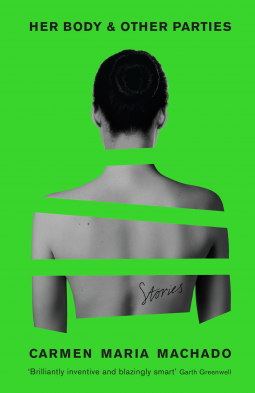
Her Body & Other Parties by Carmen Maria Machado

Her Body And Other Parties is a book of incisive short stories that combine bodies, sex and relationships, horror, science fiction, and pressing issues in imaginative ways. The main characters are mostly women, living in uncanny worlds that can be apocalyptic, magical, and/or unnervingly almost real. In one, the truth about a dress shop and the women slowly going incorporeal drives an employee away from the store. In another, the ribbon around a woman’s neck becomes a mysterious focus in a story that highlights the act of telling stories and of the sounds of telling them aloud. Others play with structure—an inventory of sex that depicts a virus epidemic across the globe, a story told using Law & Order: SVU episode titles—or with common issues like dieting and motherhood, in ways that rethink how these things can be considered.

To describe the stories doesn’t quite do justice to the freshness and imagination of the collection, not only in the ideas and the blending of magical realism, sci-fi, horror, and the reality of life, but in the way they are written. The writing style is distinctive, creating atmosphere and digging deep into the female protagonists. These women have varied relationships with their bodies, different dynamics with their male and/or female lovers, assorted pasts and futures, but what unites them all is the way their stories are both real and surreal.

Some of the stories will likely have a greater effective on different people—as someone who actually thought the acronym was SUV, the Law & Order structured one passed me by quite massively—but this is an important collection. The stories do exciting things with ideas and writing, and the use of the uncanny and the monstrous to highlight issues particularly around women’s bodies and sexualities is creative and thought provoking.

Best non-2017 books I read in 2017

I know it’s ‘end of year lists’ season because I have enough of a Buzzfeed habit to now be seeing the same tweets I’ve seen all year in new lists that use the year in their title. And whilst there are a lot of reading days left of 2017, I realised that to get in more than one list of books from this year, I’d have to start now.

First up is the nebulous category ‘books not published in 2017 that I read for the first time in 2017’. I’m going for things not published new in hardback or paperback in the UK in 2017 as far as I know. Seeing as I spent so much of 2017 reviewing upcoming books or reading very new ones, this list may seem a bit random.

  • Romantic Outlaws: The Extraordinary Lives of Mary Wollstonecraft and Mary Shelley by Charlotte Gordon – This dual biography moves between their lives a chapter at a time, not only drawing parallels but giving a real sense of the mother and daughter who didn’t get to meet. It is packed full of detail and is worth it for not feeling overwhelmed by the author’s judgements about people who turn up in their lives, unlike many biographies of Wollstonecraft or Shelley.
  • If I Was Your Girl by Meredith Russo – A powerful and sweet young adult novel about being the new girl at school, falling in love, and being transgender. It really focuses on finding friends who support you as well as navigating teenage life and rituals whilst dealing with your own and your friends’ secrets.
  • Room by Emma Donoghue – Obviously I’m very behind having only read Room this year, Donoghue’s incredible novel from the point of view of a five year old imprisoned in a single room with his Ma. The way that the style captures the character and his worldview makes it a crucial read.
  • Byrne by Anthony Burgess – I’m including Byrne almost solely because I’m annoyed Burgess wrote it, stopping me writing a story that has a structure that’s a Byron joke: a poem in ottava rima that slips into Spenserian stanzas and back again. You might have to specifically care about that to read it (or just be a huge Burgess fan) as it’s the story of an ageing Don Juan-esque composer written in verse.
  • Giovanni’s Room by James Baldwin – I read most of Giovanni’s Room on my birthday (1st Jan) in the bath, so it only just counts. A classic short love story about two men in 1950s Paris. If you haven’t read it, do.
  • The People In The Trees by Hanya Yanagihara – I wasn’t sure whether to include this one because A Little Life is so much better (but I read that at the end of last year), but I think her earlier novel is worth a read too. It’s about a young doctor who goes on an expedition to find a lost tribe, gains fame from what he discovers there, and things don’t go well from there. If you’ve read A Little Life, you won’t be surprised it can be horrible at times, but very interesting as well.

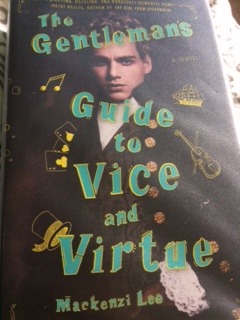
The Gentleman’s Guide to Vice and Virtue by Mackenzi Lee

The eighteenth century, redux: The Gentleman’s Guide to Vice and Virtue by Mackenzi Lee

If someone had asked me ‘would you like a book about a rebellious eighteen-year-old bisexual aristocrat in the eighteen century?’ I would have obviously said yes. Add in the fact that it’s about going on a Grand Tour, full of adventure novel tropes, and is completely ridiculous in the way fun modern historical fiction should be and well. That’s The Gentleman’s Guide to Vice and Virtue.

The book is aimed at older young adult readers, though I think it’s real target audience is anyone who enjoys trash eighteenth century (and/or is a fan of Byron). It follows Henry “Monty” Montague, who has been kicked out of Eton and faces his tyrannical father’s disapproval for his lifestyle of drinking, gambling, and sleeping with various women and men. He has been allowed to go on the stereotypical Grand Tour of Europe alongside his best friend Percy, his little sister Felicity, and a boring guardian, as a final yearlong break before he must start learning how to take over the family estate. However, when one bad decision too far on Monty’s part puts them in trouble, soon the cultured Grand Tour turns into an adventure across Europe full of highwaymen, pirates, and alchemy (plus Monty’s inconvenient massive thing for his best friend).

I may be part of its specific audience, but this is how historical fiction should be done. Based in historical fact and with a few actual figures thrown in, but for the most part using the spirit of the period to do something adventurous (literally) and enjoyable. The tropes are used purposefully (and anyone whose read eighteenth century stuff like Sterne’s A Sentimental Journey will know things written at the time were full of ridiculous tropes too) and add to the charm of the fast-paced and witty plot. The true highlight is the characters: the scandalous Monty who needs to learn to think about other people whilst escaping his father, his younger sister Felicity who has better plans for her life than the finishing school she’s meant to be going to, and the likeable Percy, Monty’s companion in gambling and drinking who is hiding a secret or two.

This is not your accurate historical fiction. This is what happens when history is treated with sufficient irreverence and as a vehicle for adventure, romance, and general hilarity, whilst touching on a few major issues that all still have relevance now in some way. The style is modern with a hint of eighteenth century, and it works for the story. Some people will be scandalised by it (probably), but this is a fun and fresh novel that gives a happy ending to a scenario plenty would think should have no hope of one.

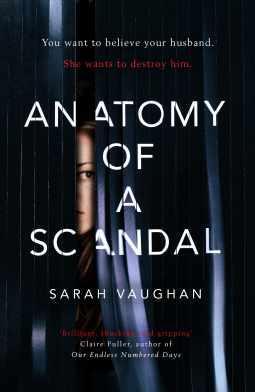
Anatomy of a Scandal by Sarah Vaughan

Increasingly relevant: Anatomy of a Scandal by Sarah Vaughan

Anatomy of a Scandal is a tense novel about power, privilege, and knowing the secrets from someone’s past. James is a politician on the rise, a family man with a long-standing connection to the PM. His wife Sophie has known him since they were both at Oxford and thinks she knows all the skeletons in his closet. However, when he is accused of a crime that cuts right into Sophie’s vision of her husband, she must consider whether she will continue to stand by him. And Kate, the barrister prosecuting James, has a past of her own, and is certain James is guilty, willing to put her all into getting him convicted.

Vaughan weaves together these main characters into a drama that jumps between the courtroom, the modern political world, and early 90s Oxford. It has elements of a psychological or domestic thriller, complete with questioning of the truth and intense legal proceedings, but Anatomy of a Scandal is more than that, an anatomy of individual viewpoints surrounding a scandal that covers political coverups, drinking societies and class difference at Oxford, and difficulties of rape accusations and trials. The epigraph is from Mantel’s Bring Up The Bodies and the way that Mantel combines the political and the personal whilst talking about the truth makes it a good comparison, despite the vast difference in subject matter. The novel is not solely psychological, or just a courtroom drama, but one that shows personal emotion within larger power structures.

The narrative is told from the points of view of major characters, with Vaughan withholding information or structuring it in a way that builds tension and gives the reader a sense of being caught in the middle of the secrets as they unfold. Her Oxford is very recognisable to anyone who has been and the whole novel is detailed, giving enough information to allow the reader to work out elements, but also keep guessing about what really happened or will happen. Though James and Sophie’s marriage is a real focus, it is Kate who stands out as someone caught between past and present, though at first she appears to just be a simple barrister character who will form the courtroom threat.

Anatomy of a Scandal is the kind of book that will appeal to both fans of thrillers and those who prefer something a bit more general, combining character relationships and backstory with tense prosecution. The focus on a privileged world—from the arcane rituals of both the court and Oxford to the money and power of politicians—can be fascinating and adds to questions of who should really be believed. It has plenty of gripping drama and would clearly make a great TV adaptation in the future.

So you want to give impressively up to date book presents?

I vowed not to do another gift guide like everyone else, but then I changed my mind. I decided to lend a helping hand to people who want to buy books as gifts, but also want to seem up to date and ‘with it’ by giving books that came out this year (and also hoping that the recipient is less up to date and hasn’t read these recent books yet).

This is not my top books of 2017 list. For starters, there’s still a month of 2017 to go, so I refuse to make any judgements until then. Instead, this is just some suggestions for who might like different books that came out this year.

  • For the beleaguered twentysomething: One of the vague sub- sub-genres I’ve noticed this year is the ‘twentysomething cannot cope with life, retreats to countryside or makes a bad life choice to reflect on how shit the world is’. Because art doesn’t imitate life at all. There’s A Line Made By Walking by Sara Baume, which is exactly that description. Sally Rooney’s distinctive Conversations With Friends stays in the city, but very much captures this spirit. English Animals is about culture shock, love, and hipster taxidermy. And straying further away, I’ll Eat When I’m Dead by Barbara Bourland is the American Psycho for the social media world and shows the toxicity of fashion in these conditions.
  • For the person who likes to dip into things: What do you buy the person who has limited time to sit down with a huge tome? Sure, you could go for a novelty comedy book that requires no memory of previous plots, or maybe something more original. For short stories, Chris McQueer’s Hings offers the surreal, the drug-fuelled, and the downright weird. From the same publisher (404 Ink) you can offer intersectional essays about being a woman in the twenty first century with Nasty Women. Bone by Yrsa Daley-Ward is modern and concise poetry that cuts deep and can be enjoyed by adults and teenagers.
  • For the character-focused reader: If you’re buying for someone who likes engrossing and quirky characters, there’s plenty of options from the past year. All The Good Things by Clare Fisher tells the story of a young woman in prison and how she ended up there. Eleanor Oliphant Is Completely Fine by Gail Honeyman offers a surprisingly uplifting story of coping with trauma whilst seeing the world differently The Book of Luce by L.R. Fredericks is a weird tale of a gender defying rock star and the obsessive fans that surround them.
  • For the ‘dark and tense, but not actually crime’ fans: It’s a specific-sounding genre, I know, but there’s so many people who want dark and dramatic literary fiction. Offer them My Absolute Darling by Gabriel Tallent, about a girl called Turtle who has to fight to survive, or The Roanoke Girls by Amy Engel, about a family with twisted secrets (and featuring an epigraph from Lolita, to suggest the tone). For the Shakespeare or The Secret History fans, there’s If We Were Villains by M. L. Rio, about a group of actors who fall apart after one of them dies.
  • For the YA fans: Note that I didn’t say ‘for the teenagers’, because not only could teenagers enjoy other books on this list, but anyone can enjoy young adult books. Girlhood by Cat Clarke shows contemporary older teenage girls at a remote boarding school in Scotland and what happens when a new girl turns up who seems to be just like the protagonist. Stephanie Perkins’ There’s Someone Inside Your House is like tense modern Point Horror with a complicated main character, and One Of Us Is Lying by Karen McManus takes the concept of The Breakfast Club and spins it on its head in a story about death and secrets. For something a little lighter, there’s The Upside of Unrequited by Becky Albertalli, about a girl who thinks she’s unlikeable and her sweet family.

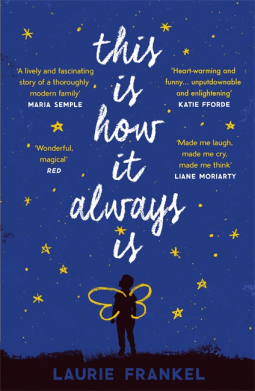
This Is How It Always Is by Laurie Frankel

This Is How It Always Is is a novel about family, secrets, fairy tales, and gender. Rosie and Penn are busy parents—Rosie a doctor and Penn a writer—with five children, all boys. When it turns out their youngest wants to grow up to be a girl, Rosie and Penn do what they can to be supportive parents, but that turns out to involve making a big change for the entire family and keeping a secret that nobody sees lasting forever.

The book is focused particularly on being a parent of a transgender child, and particularly a set of parents trying to be as encouraging and accepting of all of their children as possible. The whole family is very important to the novel, as Frankel gives all of them—not only the parents and Poppy, the youngest—individual personalities and lives, which are all tangled together as families are. The narrative is split into separate parts, broadly different phases in the family’s life across five years, and the writing style is informal, meaning it is quite easy to read much of the book in one sitting.

Frankel says in the concluding Author’s Note that the book is not based on her own experiences with a trans daughter, but is a made up story that has sprinklings of her own life as well as imagination and research. Indeed, this idea of storytelling runs throughout the book, through Penn as a writer using stories to give morals to his children and through the stories that everyone tells to make situations seem less confusing.

It is a heartwarming and sad book that ultimately tries to give hope, using a happy ending and a running theme of fairy tales and telling stories to make sense of life. I’ve seen people claim the happiness is unrealistic and the parents “too” accepting, but that is why this book is an important one as well as an enjoyable read: if a trans child’s fictional happiness is seen as unrealistic, it shows the one, there’s maybe something wrong with reality, and two, then books are needed that show happiness and a future for trans people of all ages, and This Is How It Always Is is one of these books.

The Underground Railroad by Colson Whitehead

The Underground Railroad is a book deserving of its hype. It is a sharp, clever novel that gives the Underground Railroad of US history—a network of routes and safe houses used by slaves to escape into free states—a physical form as a steam-powered escape that must stay secret. Cora is a slave on a plantation in Georgia, ostracised due to her mother’s disappearance from the plantation when Cora was ten. When a new slave, Caesar, tells Cora about the hope of escape on the Underground Railroad, her journey begins to find safety along the lines of the railroad, whilst being pursued by the slave catcher Ridgeway.

Whitehead’s conceit is simple, yet the transformation of the metaphorical railroad into a physical one feels momentous. It brings a sense of momentum and also gets across the idea of something beneath the ground, beneath both Southern states and those in the North, that is alive and working to help black people escape. Cora’s story is a compelling narrative of a desperation to keep escaping, even when those around her are not so lucky. By combining a character’s personal battle with a sense of larger scale—not only through the railroad, but also by describing other characters’ lives and looking into the future at times—the novel is both an engrossing and brutal read and a sharp look at not only slavery but race in America across the centuries. It is clear that many of Whitehead’s concise sentences are true now as they are to the time of the novel.

The Underground Railroad is an impressive combination of style, structure, narrative, and concept to produce a novel about slavery that is both devastating and fresh. Whitehead’s writing style, clever and direct,  gives the book an immediacy that feels vital to reading it and thinking about the past, present, and future.

Order in the bookcase

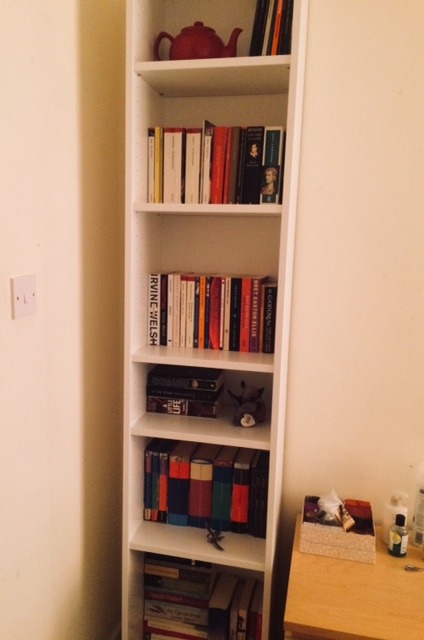
This blog has been a little quiet for the past week as I was moving house and working. One part of this was building a bookcase. Only a thin one because I left the majority of my books with my parents, having learnt my lesson that when you know you’ll be moving again in a year/under a year, don’t take all of them with you (unless you’re planning, as I did one year, to build your bedside table out of books and a piece of wood). After two English graduates remembered how 3D space worked and marvelled at how wood and screws can come together, a bookcase existed. And then I had to organise it.

How you organise your books is controversial (though there’s a fairly uniting disdain for people who do it by colour). There’s alphabetical, the classic, but then do you split further into categories like fiction and non-fiction or form or genre? You can just sort by categories, maybe subdivide by topic. Time period works if you own a lot of  ‘classic’ literature. When you’re lacking in space, as I have been, the best option can be by priority, creating your own ‘high use’ material (this is the only way to make a book bedside table without needing to dismantle it all the time).

I work in a library so you think mine would be very organised. Actually, they’re not. The shelves are as follows, from the top: drama (and a teapot); poetry and two books about Byron; prose, mostly novels but also Wollstonecraft’s Vindication(s); a small thematic shelf that is solely The Secret History, A Little Life, and If We Were Villains (and a cuddly bat); the Harry Potter books plus DVDs, a copy of Quidditch Through The Ages that my friend delightfully graffiti’d in character, and a Buckbeak keyring; and finally, a misc shelf that is keeping the bookcase stable by containing the complete works of Shakespeare, The Goldfinch, The Stranger’s Child, a single hardback book, and a selection of things I didn’t think I’d be reading too soon, but I did want to have with me.

It’s a fluid system that needs to be able to integrate parts of my to-read shelf once they’re read (these books are currently on my desk urging to be chosen next). It is also based upon whim and could be totally changed in a few months (say, after Christmas and my birthday, the main book gaining times of the year handily only a week apart). I think my point is, organise your books how you want. You’re the person who has to find/look at them, after all. Though if you have a particularly notable system, do share it so we can all be outraged/inspired.

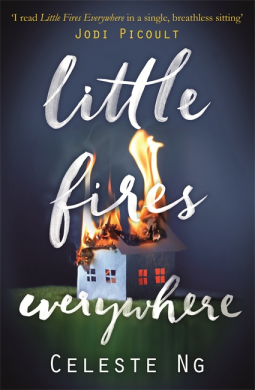
Little Fires Everywhere by Celeste Ng

Sparks and flames: Little Fires Everywhere by Celeste Ng

Little Fires Everywhere is an intricate and observant novel that shines a light on false perfection and the intricate way in which everyday things are interlinked. Shaker Heights is a carefully planned suburb of Cleveland, where everything has order and they pride themselves on being progressive. Elena Richardson embodies much of Shaker’s ideals, but when the Richardson house is found burnt down, the recent past must be unravelled to see how the arrival of the Richardson’s tenants, the artist Mia and her teenage daughter Pearl, affected the four Richardson children, their parents, and the whole community, showing how underneath things aren’t always quite as they seem.

The narrative structure is particularly impressive, with an omniscient narrator flashing back from the burnt house to tell the story from many perspectives in a way that foreshadows and hints at past events in a satisfying way. Key moments and details that will clearly cause a ‘little fire’ later on, be misunderstood or reinterpreted by other characters, are apparent to the reader, but also not overly signposted by the writing. Through this, the book has a great sense of connection and coincidence as the present and past come together in the relationship between the Richardsons and their new tenants and in the battle over the custody of a Chinese-American baby that grips Shaker Heights and puts Elena and Mia on different sides.

Little Fires Everywhere is a novel somehow both charming and tense, with the drama between the characters built upon tiny moments and the overall narrative one that doesn’t reveal surprises so much as fill in the gaps to show how interpretations can be different. The teenage characters are a highlight and this is the kind of adult novel that can also be enjoyed by older teenagers. This tangle of characters and detail is an impressive book with a very satisfying linking of structure and themes and a very apt title in multiple ways. The ‘little fires’ are what makes the novel blaze.