A Thousand Ships by Natalie Haynes

A Thousand Ships cover

A Thousand Ships is the Trojan War retold from the perspectives of a plethora of women, Trojan, Greek, and gods. It starts with Troy burning, and stretches out in a non-linear fashion to tell the story of the war, how it came to be, and what happened afterwards. Famous stories—Penelope and Odysseus, the Trojan women, Helen, Aphrodite and the golden apple—are told from different perspectives, and other characters given a fuller narrative (as Haynes outlines in the afterword). By the end, the story of the war has been told, but not as it usually is.

Female retellings of material from the Iliad and Odyssey have been prevalent recently, perhaps most notably Madeleine Miller’s Circe and Pat Barker’s The Silence of the Girls. Where A Thousand Ships differs is in its style and scope: this is a book that gives a huge range of female perspectives, and uses carefully chosen moving perspectives to weave the story together. For example, Cassandra is used to tell others’ stories, but her own death is from Clytemnestra’s view, and Penelope tells Odyssey’s story in the form of futile letters to her husband. Calliope, muse of epic poetry, is used to provide a sharp take on male-focused epic and the tendency to ignore the fights of the women. This multi-faceted approach is what has felt lacking from other retellings, and it also makes the book a surprisingly good way of get an overview not only of the content of the Iliad, but a host of other classical texts and stories that rely on the Trojan War in some way.

Another crucial aspect is its depiction of war itself, and the horrors of it. This is a book full of death, as the story requires, and there is sometimes a surprising amount of nuance, such as where Trojan characters accept that if the tables were turned, the Greeks would have been slaughtered and forced into slavery just the same. Calliope’s sections bring some overall commentary on war and also about writing one, even if it is mythical.

As A Thousand Ships unfolds, it becomes a compulsive read, waiting to see which characters get their story told and how the Trojan War will be woven together through these perspectives. Naturally, there’s plenty that has to be left out, glossed over, or changed, but this isn’t an academic exercise, but rather a complex novel that should sit along other modern retellings of these classical stories as a reminder there’s new ways to bring out these narratives.
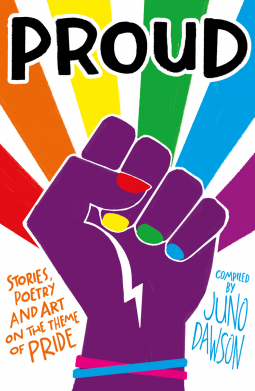
Proud (compiled by Juno Dawson)

Proud cover

Proud is an anthology of YA stories and poetry with accompanying art written by LGBTQ authors on the theme of ‘pride’. These cover a range of experiences, giving different insights into teenage life including learning to drive, coming out, escaping bad situations, dealing with anxiety, and finding ways to fight. People think about their opinions on marriage, find community in choirs and football teams, and get upstaged by some penguins.

The stories are often moving, funny, and powerful, taking some of the best elements of young adult fiction—the characters, voices, and relatability—and distilling them into short tales. The authors are a mixture of established YA writers and some lesser known ones, and the anthology provides a great way of finding new authors to read. Each story makes a great bitesize, affirming read, but it is difficult not to read it all at once. This is another YA anthology from Stripes Publishing that brings together thought-provoking fiction that shows the diversity of YA writing and will hopefully provide a lot of people with stories that reflect them and the people they know.

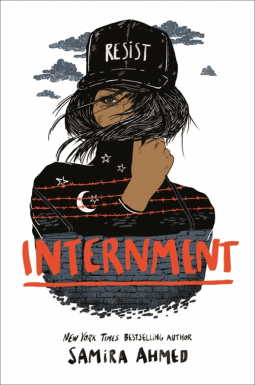
Internment by Samira Ahmed

Internment cover

Internment is a powerful young adult novel set in near-future America, in which a seventeen-year-old girl has to try and fight for revolution. Layla and her parents have been sent to the first internment camp for Muslim Americans, ripped away from their home and lives. There, Layla finds friends and allies as she fights to get contact with her boyfriend on the outside to share what is happening and to rebel against the camp’s Director and guards.

The real terror of Internment is how close it is to the present-day United States, with the narrative making it clear how few additional nudges are needed. In addition, there is a deep-running theme about complicity and about how not standing up to something can be the same as letting it happen. This is not only how non-Muslim people either allowed or actively voted for the laws and internment camp seen in the novel, but also how people can turn on those who rebel. Having the novel from Layla’s perspective shows the personal side to the horror of the camp—how they are imprisoned, watched, and controlled—and also her anger and how difficult it is to find ways to channel that anger into protests that will actually make a difference.

Internment is a novel that will make readers think, teenagers and adults alike. It is intense, but hopeful, and it shows how important solidarity and rebellion are. It seems like YA fiction is really a powerful voice in showing present realities and possible futures, particularly with regards to racism and Islamophobia.

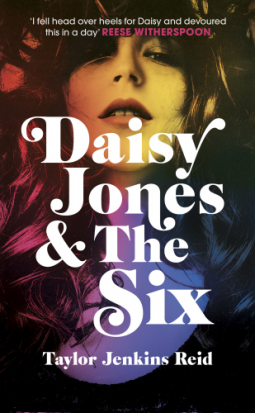
Daisy Jones and The Six by Taylor Jenkins Reid

Daisy Jones and The Six cover

Daisy Jones and The Six is the story of the rise and fall of a fictional 70s rock band, told in the style of an oral history music biography. Daisy Jones is a lost girl and a talented singer. The Six are a band fronted by newly sober Billy Dunne, who have found their sound but still need extra spark. When they’re brought together, they blaze bright, first with a track on which Daisy does guest vocals and then, when that song becomes a hit, a full album. During the course of this, however, it becomes apparent that the band are not going to keep it together and their many tensions are going to come to a head.

This is a music novel. From the oral history style to the lyrics in the back, it is clear that 70s music is infused throughout. In some ways, this makes the novel a little strange: at first, it can feel so much like a biography that it’s easy to forget the band are fictional. As the differences in the characters’ accounts of events and emotions become more clear, however, it becomes very obvious that this is a constructed narrative that is purposefully looking at how differently the characters viewed things. In particular, misunderstandings between Daisy and Billy whilst they are writing the album and beyond show how the oral history style really allows characters to clash overtly. As in the fictional band, often the other characters recede into the background in comparison to the two of them, which is also crucial to the way their comparable addictions are shown (indeed, for a book marketed as a fun 70s music romp, there is a lot about addiction in it, as might be expected, handled seriously).

Daisy Jones and The Six makes you wish the songs were real so you could hear the emotions described in the narrative. It is also surprisingly moving by the end, despite spending a lot of time doing quite typically rock biography things like describing details about the band getting together from everyone’s perspective. It is a hard book to categorise, but one for anyone interested in a book with a vivid sense of music and character.

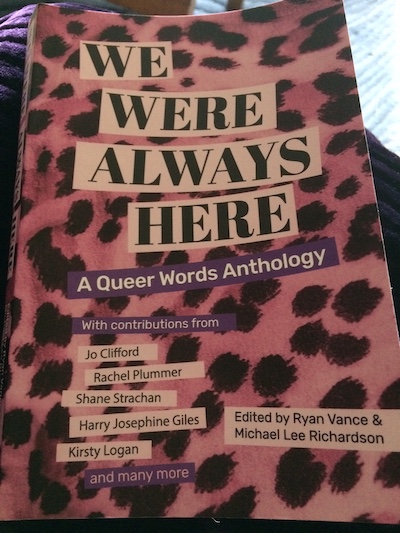
We Were Always Here edited by Ryan Vance & Michael Lee Richardson

We Were Always Here cover

We Were Always Here is an anthology of fiction and poetry showcasing Scottish LGBT+ writers across a range of genres and styles. Some pieces are historical or speculative, others look at modern life, love, and hints of the magical. As with many anthologies that contain a variety of styles across a common theme, there are certain pieces that will resonate with different people, and others that are less up someone’s street, and it’s a strength of the editing that the collection moves between different pieces so well, bringing different work together side by side. Some personal favourites were some of the contemporary-set stories looking at characters and their relationships (like Christina Neuwirth’s ‘Sequins’) and a poem about a punctuation error around Mary Shelley.

This anthology is a chance to discover new writers, think about different genres and styles, and get a quick hit of varied LGBT writing all at once. It is important that collections like this keep coming out (no pun intended) as they give a chance to read both familiar and unfamiliar authors together in an accessible format. And it’s always good to see another great book from 404 Ink.

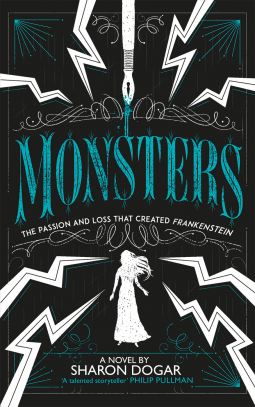
Monsters by Sharon Dogar

Monsters cover

Monsters is a young adult novel about the creation of Frankenstein, fictionalising the life of Mary Shelley around that time. In 1814, Mary Godwin meets Percy Bysshe Shelley at the behest of her father, writer William Godwin. Mary and Percy immediately are struck by one another, and bond over the writing of Mary’s mother, Mary Wollstonecraft, who died after giving birth to Mary. The young lovers run away, escaping societal and Godwin’s disapproval, but they have Jane, Mary’s stepsister, along with them. The tangle between the three of them is complicated, as they balance radical ideals with the realities of life.

I came to this novel with low expectations: it is difficult to do justice to historical fiction centred around iconic writers’ lives, especially the Romantics. Too many books try to simplify their personalities, but Monsters thankfully keeps them complex, giving perspectives from Mary and Jane (who later changes her name to Claire), as well as more fleeting glimpses into the thoughts of Mary’s sister Fanny, Percy, and Lord Byron. The downside of this is that the perspective can shift within chapters and sections, sometimes in a disorientating fashion, so you will suddenly get the motivations of a character when you thought that part of narrative was from another’s perspective.

By focusing on the time from when Mary and Percy met until her finishing writing Frankenstein, Dogar has a chunk of their lives to focus on, rather than stretching too far. This helps with the fictionalisation too: it is a neater story without their endless travels around Italy, and with keeping the tension between Mary, Percy, and Jane, rather than bringing in later people who complicated their relationships. Dogar tries hard to balance Mary and Jane, particularly in terms of sympathy, whilst also not painting Percy as a villain, as many people try to in order to ‘fix’ the narrative.

A lot of decisions have to be made when writing a novel about these people, particularly in terms of what happened between Percy and Jane, and how Byron interacted with them, and the rumours circulating all of them. This element in particular may make the novel more enjoyable to readers (presumably a lot of teenage readers) who don’t know all the ins and outs of these people and the questions in their lives, as it would be less obvious where these choices have been made. The novel would make a decent introduction to them, as it does take liberties but at least makes them complex characters.

Other than the age of Mary and Jane (around sixteen to eighteen) and obvious focus on first love to begin with, the novel doesn’t feel particularly young adult in terms of characters (being sixteen then isn’t the same as being sixteen now) or narrative (as it follows what they actually did, more or less). It doesn’t water down elements like Percy Shelley’s free love ideals or the loss of children that occurred during this time. This means that it could be enjoyed by anyone interested in a retelling of the real life events that precipitated the writing of Frankenstein, regardless of what kind of books they typically read.

Ultimately, Monsters is a flawed yet enjoyable retelling of Mary Godwin’s life as she eloped with Percy Shelley, found hardship, and was inspired by her reading and experience to write Frankenstein. If you are already very interested in these figures (as I am) then it is easy to spot authorial decisions that affect sympathy and events, but it is certainly better than expected for a fictionalised version of this point in literary history.

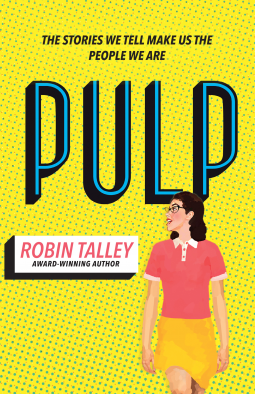
Pulp by Robin Talley

Pulp cover

Pulp is a novel about LGBT history and finding your voice, with a dual narrative that moves between 1955 and 2017. Eighteen-year-old Janet Jones lives in McCarthy era Washington DC and discovering a series of books about women falling in love with other women leads her to try and write a story herself. However, the love she feels for her best friend Marie puts them both in danger and writing a story might not be the best idea. In 2017, Abby Cohen starts a senior project on 1950s lesbian pulp fiction and finds herself obsessed with one book and its author, ‘Marian Love’. She wants to track down the truth, but must also balance her schoolwork, ex-girlfriend, and her parents’ imploding relationship.

The format of the novel means that it is both about and enacting the discovery of LGBT history by people in later decades, using a very personal approach. This makes it a powerful read, with the knowledge that though the pulp authors Talley uses as main characters are fictional, there are many who weren’t. It also addresses how changing perspectives and awareness of issues can complicate this discovery, for example the predominance of white characters in these pulp books. Janet and Abby are engaging main characters, particularly as they are both flawed teenagers who learn more about awareness of themselves and others around them. Abby in particular shuts herself off from people in her life with single minded focus on her project, and has to realise to keep thinking about the future whilst uncovering the past.

Pulp is a book for young adults and adults alike, with an inspiring story that attacks the ‘bury your gays’ trope and shows connections across generations through common experiences and the power of writing. It is a reminder of how the past is vital to forging a future and it has an important message too about how books can both change people’s lives and aren’t the whole story or necessarily true to life.

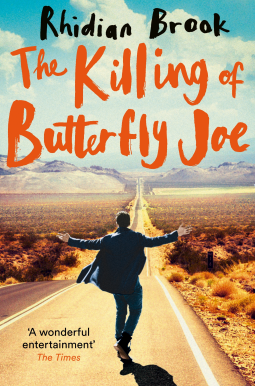
The Killing of Butterfly Joe by Rhidian Brook

The Killing of Butterfly Joe cover

The Killing of Butterfly Joe is a quirky novel about butterflies, lies, and a road trip. Llew Jones is a Welshman in America, looking for an American adventure he could write about. A chance encounter with Joe Bosco, charismatic butterfly salesman with an unusual family and morphing past, sets Llew—newly christened Rip Van Jones—across 1980s America in search of butterfly fortune. However, all does not go to plan, and telling the truth becomes vital.

Filmic in its combination of road trip, thriller, and morality tale elements, this is a novel that is bold and charming like its titular character. Considering it is centred around selling dead butterflies, it is surprisingly gripping, using a framing device of Llew telling the story to prove his innocence combined with a story that doesn’t seem like it’s going to end in death. A real focus of the novel is upon truth, lies, and telling your own versions of stories, from sales techniques to finding out people might be exactly as described. This gives it a nice metafictional aspect along with a narrator clearly trying to craft a narrative. 

It is the combination of elements—characters, tension, road trip, telling stories—that really make The Killing of Butterfly Joe come together into an unusual novel, a charming and fun read. It is a book for people who enjoy personal mythology and a character being pulled into the world of an eccentric family, but also a narrative with tension and entertainment.

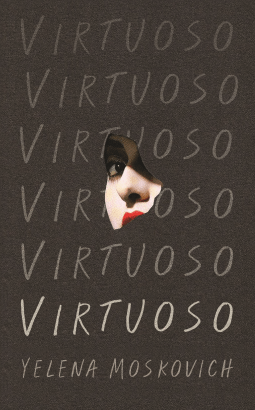
Virtuoso by Yelena Moskovich

Virtuoso book cover

Virtuoso is a stylistic piece of literary fiction that circles around the lives of a number of women. Jana’s Czech childhood was interrupted by raven-haired Zorka, a whirlwind who then disappeared. Jana is now an interpreter in Paris for a Czech medical company, where she meets Aimée, who is mourning the death of her wife. And in an internet chatroom, an American girl plots to rescue a Czech housewife from her husband.

Dreamlike in its narrative and in many of its descriptions, the novel moves between the stories and perspectives in a way that, surprisingly, mostly isn’t that confusing. When it is confusing, it feels like part of the style and the way that the fluctuations make the boundaries uncertain. The pace can sometimes be slow and sometimes fast, which again makes it feel like a series of dreams. The characters, particularly Jana and Zorka, are engaging, though at times it feels like you drift away from them and then return.

The artsy quality of Virtuoso, created through its style and interconnected narratives, will mean it isn’t for everyone. However, this is what makes it stand out, and it manages to make the characters’ narratives gripping even when it isn’t clear where anything is going.

Paul takes the form of a mortal girl by Andrea Lawlor

Paul takes the form of a mortal girl is a sharp and fun novel about 90s identity politics and LGBT culture. Paul Polydoris is a bartender at a gay bar in an Iowa university town, but he has a secret: he can shapeshift. As the narrative moves from Iowa to Michigan to Provincetown to San Francisco, Paul finds music, excitement, struggle, and intimacy, but what is key to keep that freedom to transform.

The novel digs deep into Paul’s emotions and connections with other people, but also stays witty and observational. It doesn’t so much have a narrative as it is a picaresque that follows Paul’s existence and journeying, bartender to bookseller, body transforming and style changing. Short inset stories feel like myths and the book has a slightly mythic feel, but ultimately the shapeshifting feels very real, just a fact of life. Lawlor fills the novel with music and pop culture, so that it almost feels like it has a soundtrack as you read it. There’s a lot that different people could take and interpret from it personally, about histories, identities, love, narrative, and a whole lot more.

Paul takes the form of a mortal girl has a carefully created and specific time setting and really creates a sense of place wherever Paul is. It also is a kind of timeless novel, which embraces transformation in a way that is exciting and riotous.