My reading trends of 2020

I usually do a ‘spite list’ or something similar, a list of the books I didn’t enjoy in 2020, but considering the year, and the fact I mostly found a lot of books just okay rather than actively bad, I’ve decided to go for something more like a list of general observations (some complaints) about books I read this year. Not really based on what came out this year, just what I happened to read.

  • Disappointing sequels – I should’ve expected this one, as I started the year reading The Testaments when I’m not a huge fan of The Handmaid’s Tale. After that, however, I had sequels to books I did enjoy that were a let down, most notably Mantel’s The Mirror & the Light (which I read a lot of on a transatlantic flight and whilst jetlagged, desperately trying to get through it) and Ali Smith’s Summer (I loved Spring most of the quartet so it was a shame, though a friend reread the other three before reading Summer and said it worked better that way, ready for all the references to the others).
  • Just not that interesting – In-keeping with the general ‘meh’ vibe of a fair few books I read this year, I found that I kept finding books that just didn’t really grip me in any way: not the plot, or the characters, or the writing. There were a good few let down endings, or books that sounded good but turned out to be hard to be bothered to finish.
  • A return to horror – This is very much just what I decided to read, but from October onwards I made a concerted effort to read more horror, both some old Point Horror books and a few more recent ones from a library app. As a teenager I’d progressed from Goosebumps to Point Horror to Stephen King, but I’d fallen off reading anything in recent years  The Point Horror ones in particular were a joy of how enjoyably trash they are, and it’s been nice to get back into horror even if I’m yet to find new stuff that’s really gripped me.
  • Really needing to read some less recent books – Thanks to the year there’s been a lot of books to review this year, and it’s been great in a lot of ways (I don’t normally get much poetry or drama to review at all, and I did get some this year), but I’ve had a backlog to review for much of the year. That meant I couldn’t catch up on my other ‘to read’ books and in particular couldn’t read much that wasn’t from this year or next year, except the odd library ebook that otherwise would’ve been returned unread.
  • Not much that was actively ‘bad’ – I mean, a good thing, but I only gave two books 2 stars this year. One was a naff technology book about digital minimalism and the other was a book about a working class Oxford student befriending an old woman that combined an info dump with some slightly dodgy depictions of class that felt like weird stereotypes. Otherwise, most books were decent, if not mind blowing (the main book in the mind blowing category was Boy Parts, not very original, but as I love the cult American Psycho vibe and the trashy yet pretentious art school vibe, it was wonderful).

What will 2021 bring? A load of pandemic novels? Me buying more secondhand Point Horrors and remembering how little 11-year-old me understood American culture? We’ll just have to see.

White Ivy by Susie Yang

White Ivy is a complex novel about family, class, and getting what you want, with a flawed protagonist searching for something elusive. Ivy Lin is a Chinese immigrant to came to America aged five and lives with her parents, younger brother, and grandmother in Massachusetts. She can’t match their expectations, but she does dream of winning the heart of her blond, white classmate, Gideon, a boy with a politician family and seemingly charmed life. Her grandmother teaches her to shoplift, and she gets a taste of what she could have. Now an adult, she meets Gideon and his family again, and it seems she can build a privileged life away from her parents, now with a flourishing business, but stepping into that role might not be so easy.

Susie Yang combines a range of elements in this book, from a look at the insecurities of white New England America similar to that found in books like The Goldfinch to a love triangle with unexpected twists. Ivy is a memorable protagonist, whose thievery I expected to be a larger plot point than it is, but whose personality is complicated and her motivations often questionable. This makes her a great character, suited to the slow pace with underlying darkness, with her actions often coming out of nowhere. One of the most compelling features of the book is the Lin family, especially how the reader sees them from Ivy’s point of view, and the subplot about how they don’t know how to deal with Ivy’s brother Austin was surprisingly moving.

A book that looks at immigrant experiences and seeking success in America, White Ivy is gripping and sits well alongside many other American novels of the last twenty years or so that follow a protagonist growing up and looking for success among those richer than themselves. 

Fave non-2020 books of 2020

As ever, I’m balancing out my top books of 2020 with some books I read in 2020 but didn’t come out then. It was a random year for picking what to read and accidentally this lot is half non-fiction and half fiction (and only that if you stretch the definition of ‘fiction’ to include poetry). Not sure what that says – possibly that I’m catching up with recentish non-fiction after not tending to read much of it.

Shoutout to the Heady Mix book subscription I had as a gift for some of the year, as that introduced me to some amazing books I wouldn’t have read otherwise, and for library borrowing apps giving me the chance to borrow books without going out.

  • Pet by Akwaeke Emezi – Unforgettable YA about fighting all-too-real monsters when adults are in denial.
  • Flèche by Mary Jean Chan – Poetry about identity, history, and self.
  • Girl at War by Sara Nović – One from Heady Mix book subscription, that I wouldn’t have picked up otherwise. The horror of war, as a woman returns to Croatia after years in America, to face what happened to her and her family during the civil war.
  • Because Internet by Gretchen McCulloch – A book about internet language that is particularly enjoyable if you grew up using different internet sites with different linguistic conventions and are interested in thinking about that.
  • Pachinko by Min Jin Lee – Another from Heady Mix, this was a breathtaking multi-generational look at Korean life in Japan and I was gripped in spite of the length and the fact I don’t normally enjoy multi-generational novels.
  • Superior by Angela Saini – Thorough and interesting debunking of race science.
  • Capitalist Realism by Mark Fisher – Hard to know what to say about this classic on the inconstancies and glitches in capitalism.
  • Brit(ish) by Afua Hirsch – A powerful look at race and identity in modern Britain.

My favourite books of 2020

I guess here’s where I’m meant to write that it’s been a strange year and all. Anyway, passing over that, here’s my usual list of my favourite books that came out this year. I’ve been quite picky with what I’ve included (and split into fiction, poetry and drama, and non-fiction) as I’ve read a lot of ‘good’ books this year, but I really wanted to highlight the best ones.

Books not published in 2020 are going to come separately, so my top books I’ve read this year are basically split into ‘stuff I’ve reviewed’ (this post) and ‘other things’ (the non-2020 publication lot). Links are to full reviews if you’re interested.

Fiction

  • The Magnificent Sons by Justin Myers – Biting look at what happens when two brothers with a big age gap both come out.
  • Mad, Bad & Dangerous to Know by Samira Ahmed – YA mystery through the streets of Paris as teenage Khayyam tries to solve an art history puzzle (with bonus Byron as my real selling point).
  • Homes and Experiences by Liam Williams – Email epistolary novel satirising gentrification and millennial culture and guilt, with a bittersweet narrative.
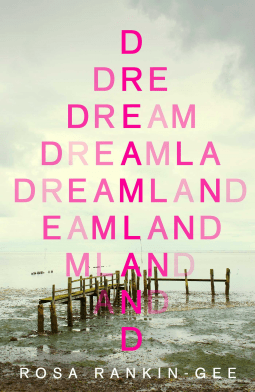
  • Wonderland by Juno Dawson – The final of her three books in a loose trilogy (following Clean and Meat Market), this one is Alice in Wonderland retold as a fall into an elite world of ‘old money’ teenage parties. Dark, thrilling, and hard hitting, it’s my favourite of the three.
  • Loveless by Alice Oseman – Working out asexuality whilst adjusting to weird university life and realising there’s not ‘one’ experience for everyone – just the sort of book I’m glad teenagers now have.
  • The Death of Vivek Oji by Akwaeki Emezi – An entrancing novel about whether parents really know their child.
  • Boy Parts by Eliza Clark – Perhaps very predictable of me to love this, an artsy Northern female take on the aesthetic antihero, but it was thrilling, very dark, and brilliant.

Poetry and Drama

  • Tongues of Fire by Sean Hewitt – Lyric poems combining nature and modern, like moving from a walk to a Berlin club and back again, and beautifully describing tiny moments.
  • My Darling from the Lions by Rachel Long – Short, storytelling poetry with vivid images and messages.
  • Underground, Monroe, & The Mamalogues by Lisa B. Thompson – Three very different plays looking at the black middle class and elements of race, gender, and respectability.
  • Poor by Caleb Femi – Witty and cutting poetry and photography about growing up on a Peckham estate and the reality of geography and gentrification with class and race.
  • The Girl and the Goddess by Nikita Gill – A novel in verse about a girl growing up in India, discovering herself, and interacting with gods and goddesses, whilst considering the power of storytelling.

Non Fiction

  • The Reality Game by Samuel Woolley – Good primer on online disinformation and technology.
  • Data Feminism by Catherine D’Ignazio and Lauren F. Klein – How to think about data science from an intersectional perspective.
  • So Hormonal from Monstrous Regiment – Collection of essays about how hormones impact people’s lives, full of a vast range of eye-opening experiences.
  • White Tears/Brown Scars by Ruby Hamad – A look at how white feminism affects women of colour and how important intersectionality is (technically this first came out in 2019, but I read an edition out in 2020 so I’m saying it counts here).

Detransition, Baby by Torrey Peters

Detransition, Baby is a witty, cutting, and clever novel about relationships and motherhood, as three characters try to navigate if they’re having a baby. Detransitioned Ames thought he was infertile, until he got his boss, Katrina, pregnant. Not sure about the role he’d take in parenting, he contacts his ex, Reese, with a proposition—to raise the baby with them. Since their breakup a few years ago, Reese has been lonely and sleeping with married men, feeling a like a trans elder with no one to mother, so this could be her chance for what she’s dreamed of: a child.

One of the greatest things about this book for me was the writing, particularly the tone and detail. It can be blunt and brutal in deconstructing characters’ ideas and lives, but also has a real emotional side (there’s even some meta-commentary on this as characters make jokes at a funeral). This is literary fiction about negotiating relationships given a new breath of life, but also self-aware about the people who aspire towards the directions it takes the narrative, such as how middle class cis women might love the idea of something more unconventional without being able to deal with some of the realities of it (giving much more detail might be giving small spoilers, so I’ll refrain). The ebbs and flows of the three main characters’ relationships are fascinating to be drawn into, especially the connection with Katrina and Reese, and how Ames finds it difficult to navigate his own sense of getting someone pregnant amidst the murky waters of gender and trauma.

From even just the title, it’s clear it’s a book that is taking a bold approach to the age old stories of relationships and motherhood, and Peters does a great job of creating the right, wry tone to pull it off. There is something joyful, even through the issues and self-destruction you see in the characters, in the reading experience, and it might be at least in part just the sense of getting the kind of complicated break up literary novel but with biting trans comedy thrown in. It is refreshing and I hope for more contemporary literary fiction that can bring quite such a combination of spot-on references and commentary, cutting jokes, and emotional reckoning.

Memorial by Bryan Washington

Memorial is a novel about a relationship breakdown, family, and the path that life takes. Benson, a Black daycare teacher, and Mike, a Japanese-American chef, have been together for a few years, but things between them haven’t been going so well. When Mike’s mother comes over from Japan to visit their Houston apartment just as Mike flies out to Japan to visit his estranged father who is dying, their relationship becomes even more strained, with Benson suddenly living with Mike’s mother. Their relationship with each other and with their families starts to change, and it seems that maybe love isn’t everything.

This is a complex novel that delves into different emotions and looks at a relationship where the characters still love each other, but also don’t seem to be getting along. The narrative balances this with their respective relationships with their families, and the different ways they interact with people in their lives, to give a detailed picture of the two protagonists. A notable element of the novel is the fact that Benson is HIV positive but it isn’t a big deal; rather, it has strained his connection with his family, but doesn’t restrict his life. All of the characters are flawed and often selfish and self-absorbed, and this works well with the structure of telling the story from the POV of Benson, then Mike, then Benson again to show their complex emotions and lack of sympathy a lot of the time.

Memorial is a bittersweet look at a relationship that isn’t working out, and at slowly rebuilding familial relationships. It gives the protagonists space to potentially move on and change, or to not really change, and was emotional and powerful (though not one if you want a book where everything works out unambiguously).

Beowulf: a new translation by Maria Dahvana Headley

As Maria Dahvana Headley states in the introduction to this book, there have been a lot of translations of Beowulf, the Old English epic poem about a warrior fighting monsters. This is a new translation, focusing on updating the verse rather than preserving its antiquity and giving some of the female figures—particularly Grendel’s mother—a somewhat better treatment. Perhaps most notably, this version of Beowulf focuses a lot on the modern parallel of oral storytelling and frames the poem like some guy is telling you it in a bar (the poem’s opening word, ‘hwæt’, becomes ‘bro!’).

I’ve studied Beowulf both in translation at secondary school and in the original during my undergrad English degree, so the story and general feel of the poem are very familiar, but this translation brings something else to the poem. Possibly it’s the clash of old and new—modern slang like ‘Hashtag: blessed’ and archaisms like ‘wyrm’—and the use of swearing and colloquial phrases to get across the meaning of certain lines and phrases which feels quite different to the Beowulf people might be used to. Occasionally the use of ‘bro’ throughout gets a bit grating, but it’s interesting to see which parts could be translated into something much more modern and which stay sounding older.

There’s probably some clever things to be said about some of the translation choices and the way this translation is framed, though it’s too long since I’ve actually read another version of it for me to think of anything. I liked the fact that the repetitive nature of the storytelling in Beowulf is foregrounded by giving it the feel of some guy telling you a boring story, only the story is about fighting Grendel and his mother and a dragon.

As someone who loved Emily Wilson’s translation of the Odyssey, it was enjoyable to get another modern translation that focuses on updating the language and making the concepts reverberate through time, rather than something that is a reimagining or retelling. This is a readable Beowulf in verse and one that really makes you think about why these warrior men spend so much time sitting around telling heroic stories to one another. I’m not sure what it would be like as an introduction to Beowulf but it’s fun if you already know it and can imagine rolling your eyes as some guy tries to tell you the story.

There’s No Such Thing As An Easy Job by Kikuko Tsumura

There’s No Such Thing As An Easy Job is a novel about looking for meaning and escape in the modern world, as a young woman looks for the most suitable job for her. After burnout in her previous career, a woman asks an employment agency for an easy job: namely, one that involves no reading, little thinking, and is close to where she lives. She finds herself sitting for hours watching hidden camera footage of an author suspected of having contraband in his home, in a job that is opposite where she lives, but she gets drawn into the author’s life and also into how she can manage her own life alongside watching his. The narrative follows her as she moves between suitable jobs found for her by the agency, ending up in absurd situations like writing bus ads for shops that seem to appear out of nowhere, but it doesn’t seem like an easy job is so easy to find.

This feels like a thoroughly modern novel, a fresh look at ideals of workplaces and fulfilment and looking for meaning as a young woman without direction. It is translated from Japanese and set in Japan, but a lot of the issues are universal, as she needs to find appropriate times to be in if she wants to get deliveries and deals with weird workplace politics. The book also has a fantastical sense, with the absurdity of some of the jobs and the weird circumstances bringing a kind of dark comedy to burnout and to modern ideas of what you should want from a job. It is amusing and clever, and easy to enjoy the eccentric characters, but also feel for the narrator, especially as the book draws to a close.

I don’t really want to say this is a very millennial book that captures a moment of people being consumed by work in different ways, but it’s hard not to want to write that. It has a kind of darkly comic existentialism about looking for meaning, even when the narrator is mostly looking for maté tea.

The Henna Wars by Adiba Jaigirdar

The Henna Wars is a contemporary YA novel about a girl who starts a henna business for a school project and finds herself with a crush on her rival. Nishat has a lot going on: she’s just come out to her parents, who are having trouble accepting a Bengali girl could be a lesbian, and she’s determined to create a successful henna business for her school business project. However, hers isn’t the only henna business as part of the competition, and Nishat finds herself rivals with Flávia, a girl she used to know at primary school who’s now at the same Irish all-girls school as her.

This book has had a lot of hype around it, and it is certainly distinctive, both through the henna rivals premise and just the fact it is a YA novel set at an Irish school. Nishat is a good protagonist, with realistic teen flaws like a tendency to become focused on her own issues and goals at the expense of others’, and her relationship with her sister is a highlight of the book, as they support and bicker with each other. The reader gets to see a lot of Nishat’s emotions and delve into Bengali culture and ideas around cultural appropriation, and it’s good to see how much Nishat wants to stay true to herself.

Part of the plot later in the book does revolve around a forced outing to the whole school, which is a trope used in YA books that I feel doesn’t need to be used so often, and which often isn’t then dealt with in ways that feel supportive towards the character or teenagers reading the book. There’s a lot of plot in The Henna Wars, which meant there perhaps wasn’t enough space to deal more with how Nishat was treated at school after that, or even how her friends reacted. It also felt like some important conversations were cut off or skirted around, and it might’ve been nice to see these followed up on for more resolution.

A readable story with a great protagonist, The Henna Wars is a young adult novel that offers a powerful perspective about staying true to yourself and a teenage love story featuring characters who have to grow and try to learn from their actions.

Cat Step by Alison Irvine

Cat Step is a gripping novel about how things can fall apart under pressure, after a single mother leaves her daughter alone in the car whilst she nips into the shop. Liz moves to Lennoxtown in Scotland with her four-year-old daughter Emily, to get a house ready for sale and give her mother—who they’d been living with—a break. She’s sure this can be a fresh start for them, but after an incident outside the Co-op, it seems everyone is in their business, and it’s not easy to go back to being unknown.

The book draws you in from the opening pages, in distinctive prose, as it unfolds Liz’s perspective and the incident with leaving Emily in the car that sparks off the narrative. I wasn’t quite sure why I was gripped so quickly from the start, but I was, and I read most of the book in one evening. The way people judge Liz, and the difficulty she has in improving circumstances once things start to go less well, feels very realistic, and Cat Step is a really interesting exploration of how motherhood intersects with other things, like mental health, community, and class. Judgement and advice are particularly notable, like Liz’s instinctive disdain for how she is offered advice and support in a patronising or forceful way, like being told she should go to parental support group.

This is literary fiction with a thriller-like need to read on and a moving look at a character trying to keep things from falling apart. The narrative isn’t trying to be sensational, but is sparse and almost claustrophobic in the ways Liz becomes trapped, making it an ideal one for sitting down with and reading all at once.

(Thanks to Dead Ink Books for the proof copy!)