A Secret Sisterhood by Emily Midorikawa and Emma Claire Sweeney

Female literary friendships: A Secret Sisterhood: The Hidden Friendships of Austen, Bronte, Eliot and Woolf by Emily Midorikawa and Emma Claire Sweeney 
image

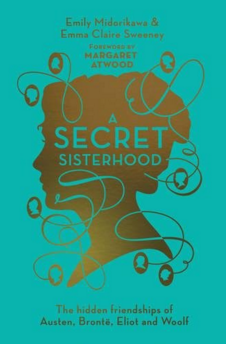
A Secret Sisterhood is a look at the friendships that some of the best known female writers had with other women who wrote and how these affected their lives. It sets out to show the importance of the support, rivalry, and inspiration that characterises famous male literary friendships to these authors, in friendships that have been often overlooked by biographers and critics. The writers, real-life friends, emphasise how these friendships are a major part of literary history and suggest by the end that more female literary friendships should be appreciated and studied, to compare with famous male ones like Byron and Shelley or Fitzgerald and Hemingway.

The book is very much literary history, focused upon the writers’ lives and mentioning a great deal of other writers and literary trends on the way. It is split into four sections, covering each of the writers named in the subtitle and their relationship with a particular other female writer in their life. Reading it does not require a huge familiarity with each writer, making it accessible to those with an interest in writers, but who don’t necessarily know a huge deal about the lives of the individuals covered already. There is quoting from letters and diaries to give detail of these friendships, but no literary analysis of the writers. Instead, it is very much biography, opening the way for people to look at these and other female literary friendships in the context of their writing and specific elements of their texts.

A Secret Sisterhood is an enjoyable book about lesser known literary history and an important one for showing that female writers do not have to either be reclusive and isolated, or tightly bound to a man without female support.
Well-adapted

Book adaptations are not always a disappointment. Whilst plenty of fans complain about the misrepresentation or loss of their favourite character or the changing of major plot points or important themes, there are also the films and TV shows that do books justice, transforming them into a different format whilst keeping essential parts that make them good adaptations. Maybe they capture an notable narrator in some way, make changes or cut out unnecessary material that actually make it a better experience, or just faithfully capture a book in a new way. However these adaptations work, they form an extra way to enjoy your favourite books, or even make a book even better.

There are plenty of books that don’t work in certain adapted formats. The Harry Potter films have to cut out so much that without book knowledge they can be at times confusing or incomprehensible. I couldn’t make it further than one episode of the Wolf Hall TV series before I got before, despite enjoying both books. The Baz Luhrmann film of The Great Gatsby is fun, but it can’t quite match up to the book.

On the other hand, both Trainspotting and Filth show that adapting Irvine Welsh’s books can make very different yet still fantastic and dark films. Plenty of classic and hugely popular films and TV shows are based on books, though sometimes loosely. I’ve picked out a few where I think the adaptation has been particularly notable to me, and would be interested to know which book adaptations are most important to other people.

  • American Psycho – Bret Easton Ellis’ novel is an onslaught of brand names, restaurant reservations, and graphic violence and sex. The film version pares this down into an unnerving vision of a psychopathic killer hidden in yuppie culture, talking over the action and dancing around the room to Huey Lewis and the News.
  • The Shining – Even though I was a fan of Stephen King, I didn’t actually read the book until after I’d seen Kubrick’s film. The psychological tension of following Danny around the Overlook Hotel can’t quite be matched by the novel, which differs in some major ways.
  • A Single Man – Tom Ford’s film of Christopher Isherwood’s novel somehow takes the breathtaking prose style and uses a visual beauty to get across a different, but somehow recognisably similar too, take on how the story is told. The ending differs too, but it is a case where both the book and the film feel valid in their own right.
  • Fight Club – One of the most famous cases of the adaptation surpassing the fame of the book, Fight Club has contributed to the cultural zeitgeist in a way that angers its author Chuck Palahniuk and allowed plenty of people to misunderstand and misrepresent its ideas of toxic masculinity and violence. Regardless, the film is incredibly good, with a great soundtrack and cinematography that gets across its twist and the bizarre perspective of its messed-up protagonist.

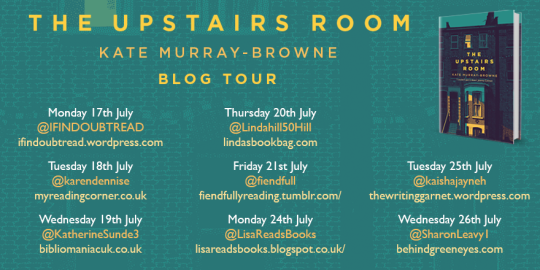
Blog tour: The Upstairs Room

The Upstairs Room by Kate Murray-Browne

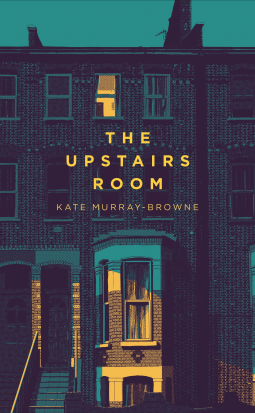
The Upstairs Room is both a tense mystery and a gripping novel about happiness and knowing when something isn’t working. When Eleanor and Richard move to a Victorian house in London Fields with their two young daughters, it is meant to be a great opportunity for them, even though the cost of potential renovations mean they have to take a lodger, the at-a-loose-end Zoe. Eleanor quickly thinks there is something wrong with the house, something connected with the mysterious wall scribblings in the upstairs room done by an ‘Emily’.

The novel is a character-driven mystery, focusing on the lives of Eleanor, Richard, and Zoe and their discontentments both in and outside of the house. That doesn’t mean that Murray-Browne does not keep up the tension, with eerie moments and an unnerving combination of obvious and unexplainable mysteries throughout. Problems like a lack of communication and the perils of the London housing market exacerbate issues as they attempt to live in the house that Eleanor comes to believe doesn’t want her there. The style is easy to devour and the combination of characters and ambiguous mystery make it a good book to sit down with and be drawn into.

In some ways, The Upstairs Room is like a slow burn horror film, the kind focused on the happiness and lives of the characters as much as the potential mystery and threat, or The Shining rewritten for the modern London housing crisis. It will also appeal to anyone who enjoys reading about character relationships and life uncertainty, with a background mystery plot and not too much overt revelation, but rather an understated approach to the genre.

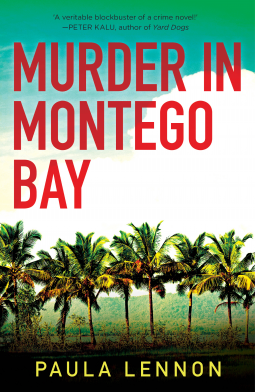
Murder in Montego Bay by Paula Lennon

Murder in Montego Bay by Paula Lennon

image

Murder in Montego Bay is a police procedural crime novel set in Jamaica, featuring an unlikely partnership and a fight to solve the case despite funding issues and inside involvement. When the son of a prominent entrepreneur family is found killed, Detective Preddy wants to solve the case and prove he’s better than the failures that haunt his past. To do so, however, the Jamaican detective will have to work with Glaswegian Harris, seconded into their force and sticking out like a sore, ginger thumb. The pair, plus female colleagues Spence and Rabino, must hunt through lies and cover-up to find out what was really going on with the family and whether local criminal types were involved.

Lennon’s novel is a solid crime story focused on the police difficulties and the quirks of solving a murder in Jamaica. The story is mostly told from Preddy’s point of view, showing his personal struggles at work and at home, but cuts to other characters to give key scenes and information to the reader. The dialogue is stellar, with Jamaican patois and moments of Glaswegian dialect to show characters’ similarities, differences, and ability to fit into different situations, and giving the novel a realistic feel by showing the varying voices of characters.

This is an enjoyable read, perfect for crime fiction fans and people who like the use of dialect and regional language to create realistic characters. The issues of police funding, racial differences and tension in Montego Bay, and police reputation and brutality form the backdrop to the novel alongside the sunny location. It is a police crime novel with social issues and a message that even the rich won’t stop wanting more.

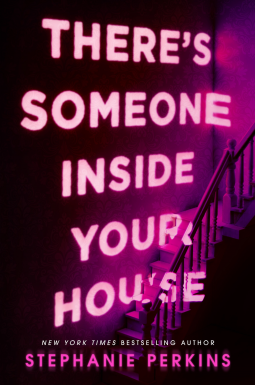
There’s Someone Inside Your House by Stephanie Perkins

Is there somebody lurking inside your home?: There’s Someone Inside Your House by Stephanie Perkins

image

There’s Someone Inside Your House is a young adult thriller that makes for an exhilarating read. Makani Young moved from her Hawaiian home to her grandma’s house in small town Nebraska, escaping her parents’ divorce and her own secrets. After a year, she has two best friends—a Goth girl and a trans guy—and a crush on a school loner, though she still misses Hawaiian food and the sea. Her senior year is not going to be quiet, though, as students in her high school start to be the victims of gruesome murders. Soon, Makani has to balance the fear of who will be next with her own past, her fledgling romance, and looking after her grandmother.

Perkins’ novel is very recognisable as a YA thriller/horror book, with a classic combination of school cliques, town rumours and secrets, and teenage drama alongside narrative threat. Makani is a stand-out protagonist, a biracial girl far from home who is dealing with issues from her past and how out of place she feels in her new town. Her friends are also outsiders, but though the book uses teen cliques and popularity contests, it also emphasises that people can be better than they seem, regardless of social status. The inclusion of small elements such as internet trolling and rural internet and phone signal stop the location from feeling backward, but instead just another town that teenagers dream of leaving.

The novel is a page turner that will be enjoyable to adults who remember devouring Point Horror novels as well as teenagers. The characters are varied and likeable and the book does not shy away from real danger and high stakes amidst teenage rebellion and small town life.

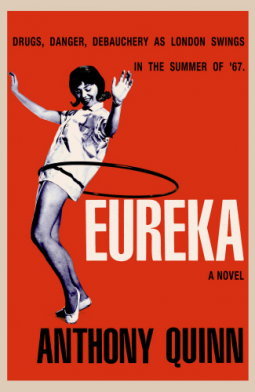
Eureka by Anthony Quinn

Acid trips and revelations: Eureka by Anthony Quinn

image

Eureka investigates an elusiveness about art whilst also being a Sixties caper. It follows the making of a new film by German director Reiner Werther Kloss: a very loose adaptation of a Henry James story being written by man-about-town screenwriter Nat Fane, a man who likes an exciting life more than getting work done. The film features fledgling actress Billie Cantrip, whose introduction to the world of cinema is not quite as she expected, with mystery, acid trips, fire, and many, many secrets featuring as the film ‘Eureka’ is slowly made.  The bustle of art, music, and gangsters in London in 1967 forms the backdrop for the book, which somehow balances the fun and danger of the period with meditations about obsession, artistic creation, and the hunt for real meaning.

Quinn gives all of the main characters extensive backgrounds and moves between focuses on them to weave together a long story, though the narrative doesn’t take place over more than a summer. Intercut between the chapters are snippets of the screenplay for the film that Fane is writing within the narrative, revealing the secrets of the film as the tension in the story rises. This technique gives good freedom for Quinn to counterpoint ideas about art and love in one story with another, and also to break up one narrative with another. This means that the book doesn’t feel as long as it might, and it stays gripping throughout with enjoyable characters and some surprisingly intriguing strands of plot.

As is discovered in the film being made, art should not give all the answers, and Quinn does not, giving his ending enough ambiguity to follow through with this message about the questioning of meaning. Eureka is a literary caper that delves into obsession with art and refuses to give definite answers to many of its major questions.

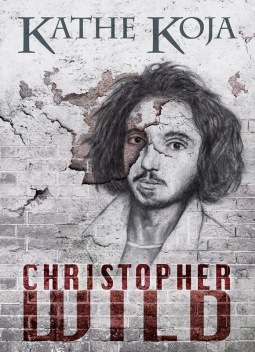
Christopher Wild by Kathe Koja

Kit Marlowe, three times over: Christopher Wild by Kathe Koja

image

Christopher Wild is an imaginative historical novel, a menacing dystopia, and a grimy city tale in one. It tells a raucous life, a claustrophobic life, a poet’s life, three times over: the trajectory of Elizabethan poet Christopher Marlowe in his historical setting and beyond. The first third is Marlowe as he faces danger from the Service for his role as an intelligencer, his famous plays, and his infamous pronouncements about religion and beyond. The second part is a twentieth-century tale of a gritty poet’s life, tied up in gay bars and covert investigation. The final section is a near-future dystopia of intense surveillance, where the poet known as X04 is fighting for his freedom.

Koja’s book puts an unusual spin on a historical figure who has been the focus of plenty of written works previously, from conspiracy theory novels claiming that Marlowe wrote Shakespeare’s works  to Burgess’ delightfully playful A Dead Man in Deptford. The first section reads like another in this line, the fan fiction about the outrageous life of an apparent gay atheist spy turned poet and playwright from the late sixteenth-century. The fast-paced prose hurtles forward and the references are piled in, meaning that it can feel like a whistle-stop tour of every mention that needs to be made about Marlowe’s life. For fans of him and novels about him, this feels a bit too obvious, but the references are necessary for less knowledgable readers to be able to appreciate the later two parts.

The remaining two thirds of the novel tell two other stories, other outspoken Christophers who also write poetry, fight the authorities, and sleep with a complicated tangle of men. Koja takes advantage of the looseness of Elizabethan spelling to create new versions and echoes of characters and scenarios in a way that will probably delight some and annoy others. Every version reads Ovid and Lucan (the real Marlowe translated works by both of them), smokes tobacco (as per the infamous ‘all who love not tobacco and boys are fools’ line from Richard Baines’ list of accusations), and writes poetry. The prose style that captures a tumultuous Elizabethan London doesn’t slow down, and whilst it is slightly less effective in the later sections, it allows for a poetic style and an overlaying of words that matches the way the narrative and characters are overtly replicated.

This kind of transformative work is nothing new (and indeed there are plenty of examples in literature and on the internet of people doing similar not only with Marlowe, but with a whole range of historical figures), but Koja’s combination of the settings does feel fresh, particularly the final scenario in which the dark web and digital surveillance give a new meaning to the spy-intelligence-based drama of Marlowe’s probable life. Marlowe fans are likely to enjoy the ride, even if some of the ideas (like that he was forced into writing a new play about the secret service that led to his death) are somewhat out there. As novels, TV shows, and films about Shakespeare continue to proliferate (and often reduce Marlowe to a bit part), it is always good to see more attempts to present elements of Marlowe’s life in new fictional ways.

[And in case you missed it, here’s the drinking game I invented whilst reading this book.]

Fiction about Christopher Marlowe: the drinking game

  • Drink every time they get in an unsubtle use of the ‘tobacco and boys’ comment.
  • In fact, drink whenever a line is clearly using the Baines note as its source.
  • Drink every time he is referred to or refers to himself as one of his characters. Drink again if he quotes his own lines (or paraphrases for no apparent reason).
  • Drink every time ‘Ganymede’ is mentioned (this rule stands for his actual works too).
  • Drink every time one of the Toms is mentioned—Watson, Walsingham, Kyd, Nashe, etc—and finish your drink if this is turned into some kind of tom cat/Kit pun.
  • Drink whenever Shakespeare comes up in some overly casual way. Finish your drink if it is to call him a countryside yokel or an upstart.
  • On the flip side, if the thing is about Shakespeare and Marlowe is a side character, drink whenever Marlowe is in a scene or is implied to be a friendly rival to spur Will on and then die to get out of his way. Consume everything within reach if Kit is solely there to make flirtatious comments and talk about Hell.

Spoonbenders by Daryl Gregory

Tricks of the mind: Spoonbenders by Daryl Gregory

image

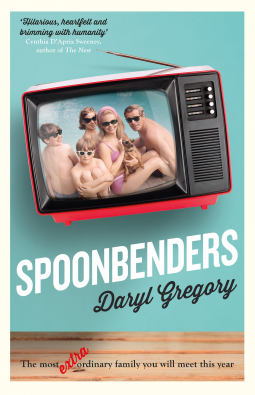
Spoonbenders is a quirky and amusing novel about a dysfunctional family of psychics and con artists. The Telemachus family—Teddy and Maureen and their three children—were a national sensation until the day they went on television and were less than magical. Twenty years after their fall from grace, grandson Matty discovers that he has some psychic powers like his family, and finds himself caught up in the middle on the ongoing family drama as they fight for money, power, and love.

The novel is told from the perspective of the main members of the family, jumping back and forth to show their different abilities and priorities. This gives it the classic feel of an intergenerational novel, with family secrets and troubles being hidden and revealed. The hijinks and troubles with the government, with the local mob, and with each other are amusing, but also carry the level of threat of a gangster story or similar to keep narrative tension. The writing is straightforward and Gregory carefully withholds small details and reveals them with dramatic or casual effect. Unsurprisingly, the characters are larger than life, especially charismatic trickster Teddy and outsider son Buddy, and their complex family relationships give the novel a fun humanity akin to any family drama.

Spoonbenders feels like a Wes Anderson film written down. It is imaginative and enjoyable, a great light read with some decent stakes and a combination of real powers and tricks.

Good As You – From Prejudice to Pride by Paul Flynn

Good As You – From Prejudice to Pride: 30 Years of Gay Britain by Paul Flynn

image

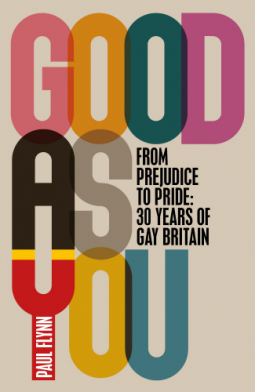
Good As You is a powerful, sometimes funny, and emotional account of British gay culture from the hits of the 80s and the identification of HIV to the legalisation of same sex marriage. Flynn organises this into thematic sections—music, television shows, football, reality stars, politics—with personal anecdotes to introduce each part. There are interviews with various important figures, well-known and less so, and a wealth of detail, both factual and anecdotal, which makes the book a vivid account of the good and bad of gay men and popular culture across the last thirty years.

The format means that the book could be easily dipped in and out of, and it is a light and sometimes humourous read. The different chapters will have varying appeal depending on the reader—for instance, my personal interest leans more towards music and politics—but overall every section is interesting, highlighting things like the ongoing lack of acceptance in football and the connection of reality TV and gay culture in the 2000s. Of course, the spectres of AIDS, homophobia, and mental health loom large, and Flynn on the most part does not avoid them to make a nicer portrait of an upward struggle.

The book touches on most aspects of British culture, showing how ‘Gay Britain’ has evolved and changed over the past thirty years. Due to space constraints and readability, Flynn focuses on specific examples of important moments and figures (which may leave some people disappointed that their greatest influences aren’t included), creating a book that feels a bit like a documentary series, engaging and varied. Good As You is a book that needs to exist, part-personal memoir and mostly a look at the personal and larger effects of British gay culture until the present day.