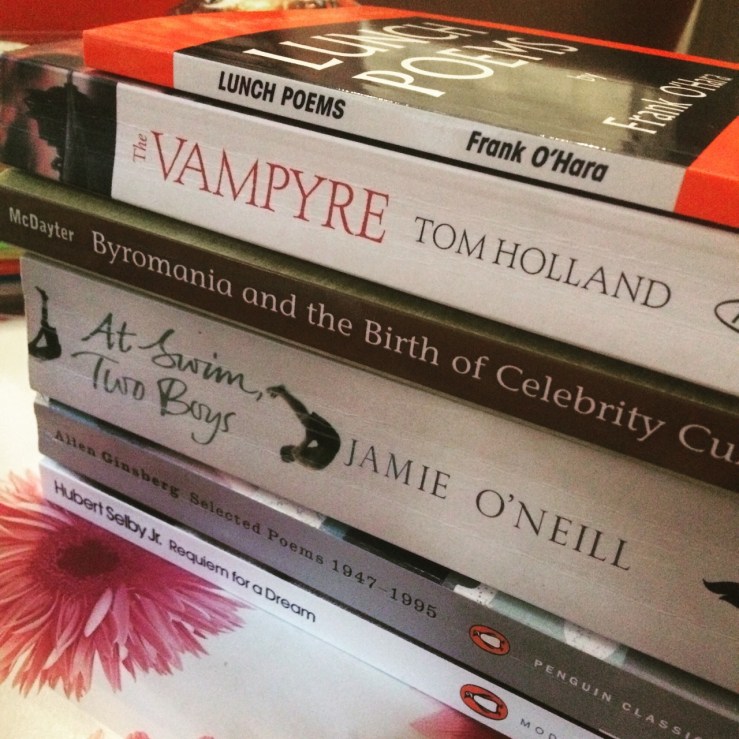
This year’s Christmas book haul.

Book reviews and chat from @fiendfull
This year’s Christmas book haul.
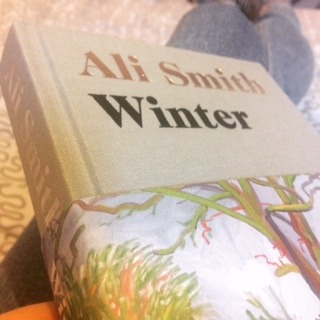
Winter is the next in Ali Smith’s seasonal novels that began with Autumn last year. As with the previous one, this is a novel both about a season and characters in that season, and a novel about modern Britain and strange contradictions and times in the country. When four people gather for Christmas in a large old house in Cornwall, they bring together their own personal truths, but these don’t all match up. Two warring sisters, a son being falsified on the internet, and a stranger he wants to masquerade as someone important find themselves together in winter, for better or for worse.
From the opening pages, Smith intermingles the idea of winter—a tough, cold, stark time—with the modern world and a post-truth era in which people can believe totally opposite things as the objective truth. She asks, in a world where everything—art, love, romance, god, every media form and method of communication—is proclaimed dead on a regular basis, what happens in winter when nature reflects this deadness? Like with Autumn, the story itself feels almost incidental, some people who happen to be written together, their lives connected by art and nature and relationship.
The strange position of Lux, a girl paid to pretend to be someone’s girlfriend whilst visiting his mother, is a highlight, the kind of transitory character that Smith writes well and who feels well into her transformative writing style. The expected punning and witty style is there, but also feels a little more sparse, maybe wintry.
The novel features many classic elements of Smith’s writing, a fitting follow up to Autumn, but also gets across the post-truth, Trump and Twitter age surprisingly well, mingling the failings of human memory and the certainty of disagreeing siblings into a new form of fake news. This is the perfect book to read over the holiday season this year to reflect on the season and the year in delightful style.
Dark, poetic prose: Peach by Emma Glass
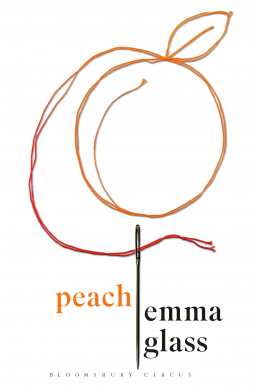
Peach is a visceral book about a girl who has been assaulted, written in an unforgettably immediate style. Peach comes home bloody and plagued by the smell of meat, but her parents are too preoccupied with their new baby to ask the right questions. She goes to college to see her boyfriend Green, but still nothing is right. Her body is wrong. Glass uses a distinctive style written in sharp immediacy to show Peach’s thoughts and actions after she is attacked.
This short novel is an exercise in darkly poetic prose that takes a difficult subject and inhabits the trauma of the experience. At times it is so visceral that it is painful to read and its depiction of the aftermath of sexual assault and the mental processes of the main character mean that any reader needs to be aware of this content before reading, but it is also carefully done, with a skilful use of minimal words and descriptions of physical sensations and sounds. It has similarities to books like Eimear McBride’s The Lesser Bohemians, but far more condensed, focused on detail and spanning a short space of time. Every word feels like an attack or relief in this impressively written book that depicts a terrible subject in an emotive and haunting way.
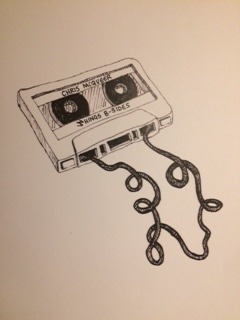
Hings: the B-Sides is a further eight witty and surreal stories from Chris McQueer that weren’t included in his collection published earlier this year, Hings (which I reviewed here). There’s the ‘too hot for TV/the original collection’ like the weird ‘Road Closed’ and the disgusting yet strangely relatable ‘Bursting’. Both ‘Love Is Love’ and ‘News’ feel like comedy Scottish snippets of Black Mirror ideas, with the former definitely a comedy smart home advert. For fans of the A-side, there’s another little bit of Sammy, and there’s two little tales with clever twists that feel very much in keeping with the strange twists in Hings itself, ‘Crisp Packets’ and ‘Flowers’.
This is a welcome bunch of up to date and clever short stories, something for fans of Hings and for lending to people to convince them to commit to reading the larger book. In a handy zine format, it’s a great antidote to just reading another pointless Buzzfeed end of year listicle.
After claiming you should know what you hate, I really ought to practice it, and what better way than by moaning about things I read this year. If I’m being honest, I’ve actually left a few books off this list because I’ve already given them harsh reviews and I feel they were enough respectively. I’d say ‘no particular order’, but that’s untrue, Underworld is at the top because I disliked reading it that much.
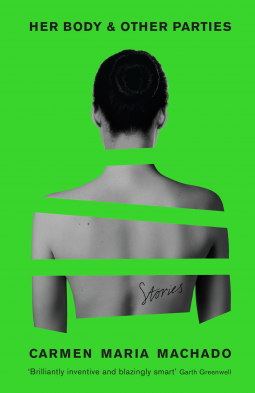
Her Body And Other Parties is a book of incisive short stories that combine bodies, sex and relationships, horror, science fiction, and pressing issues in imaginative ways. The main characters are mostly women, living in uncanny worlds that can be apocalyptic, magical, and/or unnervingly almost real. In one, the truth about a dress shop and the women slowly going incorporeal drives an employee away from the store. In another, the ribbon around a woman’s neck becomes a mysterious focus in a story that highlights the act of telling stories and of the sounds of telling them aloud. Others play with structure—an inventory of sex that depicts a virus epidemic across the globe, a story told using Law & Order: SVU episode titles—or with common issues like dieting and motherhood, in ways that rethink how these things can be considered.
To describe the stories doesn’t quite do justice to the freshness and imagination of the collection, not only in the ideas and the blending of magical realism, sci-fi, horror, and the reality of life, but in the way they are written. The writing style is distinctive, creating atmosphere and digging deep into the female protagonists. These women have varied relationships with their bodies, different dynamics with their male and/or female lovers, assorted pasts and futures, but what unites them all is the way their stories are both real and surreal.
Some of the stories will likely have a greater effective on different people—as someone who actually thought the acronym was SUV, the Law & Order structured one passed me by quite massively—but this is an important collection. The stories do exciting things with ideas and writing, and the use of the uncanny and the monstrous to highlight issues particularly around women’s bodies and sexualities is creative and thought provoking.
I know it’s ‘end of year lists’ season because I have enough of a Buzzfeed habit to now be seeing the same tweets I’ve seen all year in new lists that use the year in their title. And whilst there are a lot of reading days left of 2017, I realised that to get in more than one list of books from this year, I’d have to start now.
First up is the nebulous category ‘books not published in 2017 that I read for the first time in 2017’. I’m going for things not published new in hardback or paperback in the UK in 2017 as far as I know. Seeing as I spent so much of 2017 reviewing upcoming books or reading very new ones, this list may seem a bit random.
The eighteenth century, redux: The Gentleman’s Guide to Vice and Virtue by Mackenzi Lee
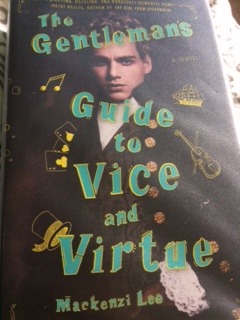
If someone had asked me ‘would you like a book about a rebellious eighteen-year-old bisexual aristocrat in the eighteen century?’ I would have obviously said yes. Add in the fact that it’s about going on a Grand Tour, full of adventure novel tropes, and is completely ridiculous in the way fun modern historical fiction should be and well. That’s The Gentleman’s Guide to Vice and Virtue.
The book is aimed at older young adult readers, though I think it’s real target audience is anyone who enjoys trash eighteenth century (and/or is a fan of Byron). It follows Henry “Monty” Montague, who has been kicked out of Eton and faces his tyrannical father’s disapproval for his lifestyle of drinking, gambling, and sleeping with various women and men. He has been allowed to go on the stereotypical Grand Tour of Europe alongside his best friend Percy, his little sister Felicity, and a boring guardian, as a final yearlong break before he must start learning how to take over the family estate. However, when one bad decision too far on Monty’s part puts them in trouble, soon the cultured Grand Tour turns into an adventure across Europe full of highwaymen, pirates, and alchemy (plus Monty’s inconvenient massive thing for his best friend).
I may be part of its specific audience, but this is how historical fiction should be done. Based in historical fact and with a few actual figures thrown in, but for the most part using the spirit of the period to do something adventurous (literally) and enjoyable. The tropes are used purposefully (and anyone whose read eighteenth century stuff like Sterne’s A Sentimental Journey will know things written at the time were full of ridiculous tropes too) and add to the charm of the fast-paced and witty plot. The true highlight is the characters: the scandalous Monty who needs to learn to think about other people whilst escaping his father, his younger sister Felicity who has better plans for her life than the finishing school she’s meant to be going to, and the likeable Percy, Monty’s companion in gambling and drinking who is hiding a secret or two.
This is not your accurate historical fiction. This is what happens when history is treated with sufficient irreverence and as a vehicle for adventure, romance, and general hilarity, whilst touching on a few major issues that all still have relevance now in some way. The style is modern with a hint of eighteenth century, and it works for the story. Some people will be scandalised by it (probably), but this is a fun and fresh novel that gives a happy ending to a scenario plenty would think should have no hope of one.
Increasingly relevant: Anatomy of a Scandal by Sarah Vaughan
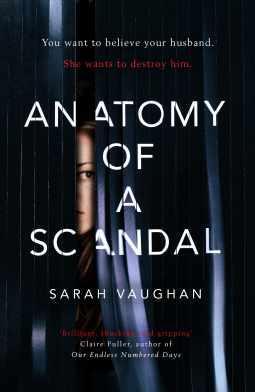
Anatomy of a Scandal is a tense novel about power, privilege, and knowing the secrets from someone’s past. James is a politician on the rise, a family man with a long-standing connection to the PM. His wife Sophie has known him since they were both at Oxford and thinks she knows all the skeletons in his closet. However, when he is accused of a crime that cuts right into Sophie’s vision of her husband, she must consider whether she will continue to stand by him. And Kate, the barrister prosecuting James, has a past of her own, and is certain James is guilty, willing to put her all into getting him convicted.
Vaughan weaves together these main characters into a drama that jumps between the courtroom, the modern political world, and early 90s Oxford. It has elements of a psychological or domestic thriller, complete with questioning of the truth and intense legal proceedings, but Anatomy of a Scandal is more than that, an anatomy of individual viewpoints surrounding a scandal that covers political coverups, drinking societies and class difference at Oxford, and difficulties of rape accusations and trials. The epigraph is from Mantel’s Bring Up The Bodies and the way that Mantel combines the political and the personal whilst talking about the truth makes it a good comparison, despite the vast difference in subject matter. The novel is not solely psychological, or just a courtroom drama, but one that shows personal emotion within larger power structures.
The narrative is told from the points of view of major characters, with Vaughan withholding information or structuring it in a way that builds tension and gives the reader a sense of being caught in the middle of the secrets as they unfold. Her Oxford is very recognisable to anyone who has been and the whole novel is detailed, giving enough information to allow the reader to work out elements, but also keep guessing about what really happened or will happen. Though James and Sophie’s marriage is a real focus, it is Kate who stands out as someone caught between past and present, though at first she appears to just be a simple barrister character who will form the courtroom threat.
Anatomy of a Scandal is the kind of book that will appeal to both fans of thrillers and those who prefer something a bit more general, combining character relationships and backstory with tense prosecution. The focus on a privileged world—from the arcane rituals of both the court and Oxford to the money and power of politicians—can be fascinating and adds to questions of who should really be believed. It has plenty of gripping drama and would clearly make a great TV adaptation in the future.
I vowed not to do another gift guide like everyone else, but then I changed my mind. I decided to lend a helping hand to people who want to buy books as gifts, but also want to seem up to date and ‘with it’ by giving books that came out this year (and also hoping that the recipient is less up to date and hasn’t read these recent books yet).
This is not my top books of 2017 list. For starters, there’s still a month of 2017 to go, so I refuse to make any judgements until then. Instead, this is just some suggestions for who might like different books that came out this year.
 Fiendfully Reading
You must be logged in to post a comment.