Superfan is a novel about a college student who discovers a new boy band and becomes a huge fan, whilst secrets about one of the band members threaten to be revealed. Minnie is lonely, a freshman at college in Texas who feels like an outsider struggling to make friends. When she discovers a video of HOURglass, an American band created in a K-Pop model, she’s found her new obsession. The band, especially the group’s bad boy Halo, bring her happiness and an online community that is there for her as she struggles in real life. However, Halo himself is struggling, with secrets from before he became famous and the pressures of life in a band where everything is controlled by the record label.
This is a multi-faceted novel that combines a coming-of-age college narrative with a story about parasocial relationship and manufactured fame. It is told concurrently from Minnie and Halo (real name Eason)’s perspectives, bringing a dual narrative that you know must collide at some point beyond Minnie’s obsession. A lot of the book actually isn’t just about Minnie and the band, but about Minnie’s time at college as she attempts to find herself, but instead finds a controlling guy who isn’t quite her boyfriend and his creepy friend. It is interesting therefore that the book has a dual narrative, as it is easy to imagine it just from Minnie’s perspective, but by having Eason there as well with a separate tense narrative, there’s a lot more packed in. There’s a lot of realistic details about online fan communities, though there’s not as much resolution from that side of things, nor around the ways that the band were manipulated and the ethics of that.
Overall, Superfan is a campus novel crossed with a boy band novel and a dash of thriller, and it’s definitely fascinating for anyone who has spent time online seeing fan communities in action.
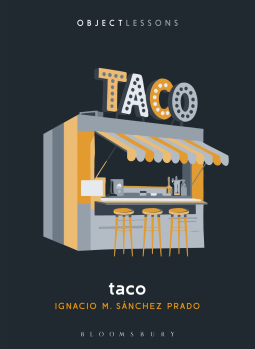
Taco is another instalment in the Object Lessons series, focusing on the taco and its fame as a Mexican food. The book explores elements of the taco such as the definition of what one is and what has caused variations such as soft and hard tortillas, whilst also delving deep into ideas of authenticity and who can make Mexican food.
The Object Lessons series is often delightful, but Taco has definitely been one of my favourites. I felt like I learned a lot not only from the information about tacos, but from Sánchez Prado’s personal experiences as someone from Mexico City who has tried a vast range of tacos (and has opinions re: some of the big debates around tacos). As someone from the UK (where tacos weren’t even that well-known not that long ago, especially anything other than an Old El Paso kit), I liked how the book touched on a lot of aspects of Mexican cuisine and culture, whilst also highlighting what has happened to the taco once it crossed the border into the USA. The only downside is, I’m now craving tacos.
Somebody Is Walking On Your Grave is a nonfiction book from Mariana Enriquez, whose short story collections and the novel Our Share of Night have previously been translated into English. The book explores her visits to a range of graveyards around the world, blending a travelogue, personal memoir, and history as she explores these places and what took her to their locations.
I liked the way she blends travelogue and personal essay, capturing the excitement of visiting new places (it’s fun that a few of them are so she can see bands in that country) as well as her clearly deep interest in graveyards and cultures around death in different places. As a fan of Enriquez’s writing, it was fascinating to find out more about her and travel with her on a few wild adventures (stealing a bone from the Paris catacombs the most thrilling). Some of the historical context I found more interesting than others—New Orleans was maybe my favourite—but it was good to find out more about not just the places she visited, but the people either interred there or connected to it.
Shy Trans Banshee is the sequel to Bored Gay Werewolf and it follows said titular werewolf, this time in London, where he and his supernatural-fighting friends are trying to pick up the trail of a missing colleague. Brian and his friends Nik and Darby are running a secretly supernatural shop whilst trying to work out what happened to the previous proprietor. They’re not getting anywhere, but then they find that fortune tellers are being kidnapped, and then they meet Maeve, an Irish trans woman who seems shy at first, but also has something she’s not telling them.
Bored Gay Werewolf was a fun book satirising manosphere-type guys with a slacker protagonist. The sequel picks up with Brian still lazy, but now much more able to control the werewolf side of his life, and the narrative has morphed into more of a ‘monster hunting friends’ situation than just focused on Brian. He is still the perspective through which the narrative is focused, but now there’s his friends and new friend Maeve, who is the shy trans banshee of the title (it is funny that the final word of that phrase isn’t revealed for a long time in the book, which is a bit frustrating when reading).
I like the fun, irreverent vibe of this book, which is similar to the previous one, and it makes the supernatural mystery solving element more enjoyable for me, as someone who isn’t a huge fantasy fan but does like sweary queer books. I was glad that the ‘Americans in London’ jokes weren’t too overdone (I’m realising now that this is an ‘American Werewolf in London’ book), though there was the odd detail that was weird for me as a British person (it’s strange to have a side character being described as UKIP when they’ve not really been prevalent or used as a descriptor in quite a few years).
I’ve seen other reviews mention that they wanted more Maeve, and I agree. I think that though she’s crucial to the plot, it would’ve been great to see more of her as a character and also delve more into what it is actually like for her to be a “shy trans banshee”. Maybe some way of having her perspective added into the narrative as well as Brian’s at some point would’ve helped. There’s an offhand joke from Brian at one point about the intersection between being gay and being a werewolf, and I do think that the quirky titles of the series don’t quite get the exploration in terms of that intersection, especially in Maeve’s case.
As the second in what is clearly a series (the book ends obviously prepared for another sequel), Shy Trans Banshee is a fun queer supernatural story that perhaps has a bit more style over substance at times. I think the pivot from the first book being more obviously satirical to this one being more of a quipping-friends-solving-a-mystery means that the humour is different and the engagement with the real world not as gripping (compared for example to books like Juno Dawson’s Her Majesty’s Royal Coven books, which very clearly integrate magic in to the real world and into real world issues). However, I did enjoy the characters and will read the sequel to find out what happens to them next.
The Decadence is a gothic horror story that offers a new take on the country house novel, as a group of friends flee to an old country house during lockdown. Jan and her friends are floundering, and now lockdown has made things even worse as they can’t even party to escape their lives. But there is one option: a couple of weeks at the old country house Theo inherited from his great uncle. Fuelled by as many drugs as they could bring, things start falling apart almost immediately, as their interpersonal dramas surface, but quickly it seems to Jan that there’s something else going on, and maybe the house isn’t the safe retreat they imagined.
This is a book that takes a lot of other works and reinvents them into something new, as Leon Craig discusses in her note at the end of the book. The narrative perspective (entirely from Jan’s point of view, a woman trying to fit in despite being a queer Jewish woman in a upper class English environment) and characters are from the country house novel, even pushing as far as (again, as Craig states) The Secret History as a kind of country house novel without the house, but with the in-group rarified from others. The haunted house side of things easily calls to mind Shirley Jackson, House of Leaves, and Tell Me I’m Worthless, and the latter in particular feels like a good comparison for this book, with The Decadence having less of the horror but a similar connection between the evils of Britain and the haunting of its seats of power.
The story itself is pretty simple, with messy characters and drama between them building to a climax alongside the weird things happening in the house, and being forced together in a claustrophobic setting adding to all that. It starts in a slow burn gothic style, mostly focused on the characters, before things ramp up as they all take an experimental drug. Sometimes this kind of book can lack a dramatic ending, but The Decadence builds to something that feels in-keeping with the atmosphere it has created (though I think having read Tell Me I’m Worthless primed me to expect something like what happens). Due to being from Jan’s perspective, you never quite know what was going on with the other characters, which again, suits the genre, and also the overarching theme of belonging and what is knowable.
I thought from hearing about it that The Decadence would be my sort of book, with its combination of haunted house horror, the Brideshead-style novel, and a queer protagonist, and I’m happy that I wasn’t disappointed. Craig uses the range of books that influenced her to create a new version of a gothic country house that fits into the claustrophobia of lockdown (which I’ve not mentioned otherwise in the review, but I liked how it came into the novel, and how it didn’t) and explores the messiness of belonging (or not) in terms of identity, money, and power in modern Britain.
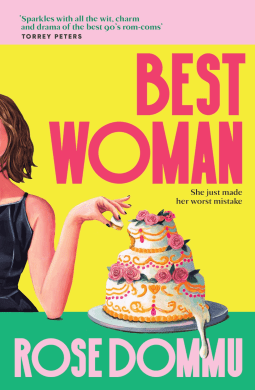
Best Woman is a romcom about a trans woman attending her brother’s wedding who discovers that her high school crush is the maid of honour. Julia’s family is supportive of her, unlike many of her friends’ families, so she’s happy to be best woman at her brother’s wedding even with having to interact with so many of her extended family members, but she’s even more excited when she discovers that her high school crush, Kim, is the maid of honour. When they meet up, Kim assumes that Julia’s family are less than happy about Julia being trans, and Julia uses this lie to try and win over Kim via sympathy. As the wedding draws closer, however, Julia realises that she can’t keep up the lie forever, and being a romcom heroine doesn’t always pay off.
I was excited to read Best Woman as you don’t see that many trans romcoms, and I love to see what we are writing in every genre. The book follows a lot of classic romcom conventions, particularly around the fact that the protagonist lies to her love interest in the hope of fuelling their romance, and it’s good to explore what a trans version of that might be: in this case, using the idea of transphobia to garner sympathy. Whilst the romance side of things is important to the plot, the book really focuses on family, and the types of family support you can have, with people who are and aren’t actually related to you. Julia has to deal with how family members perceive her and the difficulty as a trans person of navigating relatives remembering you as a child, not always as you’d like to be perceived (definitely something relatable for me).
The comedy side of the romcom is snarky, with a lot of jokes about queer life, and I particularly liked Julia’s fittingly chaotic romcom friends, who in this case are a group of queer friends from New York City who do things like “borrow” clothes from pop stars. Oddly, the main thing that didn’t get any snark was a few references (from Julia’s POV as she’s the narrator) to Harry Potter, and given that there’s a comment about Silence of the Lambs and whether it is okay to like it, it felt disorienting that the Harry Potter references were neutral and didn’t at least get a bit of commentary about how Julia couldn’t help seeing the comparisons or memories even considering the author.
The story itself is simple, building up to the wedding with plenty of drama going down, but there’s lots of little moments exploring the complexities of Julia’s emotions around her family and what she wants in life in general (even the main bad thing she does, lying to Kim, is explored in its complexities, though the book never lets Julia get away with it as just being due to the pressures she feels). The ending has more of a focus on family, and without wanting to give any spoilers, there’s a fairly ambiguous epilogue that personally I felt the book could’ve done without, but I understand that some people are looking for that kind of epilogue in a romance book.
I’ve struggled to find romcoms with trans characters written by trans people previously, and Best Woman really hits that spot. It allows Julia to be a classic romcom protagonist making mistakes that outside of the genre you might think are a bit much, but in a romcom are just the kinds of drama you get, whilst also being a snarky look at what it is like to be around different family members both when trans and as a child of divorced parents. The cover I saw before reading had a quote from Torrey Peters, and the book does make me think of things she’s said about trans people writing in all genres, and how Detransition, Baby was a take on a comedy of manners with a trans lens, because Best Woman feels like it is not just a romcom with a trans protagonist, but also considering what kind of space that might be and how transness might fit into the “wedding romcom” genre.
They Own The Night is a young adult novel set in the 1980s about two siblings whose serial killer father was the main drama in their lives until they discover that vampires are real. Mia and Johnny’s dad is in prison, having been revealed to be a serial killer, and they are both now at university near Edinburgh, trying to make their own way. Mia loves horror and has a true crime radio show, whereas Johnny is a budding music journalist with an invite to interview a reclusive rock star. As Mia uncovers secrets close to home and Johnny finds himself falling for the bad boy musician, they both discover that horror might be more relevant than they expected.
This is a Dracula retelling that has a good balance between being a retelling and actually having its own plot and character arcs. Having read the first book in McCaw’s Mina and the Undead series previously, I was interested to see what this one would be like. The narrative is told through Mia being interviewed in the ‘present’ by a police detective as well as snippets from ‘then’ from the perspectives of both siblings. There’s also bits of Mia’s radio show mixed in, and this combination has a flavour of the format of Dracula without being too epistolary in nature (it is more similar to Interview with the Vampire really in terms of format).
Having both siblings’ perspectives and stories makes the book feel a lot more complex and vivid, especially as Johnny’s story is more ill-advised queer romance and Mia’s is more group of friends become monster hunters. Sometimes plot points feel a bit forced to make the Dracula retelling and multiple narrative arcs work (the radio show, for example, is plot-relevant, but feels like it could’ve been a bit more). The 80s setting is fun, though it does rely a bit on modern teenagers liking The Lost Boys (saying that, but as a 2000s teenager I would’ve loved this book, which feels like a great follow on from 2000s children’s vampire series like The Saga of Darren Shan).
As an adult who likes trashy vampire media and who particularly loved trashy vampire media as a teenager, from my perspective They Own The Night is a fun way of retelling Dracula. I like that it plays on the tension between Jonathan and Dracula in other versions of the story and doesn’t feel the need to stick too close to the original narrative whilst still having a lot of the same plot beats.
Acquired Taste is a collection of short stories by horror author Clay McLeod Chapman, with a huge range of premises across 25 stories. The stories in the collection are mostly pretty short, never outstaying their welcome, and I liked how much they could differ, meaning that the stories don’t end up getting too repetitive. There’s also a mix of horror styles, from darker, more extreme horror to more bittersweet moments and satirical stories.
There were a lot of fun concepts in the stories (there’s one that involves plushies similar to Labubus which is a great romp) and creepy moments (like someone hearing a crying baby in the cinema, only to realise they’re alone). The only stories I found less engaging were one about civil war psychic sisters (as I’m not really a historical fiction person) and another that was presumably the precursor to CMC’s recent novel Wake Up and Open Your Eyes as it felt like a slightly watered down version of part of that book, and as I’ve read that novel, it wasn’t very exciting to read that.
The collection is great if you like punchy horror short stories, and would work as a good introduction to Clay McLeod Chapman as well. Short stories aren’t always my favourite format, but this kind of well-paced, varied, doesn’t-shy-away-from-being-nasty collection is what I do like.
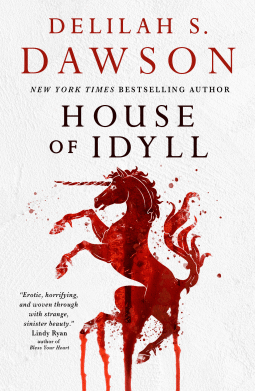
House of Idyll is a novel in which a young singer gets the chance to stay at an artists’ retreat run by her favourite band, only to find something sinister lurking underneath. Angelina is a barista in Hollywood, wanting to make it as a singer-songwriter, until she’s suddenly plucked away and offered the chance to stay at the compound owned by rock band Black Idyll. There, she can live and work on her music for free, and she even gets to see Jesper Idyll, the band’s iconic frontman and her teenage crush. As Angelina stays longer, she notices weird things like spooked horses and mysterious figures, but it is hard to tell where the dream ends and the nightmare begins.
Having read Dawson’s Bloom and Guillotine previously and being interested in stories about ideas of rock stars, House of Idyll sounded like a book for me. I particularly enjoyed Guillotine and House of Idyll feels similar to that for a lot of the book, as someone who isn’t used to a luxury lifestyle explores a very different world. However, where Guillotine is an ‘eat the rich’ horror thriller, House of Idyll is more of a rock star drama with some threatening vibes. I was expecting far more horror from this book, but that doesn’t mean that I didn’t enjoy what it was.
Following Angelina’s perspective, the narrative is very slow burn, building up her sense of unease and how it clashes with the fact it feels like all of her dreams are coming true. There’s a lot of build up, and my main issue with the book is that the ending is incredibly quick and doesn’t really conclude a lot of the plot points that came up, other than the reader assuming there’s a reason that fits in with the reveal at the ending. In my opinion, there could’ve been more dread and more meaning to the final twist if we knew a little bit more about why certain things, like character deaths, had needed to happen in the way they did. However, I did like the final twist, and it almost feels like there could be a sequel that might delve further into the darkness.
House of Idyll is a fun, quick-to-read book about secretive rock stars in a weird compound, so even though it was a lot of build up for a very quick conclusion, I enjoyed that build up and the atmosphere it created. It had the trashy rock star vibe that I often want from novels about musicians, and don’t always get, so it’s perfect if that is what you’re looking for, rather than a scary horror story.
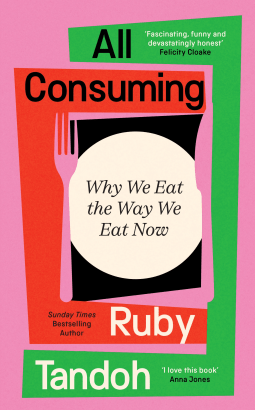
All Consuming is a book about the history of how we choose what to eat, as Ruby Tandoh investigates how over the past century many forces have changed what influences what we eat, especially in Britain and the US. The sections explore things like the changing face of recipes and cookbooks, the role of the critic before and into the social media age, and how trends like bubble tea and burgers took off in the UK.
If you have any interest in food culture in the UK (and the US), this book provides an interesting look into what influences our food choices, whether that is through celebrities, critics, recipes, supermarkets, or more. As someone who enjoys watching videos online of people trying different food, I liked this chance to reflect on what some of the food trends mean, and look into the history of certain areas. I particularly liked the part where Tandoh picks out some big name cookbooks in the UK and discusses what they say about cookbook and recipe culture.
I found myself wanting to share her thoughts with other people (I particularly liked her point about how if you start queuing for some hyped food, you cannot actually queue ironically, you are just part of that hyped queue) and the book covers something I’ve not seen other books or videos discuss, making it feel original and fresh. The book is an exploration rather than arguing a particular point and I like the space it offers to think about why we choose food, as well as a lot of suggested follow up reading if you want to keep exploring.






 Fiendfully Reading
You must be logged in to post a comment.