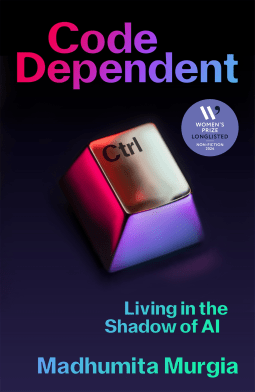
Code Dependent: Living in the Shadow of AI by Madhumita Murgia

Code Dependent is an investigation into the human side of AI: the ordinary, non-Silicon Valley people affected by and involved in areas relating to artificial intelligence. Journalist Madhumita Murgia tells the stories of people and communities impacted by AI from people labelling AI training data to people whose lives are changed by the decisions of AI systems or having deep fake videos made of them. Not everything is negative: there’s also healthcare benefits, if only these technologies can be made freely available and in places that most need them. And as the book moves towards the ending, Murgia argues that these stories give us principles we should consider going forward to ensure AI works for ordinary people, not the other way around.

Notably, this book focuses on the human side of technology, rather than the technological side, and foregrounds the experiences of people and the complexity of AI’s role. Even for areas that are often discussed in other books, such as predictive policing, this book offers examples I’ve not seen before and direct interviews with people affected, not something all technology books have. At the same time, it does provide an accessible description of a lot of AI-related technologies; for example, it’s the first time I’ve seen—as someone who reads a lot about AI—a simple explanation of what a ‘transformer’ is and why it has been so important for generative AI. This combination makes Code Dependent useful both for people who do read tech books, but are interested in human stories rather than the same talking points, and people who are newer to the topic and would like a way in that focuses on people.

Sometimes I found the framing or phrasing a bit simplistic or lacking nuance and complexity, but generally, it was an accessible book about AI that tells stories rather than just facts, and takes areas we might have heard or read plenty about and shows specific people’s lives in relation to these topics. The parting message about religions coming together to discuss AI was not where I expected the book to go and I’m not quite sure how I feel about that being the conclusion (given that high up people in a religion aren’t really ‘ordinary people’ necessarily), but I do appreciate that this was a book about AI that had a lot of things I’d not read about before, or at least not in this form.

Given the current hype and fear around AI, Code Dependent is likely to become a much-talked-about book, offering people a different way in to reading and thinking about artificial intelligence and what it means for our lives.

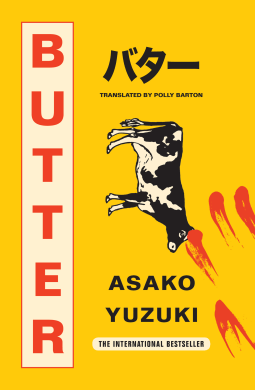
Butter by Asako Yuzuki

Butter is a novel about food and women in Japan, as a journalist tries to uncover the secrets of a gourmet cook who seemingly killed three men. Rika is a journalist who lives off instant noodles and convenience store food, focused on her work and getting tips from a connection she has, whilst keeping in touch with her old friend who is trying to build her life as a housewife. Meanwhile, Manako Kajii sits in Tokyo Detention Centre, refusing to talk to journalists, until Rika tries asking her for a recipe. Suddenly, Rika has a way to catch Kajii’s attention, and her gastronomical life is changed by Kajii’s instructions, but soon Rika and Kajii are caught in a strange game of fascination and food.

Told almost entirely from Rika’s point of view, this novel could just be a generic crime story about a journalist uncovering the truth, but actually, it is far more focused on food, society, and women’s roles within both, considering desire in terms of food and sexuality and exploring different kinds of relationships between people. For a book that is seemingly a crime novel, it has a slow, languishing plot, and is packed full of description, particularly of food and cooking, and it really does capture the titular butter and its impact on both protagonists’ lives through this. It also critiques Japanese society’s beauty standards and ideas about what makes a woman successful, in a way that is quite obvious, but as we’ve seen from things like the Barbie film, still a message that resonates with a lot of people.

Some of the subtler elements and points were more fascinating, like Rika’s own past and feelings of guilt around her father’s death, her best friend’s complex relationship to being a wife and looking to have a child, and generally the way that the wider cast of characters interact with each other and what they feel like they can do. There’s an undercurrent of female desire, and particularly queer female desire, that sits at odds with the images of heterosexual romance that characters want to perform, and though these elements are small, it’s interesting how they are hinted at. Another part that isn’t really addressed, but is running underneath the novel is ideas of Japanese and Western cuisine—particularly French cookery—and how these may or may not sit nicely alongside one another in modern Japan. Maybe these parts could be more overt, but I like how a novel that is quite big and obvious in its main points can also have these subtleties.

This is a novel that makes you hungry. People looking for something similar to other popular translated Japanese authors like Sayaka Murata may be disappointed, as it is far less transgressive than something like Earthlings, but instead it is a slowly simmering novel about people finding different places for themselves in Japanese society whilst also talking a lot about feminism and food.

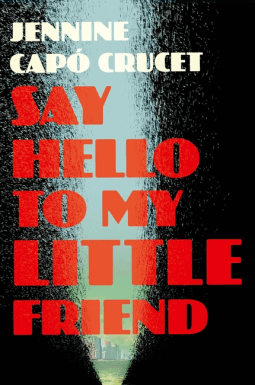
Say Hello To My Little Friend by Jennine Capó Crucet

Say Hello To My Little Friend is a novel about a twenty-year old Cuban man in Miami who decides to try and become Tony Montana, but who comes up against his own past, the city, and an orca. Izzy has just had a cease and desist stopping his burgeoning career as a Pitbull impersonator, so he pivots his dreams towards Scarface, planning out his steps to be Tony Montana. He finds a sidekick—his Manolo, Rudy—and someone who could be his Michelle Pfieffer love interest, but he also finds Lolita, the famed captive orca in Miami Seaquarium, and Izzy’s mind becomes obsessed with her, as does the water of Miami. As Izzy hunts down what happens to get him from Cuba to Miami as a boy, all of his plans start to seem more tragic than triumphant.

As I love the film Scarface, I was immediately drawn to this book, but actually, it goes a lot further than that, combining Scarface, Moby Dick, and the city of Miami itself into a damp, darkly comic novel. The narrative voice is playful, sometimes taking things seriously and sometimes not (there’s a part that recreates the success montage in Scarface but for the much lesser “success” of Izzy), and it casts a wry eye over everything, whilst still having a tense narrative as Izzy tries to uncover his own past (and makes a lot of missteps along the way). The plot centred around Lolita, the captive orca, is a wonderful example of bringing in an animal’s perspective in a novel, and makes this book more than a story of a failed gangster.

Combining a sea creature, dodgy aspirations, and Cuban life in Miami, Say Hello To My Little Friend is a distinctive book, fun yet bittersweet, about the tragedy of a young man without the past or future he hopes for. It’s a literary crime film and a free the orcas documentary and a magical tour of Miami all in one.

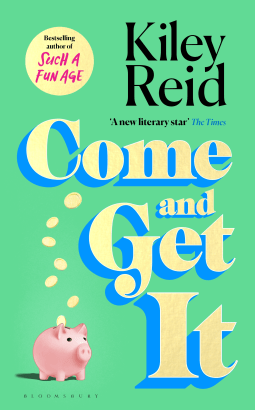
Come and Get It by Kiley Reid

Come and Get It is novel set on a university campus about a resident assistant and what happens when she allows a visiting professor to listen in to students’ conversations. Millie is an RA for her senior year at the University of Arkansas and is desperate to make money and do things right. When a professor, Agatha Paul, asks to speak to students, Millie arranges it, but soon this becomes a regular thing, and Millie is distracted from the students she oversees, including three roommates and their strange dynamic.

From the description of this book, I expected it to be more about a weird plot with Millie having to do a bizarre side hustle, but actually the book was a lot less weird than I feel the blurb made out, and was actually just a tale of college students and money, race, and inappropriate behaviour. The novel is told from multiple perspectives, focusing in on characters and backstories so you know a lot about the main characters, and not really being very plot-focused (the ending has more of a plot, but even then, it’s more like some things suddenly happening). It’s the sort of book that some people will enjoy and others will complain that nothing really happened.

The characters are an interesting, messy bunch, which is essentially the point of the book. Millie, Agatha, and Kennedy (one of the student roommates) are particularly vivid, all coming with very different perspectives, but all essentially trying to pave over the past into the future they want, or trying to find that future. Kennedy’s story is perhaps the most weird and makes for a great narrative, to the extent that it could’ve almost been a separate book, though explaining it would probably give away too much. Millie is a character who things she has things worked out (at the age of twenty-four), but actually is much less diligent than she wants to be, and is learning about desire and how people see her. Agatha seems like a bit of a lesbian professor stereotype, but then she’s also stealing students’ words to write Teen Vogue articles, which is a hilarious plot point.

The book is full of little conflicts and an exploration of the ways in which money, class, race, and sexuality impact people, but in a package that is mostly about some college students’ drama. It’s fun and a bit weird, though maybe not as weird as I wanted. 

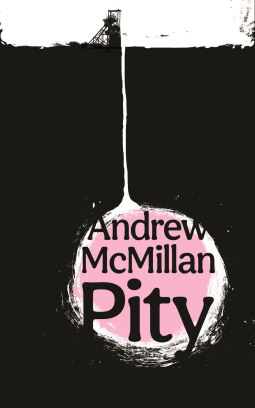
Pity by Andrew McMillan

Pity is a novel about the lives of a family in a South Yorkshire mining town and the impact of place and self to the people who live there. Brothers Brian and Alex have always lived in this town, once a mining town and now haunted by the memories of mining strikes and disaster. Alex’s son Simon lives there too, but his world is different, working in a call centre by day but by night doing drag shows and sharing content on OnlyFans. Researchers come to the town, looking at the effect of memory, but sometimes the scars aren’t what you’d expect.

This is Andrew McMillan’s debut novel and being a fan of his poetry, I was excited to read this. The narrative is told through a variety of elements—CCTV footage, third person narration, research notes—and this gives it a particular atmosphere of looking in, almost spying on the lives on the characters (and there’s a lot of watching throughout the book, a lot of viewers). It is focused a lot on place, but really the people who make up a place and how that can change as times change too, that a place isn’t always just one thing, even when it seems like “mining town” is just what somewhere is. Though the novel is short, there’s a lot to think about in terms of these elements, ideas of viewing and memory, and this kind of psychogeography.

Though the time with the characters is brief, there’s some interesting things going on with them. There’s the obvious different trajectories of Brian and Alex, the latter of whom’s plotline is half-unspoken, very much mirroring ideas of what he feels like he can talk about. Simon’s narrative is focused around him bringing his drag performance back to his hometown, where he’s changing things up for something more political, and exploring his relationship with Ryan, a security guard who wants to be in the police. There was some complex bits with Ryan and with their relationship, which the novel doesn’t delve into much as a lot is hinted at and implied rather than explicitly covered, like attitudes towards drag and who people are when they do or don’t change outfits or make up.

I would’ve read more of this book, but I also like the fact that it is very much a snapshot, a controlled piece that teases you with glimpses of lives and experiences, but ultimately doesn’t give you everything, just like the CCTV and Simon’s OnlyFans. I enjoyed how it depicted queer life across different kinds of experiences alongside the focus on place and geographical and mental scarring (brought together neatly and horribly by the spectre of Thatcher).

Black Sheep by Rachel Harrison

Black Sheep is a novel about a woman who returns to the weird religious community she grew up in, only to discover a secret that changes how she sees herself. Vesper left home at eighteen, leaving her horror film star mother and everyone else she knew, and escaping from the religious upbringing she realised she didn’t believe in to work in depressing chain restaurants. An invitation to her cousin and former best friend Rosie’s wedding, even though Vesper shouldn’t be allowed back, leaves her returning home, but once there, she finds out something that blows apart everything she thought she knew.

I enjoyed Harrison’s previous novel Such Sharp Teeth and its combination of everyday and supernatural elements, and Black Sheepdoes a similar thing, taking a somewhat lost female protagonist and bringing in some light horror elements (neither are particularly horror in plot, more supernatural, or at least up until the ending of Black Sheep). The writing is gripping and it’s easy to speed through this book, with a few twists in the narrative (the earliest one I didn’t even realise until it was revealed, so I’m avoiding mentioning this element even though I think other reviews will probably talk about it specifically, as I enjoyed the reveal). The narrative could’ve lingered more on the community and what Vesper’s childhood was like, but I think the choice to make it really focus on Vesper as an adult and her perspective makes it a more fun book and more character focused.

Again, without spoilers, I will say that I think the religious community element is a very fun thing, but also (almost hilariously) misrepresents the real life versions of it to an extent it almost needs mentioning. I would’ve liked a bit more about the beliefs and how they work, as I think some of the religion/cult stuff felt a bit light and like you needed to know more about what they actually believed on various issues/topics. The twists in the book are the kind of twists I very much enjoy in a book, and it was almost funny that I didn’t realise going into the book that it was about this area, but I didn’t read anything about it beforehand. 

I like Rachel Harrison’s style of light horror that focuses on regular, often cynical protagonists dealing with supernatural situations, and Black Sheep is a fun read ideal for people who like character-first supernatural stories. The end goes a bit closer to darker horror and I really liked that, but also people who are less into horror could still enjoy this one as its not about the scares.

Greta and Valdin by Rebecca K Reilly

Greta and Valdin is a literary novel about two queer siblings in New Zealand who attempt to navigate their complicated family and chaotic love lives. Greta and Valdin live together, with Valdin pining over his ex-boyfriend Xabi who left for Argentina once they broke up and Greta trying to deal with being an underemployed grad student with failed dating exploits and a girl who just seems to use her for help with work. Their Russian father and Maori mother—and their whole extended family—are eccentric in their own ways, but maybe Greta and Valdin can finally work out how to exist for themselves and still involve their family.

I’d heard this book hyped about, but wasn’t sure what to expect. From the opening pages, it was hilarious, and that really set the tone for me: I’m not used to literary fiction being this funny (there was one line in the book I had to stop and repeat to my partner because it was so good). At the same time, it is a book with complex interwoven messages about identity and queerness and family, particularly in the flexibility of what things mean to different people and how everyone forges their own sense of self and what their labels mean to them. The characters are endearing and messy, the kind where you are half-gripped to see what terrible decisions they make and half wanting to swoop in and save them from themselves.

The narrative is mostly around interpersonal relationships and character development, as you’d expect from literary fiction, and I liked the ending and the fact that it offered hope in a range of ways. The split perspective of the narration worked well to give you a sense of the similarities and differences between the siblings, and leave you fully entangled in their lives. I love the sort of literary fiction that feels fun, where there’s plenty of serious stuff in there and some interesting things to navigate and explore, but also you get ridiculous banter along the way. The sense of place was also a big selling point, as there’s a lot of culturally specific elements that feel very embedded into the book, and though I’m sure I didn’t get a lot of them first time around as I’ve never been to New Zealand, I appreciated it and the way the novel uses place for a family that might seem dislocated.

I didn’t know I needed literary fiction about messy queer siblings, but Greta and Valdin proved that I did. There’s a lot packed into a book that is both hilarious and quite touching, and it felt worth the hype to me.

Piglet by Lottie Hazell

Piglet is a novel about a woman whose wedding is approaching, as a perfect ideal of a life seems to be falling apart. Piglet—her family’s nickname for her—is due to marry Kit, whose upper middle class Oxford parents are a far cry from her own, and soon they will have a perfect life of dinner parties and domestic bliss. But when Kit reveals a secret thirteen days before their wedding, Piglet must decide what she wants to do and what she really desires.

This book opens with Waitrose, and that really is a good marker of what is to come. Piglet takes aim at ideas of domestic bliss and a middle class idea of what people should do, blending satirical ridiculousness (Piglet and Kit’s families are complete stereotypes) with extended descriptions of food. It is also very much about disordered eating and ways people unhealthily use food to cope, but in a literary way where this is not really addressed head on, as much of the book is. From the blurb, it might be difficult to tell how much this is literary fiction, about unlikeable characters and stereotypes and extended description that forces you to focus on the food, and not on the secret Kit has revealed, which is likely to make the book not for everyone.

The way Kit’s secret is handled is also probably divisive, and I couldn’t decide whilst reading it if the way the book does it (not wanting to entirely give spoilers) works best, especially as I did hope the book would get darker with the secret, breaking even further away from the conventions it is ridiculing. It does well to create a sense of horror around a lot of expected traditions, which might hit differently for people who have gone through them, and counters it with the subplot of Piglet’s best friend Margot and her wife having a baby and Margot being a very different voice to everyone else around Piglet.

Taking aim at the idea of a domestic goddess who also shouldn’t eat too much, Piglet is a bold novel that might not always satisfy, but was a compelling read. It’s harsh and exaggerated, and it really does, unfortunately, make you hungry.

My favourite non-2023 books of 2023

I forgot to finish and post this in 2023, but seeing as the books didn’t come out then either, I think it’s fine. These are my favourite books I read in 2023 that didn’t come out in 2023, with a caveat that Greta & Valdin actually comes out in the UK in 2024, but was already published in New Zealand so I’m counting it as already out. The list is short and weirdly varied (two novels, two poetry books, and one horror manga), but I think it does give a good insight into what kind of books I like.

Uzumaki by Junji Ito – I’d been watching the Netflix adaptation of some of Junji Ito’s stories and finally read my first book, which very much lived up to expectations (and the whole obsessed with spirals premise wasn’t helped by the fact I keep feeling dizzy, made for an immersive experience).

full-metal indigiqueer by Joshua Whitehead – Having read Whitehead’s novel Jonny Appleseed, this poetry collection was very exciting to find in my local queer bookshop.

Greta & Valdin by Rebecca K. Reilly – A bit of a 2024 spoiler seeing as it is coming out in the UK this year, but I really loved this novel about chaotic queer siblings in New Zealand.

Signs Preceding the End of the World by Yuri Herrara – I’ve had a couple of a three-month book subscription where they picked specific books based on your taste, and my taste must be weird as a lot of them were just okay, but this novel really hit the nail on the head in terms of being a literary action thriller about immigration, feeling like the sort of film I would enjoy.

Your Emergency Contact Has Experienced an Emergency by Chen Chen – I love Chen Chen’s poetry and this title really can’t help but draw you in (I love witty poetry, but I especially love witty, long titles).

My favourite books of 2023

2023 had some ups and downs in reading, but the best part was probably that a number of my highly anticipated books turned out to be great, which has the side effect that this list isn’t particularly surprising. If I was doing some kind of “unwrapped” thing, I would have to note that the number of 2023 books I’ve bought t-shirts of is 2 (and both of those books are on this list). Note to publishers: I love inexplicable merch for queer literary fiction.

I’ve split into prose and poetry, though one of the prose is non-fiction and the rest are fiction. Links in titles to full reviews where I’ve written them.

Prose

Machine Readable Me by Zara Rahman – Reinvigorated my tech book reading by being compelling and interesting, and making me think a lot more about digital borders.

Brainwyrms by Alison Rumfitt – The first (on this list) of my much anticipated books did not disappoint. I loved the body horror and the influence of the internet on the plot and the way it felt so much like edgy books teenage me liked.

How to Get Over the End of the World by Hal Schrieve – Having also read Schrieve’s Out of Salem for the first time this year, I was glad this one was great too, fully of messy queer teens and adults not living up to their role model status.

The Unfortunates by J.K. Chukwu – This novel really delves into the mental health of a Black queer college student whilst also be darkly comic and cutting.

Penance by Eliza Clark – What can I really say? Another highly anticipated book that knocked it out of the park, by being a meditation on teenagers, weird internet fandoms, Sims mods, true crime, and whose stories we are really telling. I just love literary fiction about being weird on the internet.

Corey Fah Does Social Mobility by Isabel Waidner – And the third on my highly anticipated list, Waidner’s latest experimental novel is my favourite to date, blending class commentary, Joe Orton, queer relationships, and Bambi in their distinctive, surreal style.

Never Was by H. Gareth Gavin – Another book with a distinctive style, Never Was is a queer hallucination about storytelling with narratives within narratives and a mysterious unreal party.

Such Sharp Teeth by Rachel Harrison – Sometimes my favourite books are because they are fun, and Such Sharp Teeth is one of those: a funny werewolf novel that does the ‘supernatural creatures in real world setting’ well and plays with the body horror elements of being a werwolf.

Chain-Gang All-Stars by Nana Kwame Adjei-Brenyah – Tense and brutal, Chain-Gang All-Stars is a future of blood sports featuring incarcerated people and a book full of heart and a lot of perspectives.

Bellies by Nicola Dinan – Such a tender book about how a relationship between two people changes when one of them transitions, and how they both search to find themselves after university.

Open Throat by Henry Hoke – The queer mountain lion novel you never knew you needed (but you do).

How to Sell a Haunted House by Grady Hendrix – I wasn’t expecting Grady Hendrix to come out with my favourite of his novels to date, but How to Sell a Haunted House takes a high-concept sounding title and turns it into an emotional horror novel about grief (and weird puppets).

Wild Geese by Soula Emmanuel – Another novel about a changing relationship, as a trans woman’s ex-girlfriend appears on her doorstep and they have to face the past and the present. I loved how it was beautiful and wistful, but also full of references to things like Blåhaj).

Poetry

Ex-Cetera by HLR – I loved this punchy poetry collection that is hard-hitting, but also has references to things like Strongbow Dark Fruits.

Hard Drive by Paul Stephenson – My four word review from Goodreads says it all: “Deeply emotional; wonderful stylistically.”

Tomorrow Someone Will Arrest You by Meena Kandasamy – Powerful and varied (and the title poem is so memorable).

Synthetic Jungle by Michael Chang – Witty, catchy, funny, referential: all the things I like poetry to be.