
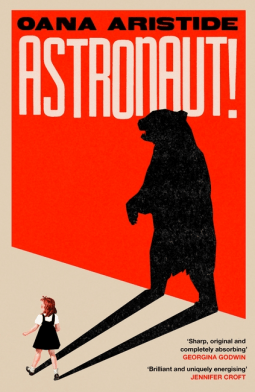
Astronaut! is a novel about Communist Romania that blends a serial killer mystery with the story of a child who doesn’t understand the stakes involved in her actions. In Romania in 1989, a string of horrible murders happens and police detective Constantin has the job nobody wants: trying to investigate the murders even as they must be blamed on a bear. He crosses paths with Lia, a schoolgirl who just wants to draw pictures and bring the colours back to the drab, grey landscape of her life. Lia’s parents just want to survive, but their daughter is unknowingly being drawn into a a dangerous plot being planned by a neighbour.
This book is completely engrossing, painting a vivid, tense picture of Romania during the last days of Communism that highlights both the ridiculous realities of trying to investigate actual crimes under an atmosphere of state violence and the impossible position of trying to get your child to comply with laws when they have a curious, rebellious nature. Lia’s character is well-written to make you understand the injustices she feels whilst also feeling sympathy for her parents just trying to avoid prison for something their daughter does. There’s a lot of clever details, like how Lia doesn’t believe her parents’ warnings about what will happen to them if she says something inappropriate because she’s used to the casual threats of typical parents when trying to convince her to do small things like eating her dinner. It builds up a powerful tension where Lia’s increasing knowledge and awareness about the world puts her and others in danger, but is also just her growing up and learning things.
Astronaut! is a gripping story, but for me it was also a eye-opening look into Communist Romania, which I knew little about before reading it. It is a book I’ll be recommending to people, especially those who like literary fiction that engages with a real historical time period whilst blending together genres.



 Fiendfully Reading
You must be logged in to post a comment.