
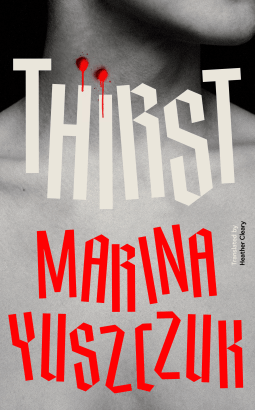
Thirst is a vampire novel, telling the story of two different women in Buenos Aires across two time periods. In the nineteenth century, a female vampire escapes Europe and the dangers of hiding those she must kill to satisfy her thirst, ending up in disease-ridden Buenos Aires where she can haunt the streets, but still she knows the danger of her need to take blood. And then in the present day, a woman deals with her ill mother and how to explain it all to her young son, whilst also being given a mysterious key to something in a crypt.
This is first and foremost a gothic novel, following in the vein of particularly nineteenth-century gothic novels that use their tropes and atmosphere to explore present concerns. In Thirst‘s case, this is fear and loneliness, and the isolation of sadness, as well as elements of women’s roles in society, and the changing city of Buenos Aires. The first half of the novel tells the story of our vampire, her struggle to drink blood whilst remaining hidden, and her desires and the ways in which sex, desire, and blood-sucking intermingle. It tells a similar story to many vampire novels, old and new, with the battle between thirst and loneliness and monstrosity. It is harsh and bloody, with a great atmosphere.
The second half of the novel is from the perspective of a woman in the present day, who cares for her young son and faces her ill mother’s impending death. When she’s given information about a mysterious crypt from her mother, you know where the book is going, but it takes a long time to get there, and this section’s tone is much more about the woman’s sadness and her struggles to cope than the vampire element until the very end. The style, like a diary, brings it back to the gothic novel, however, and there’s some interesting thoughts about creation and agency throughout.
I love a vampire novel, and it is interesting how Thirst plays with being a very traditional vampire novel, and also a story about grief and sadness that almost forgets the vampire part for a while. It is a book about uncontrollable desire, and the loss of desire, and whilst the two halves don’t entirely come together, I enjoyed it nevertheless.
 Fiendfully Reading
You must be logged in to post a comment.