
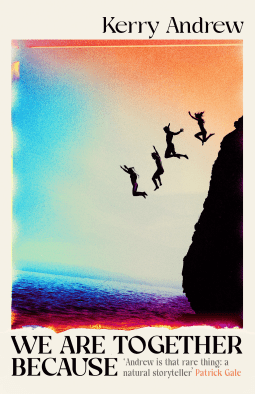
We Are Together Because is a twisting piece of literary fiction that starts with half siblings on holiday together and turns into an apocalyptic story of an eerie world ending. Luke and Connor’s father left their mother before Connor was born, and now they’re on holiday with their half sisters Thea and Violet, with their father planning to join them later. As the fragmented family deals with their own preoccupations, strange things start happening: a strange sound only Connor can hear, Violet seeing some kind of plane crash. And then, everything changes as the world seems to break before their eyes.
This novel is hard not to describe as one of two halves, because the story so suddenly changes partway through (and not having reread the blurb before reading, I wasn’t expecting it, either). It moves between the perspectives of the four protagonists, exploring their mindsets and their dynamics as they spend a hot summer in France, and the characters’ stories are quite varied, with Violet dealing with a traumatic event in her past, Luke avoiding a relationship that turned abusive, and Connor and Thea having a strange incest-y subplot. Just when you think that whatever happens will come out of these plotlines, the book takes an apocalyptic turn, and it becomes about survival and humanity in an eerily desolate setting. The second half unfolds quite expectedly, not answering any questions and focusing on the characters still in a way that makes for an unsettling sense of how it might feel to have these events happen to you.
I found We Are Together Because gripping and I liked how it went from coming of age to end of the world whilst staying very lyrical (though occasionally there were moments of description so jarring that they pulled me out of the narrative). As with Andrew’s previous books, there’s a lot of exploration of language and sounds and gender and sex, but this time with an unnerving end of the world element. A lot of people will probably prefer one half or the other, but I liked how the parts of the story talked to each other, and how the characters’ preoccupations didn’t disappear because things had radically changed.
 Fiendfully Reading
You must be logged in to post a comment.