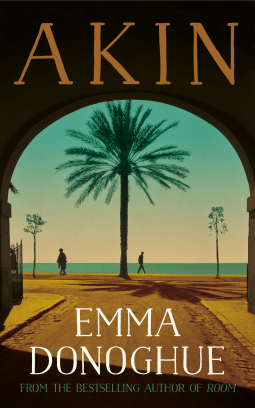
Akin by Emma Donoghue

Akin is a novel about unlikely travel companions looking for answers and for similarities and compromises that will get them through the present. Noah is a retired professor in New York, about to take a trip to Nice—where he was born—for his eightieth birthday. Just before he leaves, he gets a phone call that will change everything: his eleven year old great-nephew who he’s never met needs a temporary guardian, and Noah is the closest kin to Michael who is available. Suddenly Noah and Michael find themselves together in France, clashing over everything, but Noah ends up on a quest to work out the mysteries behind some old photos taken by his mother and Michael might be able to help point him in the right directions.

Donoghue takes a short space of time—the trip to Nice—and fills it with the present and past in a way that works well, as Noah thinks about family across generations and the history of Nice during the Second World War but the narrative stays firmly in the present day. There are a lot of details that make it thoroughly modern—from the realities of what children see on the internet to how technology can help solve old mysteries—but it also has a sense of the past and how people are shaped by it. The mirroring of this not only through Noah’s family history but through Michael’s—with his mother in prison and questions around his dead father—shows that family and history can be varying categories, but still with similar connections and dangers. The writing style makes the novel very easy to get into and it is more gripping than expected as the trip unfurls.

Akin is often very much about the personal—about specific relatives and about two people trying to compromise being forced together—but also tries to keep an eye on larger issues at stake. There perhaps could have been more made of the class issues that are important undercurrents to the novel, but as it is through Noah’s perspective, it seems purposeful at times that he often doesn’t realise how different his and Michael’s lives are not from an age perspective, but a class one. It is a book that ultimately tries to be uplifting and to show that people can have more in common or find more ways to relate than might be expected, and one that you could imagine being made into a film.
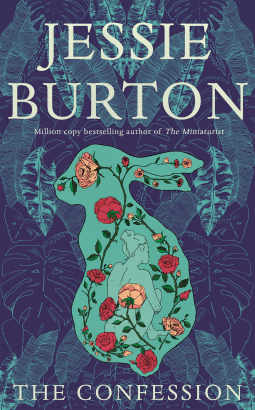
The Confession by Jessie Burton

The Confession is a novel about a woman looking for answers about her mother, and discovering not only secrets but ways for her own life to move forward. Rose Simmons is looking for her mother who disappeared not long after Rose’s birthday. A gift from her father points her towards Constance Holden, a reclusive novelist who needs an assistant, for answers so Rose hatches a plan to escape her own life and find out about her mother. And three decades previously in 1980, Elise Morceau meets Constance Holden on Hampstead Heath and they fall in love, but when they end up in Hollywood where Constance’s book is being adapted, things start to fall apart.

Burton uses a classic trope of telling both stories at once to unravel the stories of Rose, Elise, and Constance, drawing comparisons between characters and building up the emotional stakes. Unusually for this style of novel, both plot lines are engrossing in different ways, and feel a lot more focused on the emotions and characters involved than any revelations that are offered to either the reader or the characters. Particularly notable is the dynamic between Rose and Constance, which though built on Rose’s initial lies becomes something that allows Rose to finally find a mother figure right when she needs some guidance. Elise feels less realised, but it starts to become apparent that this is part of the storytelling, in a book that is partly about an author writing or not writing elements of her life, and how people tell themselves stories to get through life.

The Confession is a surprising book that does more than expected, looking at being a mother, finding yourself, and how you tell the story of yours and others’ lives.

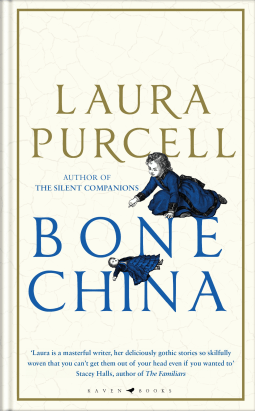
Bone China by Laura Purcell

Bone China is another atmospheric historical gothic novel by Laura Purcell, suffused in superstition and illness. Hester Why arrives at Morvoren House in Cornwall to take up a lady’s maid position with secrets surrounding her flight from London. What she finds there isn’t an escape, however, but a strange situation: Miss Pinecroft, sitting in a freezing room full of china, unwell and looking older than her years. An old servant obsessed with fairies and a mysterious ward add to the weirdness. And forty years previously, Louise Pinecroft and her father move after consumption ravages their family, hoping that the sea air will provide the answer to her father’s experiments on ill convicts, but the new maid tells her tales of fairies and the dangers they pose.

It is exciting to have a historical gothic novel that focuses on contemporary medicine that is set during the Regency and before rather than the usual Victorian setting. The tension between scientific ideas, passed down knowledge, and otherworldly magic provides a good backdrop for a novel also about the power structure of servants and those above them and the different things that keep people locked up, whether literally or not. These concepts of power and imprisonment fit well with actual gothic novels of the period in which the book is set, and the genre is used well to start to explore these (though it would’ve been interesting to see Hester’s reliance on alcohol and laudanum developed further). There are some threads that don’t feel fully explored in the novel, but this does allow it more ambiguity and gives space for mystery.

Fans of Purcell’s other novels will likely enjoy this one, which uses similar gothic tropes but also engages with the period of the earlier gothic novels (with references to Wordsworth, Byron, and the Prince Regent serving as reminders to this). It combines medicine and superstition in interesting ways and offers a morally complex point of view character who proves that the gothic isn’t just a genre centred around helpless, innocent women.