My Favourite 2017 Books (In Order of When I Read Them)

Ended up as a top nineteen.

  • Stay With Me by Ayobami Adebayo – A book about hope and a couple in Nigeria who dream of having children, told from both their perspectives (full review).
  • The Lonely City by Olivia Laing – A multi-layered non-fiction book about art, LGBT history, and loneliness in New York City (full review).
  • All The Good Things by Claire Fisher – A moving and relevant novel about Beth, a young woman in prison, who is trying to document the good things in her life whilst remembering how she got where she is (full review).
  • A Line Made By Walking by Sara Baume – In the new genre ‘millenials, mental health, and escaping to the country’ sits this novel (full review).
  • The Roanoke Girls by Amy Engel – A twisted story of a family with dark secrets that has hints of (and an epigraph from) Lolita (full review).
  • New Boy by Tracy Chevalier – From the Hogarth modern Shakespeare retellings series comes Othello in a single day in a Washington schoolyard, a version that gives new light to the original (full review).
  • Girlhood by Cat Clarke – The setting is a boarding school in the Scottish countryside, where everything feels more intense to the girls who live and study there, and a newcomer puts everyone on edge (full review).
  • My Absolute Darling by Gabriel Tallent – The unnerving and intense story of Turtle, her apocalypse-obsessed father, and her fight for survival (full review).
  • Eleanor Oliphant Is Completely Fine by Gail Honeyman – A novel about trauma and ways of seeing the world that follows Eleanor as she tries to navigate her life according to the strict rules she has set herself (full review).
  • Conversations With Friends by Sally Rooney – Frances and Bobbi are performance poets and exes who are drawn into the complicated moneyed world of an older journalist and her husband in this fresh and distinctive novel (full review).
  • Good As You: From Prejudice To Pride by Paul Flynn – An account of British gay culture from the 1980s until the present day and some of the milestones in music and TV that showed change and progress (full review).
  • The Gender Games by Juno Dawson – A funny, clever, and often informative book that is part memoir and part guide to navigating gender (full review).
  • Hings by Chris McQueer – Weird and hilarious Scottish short stories feat. drink, drugs, and knees on backwards (full review).
  • A Change Is Gonna Come by various – An anthology of diverse YA fiction written by both established and new voices (my fave is a great story about living with OCD) (full review).
  • English Animals by Laura Kaye – A touching and wry novel about a Slovakian woman who goes to work in a rural English country house, gets into taxidermy, and falls in love with the wife (full review).
  • If We Were Villains by M. L. Rio – Short description: the Shakespearean Secret History (featuring a group of obsessed actors, death, and a fair amount of quotation) (full review).
  • The Sparsholt Affair by Alan Hollinghurst – Hollinghurst’s new book is an expected delight, the story of complicated relationships spanning from Oxford during the war to the 21st century (full review).
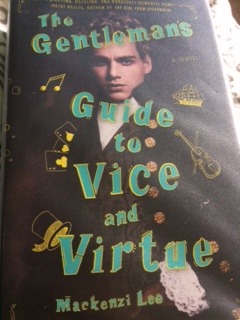
  • The Gentleman’s Guide To Vice and Virtue by Mackenzi Lee – My new ‘enthuse about this to everyone’ book, this is the story of a debauched young 18th century aristocrat who goes on a grand tour with his best friend Percy (who he is in love with) and his secretly rebellious sister and they get into a bunch of scrapes (full review).
  • The Hate U Give by Angie Thomas – A vital YA novel about a black girl torn between her posh school and the area in which she grew up.
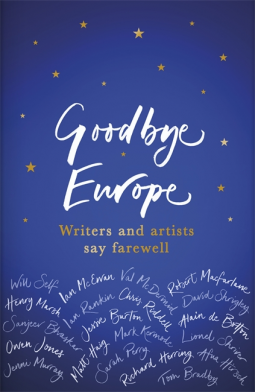
Goodbye Europe: Writers and artists say farewell

Goodbye Europe is a collection of pieces by various artists and writers of various backgrounds and focuses that looks at Britain’s connection to Europe and people’s feelings about being European post-Brexit. Perhaps inevitably, it is predominantly pro-Europe and pro-Remain, featuring a variety of personal recollections of times in Europe, thoughts on Brexit and national mentality, and the odd bit of fiction or humour.

Even for Remain-supporting readers, it is quite a strange experience to read it. Most people are sick of hearing about Brexit by now, or have been trying not to think about it any more than necessary for their own mental wellbeing. Many of the pieces are undeniably good, but there is something jarring—especially as a twentysomething reader—to hear how great it was to visit Europe in the 1970s and 80, or have the chance to live there. Perhaps it is a book for older people who can look back with a plethora of memories of Europe, rather than a desperate wish for those days not to be over.

One of the best piece is one by a fifteen-year-old who won a prize to be included in the collection, because it strikes a chord with how many young people felt about their future and their hopes and dreams after the referendum, especially those too young to vote. The humorous inclusions are good, too: like watching Have I Got News For You, repetitive news is good to find jokes in. Jacob Rees-Mogg seems to be in there to provide “balance” or as a kind of publicity stunt, particularly as it seems unlikely many people who strongly believe in leaving the EU would buy or read a collection of essays which are almost entirely pro-Europe.

The collection doesn’t feel like it has much hope for the future, though a few of the contributors have a stab at suggestions. The real audience for this book has got to be people with decades of memories of feeling European and visiting Europe, who want to enjoy thinkpieces and reminiscences that often look back to these times. It is fond, but for younger readers, it is like being told how great things were before you were born, or old enough to appreciate them.

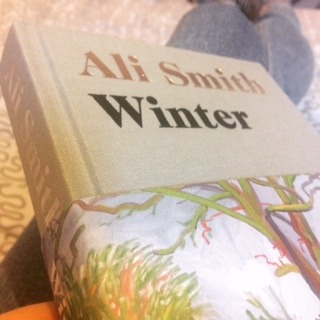
Winter by Ali Smith

Winter is the next in Ali Smith’s seasonal novels that began with Autumn last year. As with the previous one, this is a novel both about a season and characters in that season, and a novel about modern Britain and strange contradictions and times in the country. When four people gather for Christmas in a large old house in Cornwall, they bring together their own personal truths, but these don’t all match up. Two warring sisters, a son being falsified on the internet, and a stranger he wants to masquerade as someone important find themselves together in winter, for better or for worse.

From the opening pages, Smith intermingles the idea of winter—a tough, cold, stark time—with the modern world and a post-truth era in which people can believe totally opposite things as the objective truth. She asks, in a world where everything—art, love, romance, god, every media form and method of communication—is proclaimed dead on a regular basis, what happens in winter when nature reflects this deadness? Like with Autumn, the story itself feels almost incidental, some people who happen to be written together, their lives connected by art and nature and relationship.

The strange position of Lux, a girl paid to pretend to be someone’s girlfriend whilst visiting his mother, is a highlight, the kind of transitory character that Smith writes well and who feels well into her transformative writing style. The expected punning and witty style is there, but also feels a little more sparse, maybe wintry.

The novel features many classic elements of Smith’s writing, a fitting follow up to Autumn, but also gets across the post-truth, Trump and Twitter age surprisingly well, mingling the failings of human memory and the certainty of disagreeing siblings into a new form of fake news. This is the perfect book to read over the holiday season this year to reflect on the season and the year in delightful style.

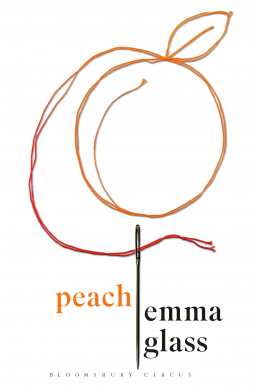
Peach by Emma Glass

Dark, poetic prose: Peach by Emma Glass

Peach is a visceral book about a girl who has been assaulted, written in an unforgettably immediate style. Peach comes home bloody and plagued by the smell of meat, but her parents are too preoccupied with their new baby to ask the right questions. She goes to college to see her boyfriend Green, but still nothing is right. Her body is wrong. Glass uses a distinctive style written in sharp immediacy to show Peach’s thoughts and actions after she is attacked.

This short novel is an exercise in darkly poetic prose that takes a difficult subject and inhabits the trauma of the experience. At times it is so visceral that it is painful to read and its depiction of the aftermath of sexual assault and the mental processes of the main character mean that any reader needs to be aware of this content before reading, but it is also carefully done, with a skilful use of minimal words and descriptions of physical sensations and sounds. It has similarities to books like Eimear McBride’s The Lesser Bohemians, but far more condensed, focused on detail and spanning a short space of time. Every word feels like an attack or relief in this impressively written book that depicts a terrible subject in an emotive and haunting way.

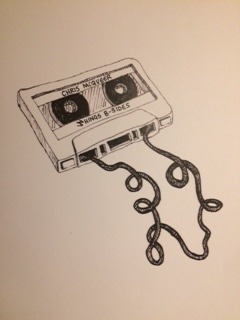
Hings: The B-Sides by Chris McQueer

Hings: the B-Sides is a further eight witty and surreal stories from Chris McQueer that weren’t included in his collection published earlier this year, Hings (which I reviewed here). There’s the ‘too hot for TV/the original collection’ like the weird ‘Road Closed’ and the disgusting yet strangely relatable ‘Bursting’. Both ‘Love Is Love’ and ‘News’ feel like comedy Scottish snippets of Black Mirror ideas, with the former definitely a comedy smart home advert. For fans of the A-side, there’s another little bit of Sammy, and there’s two little tales with clever twists that feel very much in keeping with the strange twists in Hings itself, ‘Crisp Packets’ and ‘Flowers’.

This is a welcome bunch of up to date and clever short stories, something for fans of Hings and for lending to people to convince them to commit to reading the larger book. In a handy zine format, it’s a great antidote to just reading another pointless Buzzfeed end of year listicle.

Spite List: The Worst Books I Read in 2017

After claiming you should know what you hate, I really ought to practice it, and what better way than by moaning about things I read this year. If I’m being honest, I’ve actually left a few books off this list because I’ve already given them harsh reviews and I feel they were enough respectively. I’d say ‘no particular order’, but that’s untrue, Underworld is at the top because I disliked reading it that much.

  • Underworld by Don DeLillo – It’s too long. It’s mostly about men talking about baseball. I’m fed up of big American novels unless they’re doing something innovative. Did I mention I don’t know anything about baseball? I found the experience like talking to a very boring man who wouldn’t let me escape.
  • The Minor Outsider by Ted McDermott – If Underworld is being cornered by a man trying to tell you that politics is all a sports metaphor for many hours, The Minor Outsider was the guy who thinks his writing is better than yours but actually isn’t. Basically the main character is boring and unlikeable and I found the writing mediocre at best.
  • Higher Ed by Tessa McWatt – I didn’t so much dislike this book as I just found it boring. I picked it up because I wanted more London-set novels after having stopped living there, but it just…had no spark.
  • Prague Nights by Benjamin Black – Another disappointing boring book that I picked up because it was about an interesting city. I should learn. But I did read some quite fun books set in Berlin this year so I won’t give up all hope.
  • Leopard at the Door by Jennifer McVeigh – The main problem with this book was that it was a ‘white people in Africa’ story. Also it was slow.

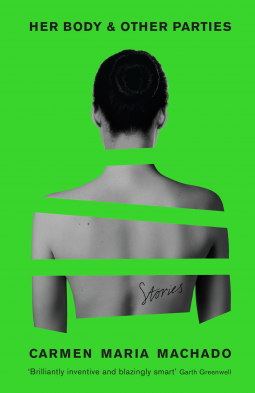
Her Body & Other Parties by Carmen Maria Machado

Her Body And Other Parties is a book of incisive short stories that combine bodies, sex and relationships, horror, science fiction, and pressing issues in imaginative ways. The main characters are mostly women, living in uncanny worlds that can be apocalyptic, magical, and/or unnervingly almost real. In one, the truth about a dress shop and the women slowly going incorporeal drives an employee away from the store. In another, the ribbon around a woman’s neck becomes a mysterious focus in a story that highlights the act of telling stories and of the sounds of telling them aloud. Others play with structure—an inventory of sex that depicts a virus epidemic across the globe, a story told using Law & Order: SVU episode titles—or with common issues like dieting and motherhood, in ways that rethink how these things can be considered.

To describe the stories doesn’t quite do justice to the freshness and imagination of the collection, not only in the ideas and the blending of magical realism, sci-fi, horror, and the reality of life, but in the way they are written. The writing style is distinctive, creating atmosphere and digging deep into the female protagonists. These women have varied relationships with their bodies, different dynamics with their male and/or female lovers, assorted pasts and futures, but what unites them all is the way their stories are both real and surreal.

Some of the stories will likely have a greater effective on different people—as someone who actually thought the acronym was SUV, the Law & Order structured one passed me by quite massively—but this is an important collection. The stories do exciting things with ideas and writing, and the use of the uncanny and the monstrous to highlight issues particularly around women’s bodies and sexualities is creative and thought provoking.

Best non-2017 books I read in 2017

I know it’s ‘end of year lists’ season because I have enough of a Buzzfeed habit to now be seeing the same tweets I’ve seen all year in new lists that use the year in their title. And whilst there are a lot of reading days left of 2017, I realised that to get in more than one list of books from this year, I’d have to start now.

First up is the nebulous category ‘books not published in 2017 that I read for the first time in 2017’. I’m going for things not published new in hardback or paperback in the UK in 2017 as far as I know. Seeing as I spent so much of 2017 reviewing upcoming books or reading very new ones, this list may seem a bit random.

  • Romantic Outlaws: The Extraordinary Lives of Mary Wollstonecraft and Mary Shelley by Charlotte Gordon – This dual biography moves between their lives a chapter at a time, not only drawing parallels but giving a real sense of the mother and daughter who didn’t get to meet. It is packed full of detail and is worth it for not feeling overwhelmed by the author’s judgements about people who turn up in their lives, unlike many biographies of Wollstonecraft or Shelley.
  • If I Was Your Girl by Meredith Russo – A powerful and sweet young adult novel about being the new girl at school, falling in love, and being transgender. It really focuses on finding friends who support you as well as navigating teenage life and rituals whilst dealing with your own and your friends’ secrets.
  • Room by Emma Donoghue – Obviously I’m very behind having only read Room this year, Donoghue’s incredible novel from the point of view of a five year old imprisoned in a single room with his Ma. The way that the style captures the character and his worldview makes it a crucial read.
  • Byrne by Anthony Burgess – I’m including Byrne almost solely because I’m annoyed Burgess wrote it, stopping me writing a story that has a structure that’s a Byron joke: a poem in ottava rima that slips into Spenserian stanzas and back again. You might have to specifically care about that to read it (or just be a huge Burgess fan) as it’s the story of an ageing Don Juan-esque composer written in verse.
  • Giovanni’s Room by James Baldwin – I read most of Giovanni’s Room on my birthday (1st Jan) in the bath, so it only just counts. A classic short love story about two men in 1950s Paris. If you haven’t read it, do.
  • The People In The Trees by Hanya Yanagihara – I wasn’t sure whether to include this one because A Little Life is so much better (but I read that at the end of last year), but I think her earlier novel is worth a read too. It’s about a young doctor who goes on an expedition to find a lost tribe, gains fame from what he discovers there, and things don’t go well from there. If you’ve read A Little Life, you won’t be surprised it can be horrible at times, but very interesting as well.

The Gentleman’s Guide to Vice and Virtue by Mackenzi Lee

The eighteenth century, redux: The Gentleman’s Guide to Vice and Virtue by Mackenzi Lee

If someone had asked me ‘would you like a book about a rebellious eighteen-year-old bisexual aristocrat in the eighteen century?’ I would have obviously said yes. Add in the fact that it’s about going on a Grand Tour, full of adventure novel tropes, and is completely ridiculous in the way fun modern historical fiction should be and well. That’s The Gentleman’s Guide to Vice and Virtue.

The book is aimed at older young adult readers, though I think it’s real target audience is anyone who enjoys trash eighteenth century (and/or is a fan of Byron). It follows Henry “Monty” Montague, who has been kicked out of Eton and faces his tyrannical father’s disapproval for his lifestyle of drinking, gambling, and sleeping with various women and men. He has been allowed to go on the stereotypical Grand Tour of Europe alongside his best friend Percy, his little sister Felicity, and a boring guardian, as a final yearlong break before he must start learning how to take over the family estate. However, when one bad decision too far on Monty’s part puts them in trouble, soon the cultured Grand Tour turns into an adventure across Europe full of highwaymen, pirates, and alchemy (plus Monty’s inconvenient massive thing for his best friend).

I may be part of its specific audience, but this is how historical fiction should be done. Based in historical fact and with a few actual figures thrown in, but for the most part using the spirit of the period to do something adventurous (literally) and enjoyable. The tropes are used purposefully (and anyone whose read eighteenth century stuff like Sterne’s A Sentimental Journey will know things written at the time were full of ridiculous tropes too) and add to the charm of the fast-paced and witty plot. The true highlight is the characters: the scandalous Monty who needs to learn to think about other people whilst escaping his father, his younger sister Felicity who has better plans for her life than the finishing school she’s meant to be going to, and the likeable Percy, Monty’s companion in gambling and drinking who is hiding a secret or two.

This is not your accurate historical fiction. This is what happens when history is treated with sufficient irreverence and as a vehicle for adventure, romance, and general hilarity, whilst touching on a few major issues that all still have relevance now in some way. The style is modern with a hint of eighteenth century, and it works for the story. Some people will be scandalised by it (probably), but this is a fun and fresh novel that gives a happy ending to a scenario plenty would think should have no hope of one.